What is irrigation?
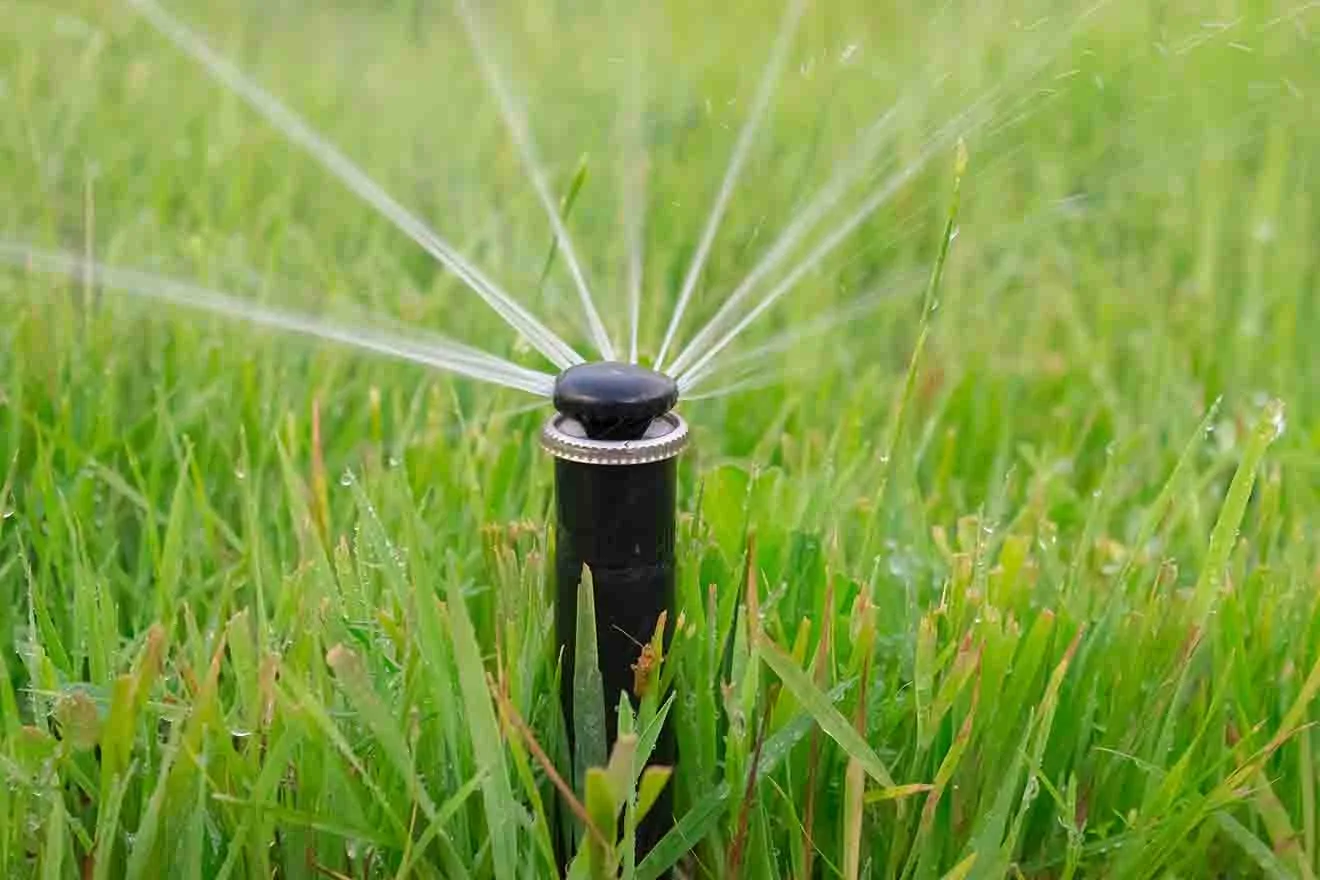
What is irrigation? It's giving plants water on purpose, from a source other than the sky, because rain isn't coming in the right amount or at the right time. A farmer flooding a rice field is irrigating. So is a citrus grove running micro-sprinklers under its trees, and so is the sprinkler system in your front yard that kicks on in the middle of the night.
People have irrigated crops for thousands of years. Early farmers in Mesopotamia and Egypt dug canals to move river water onto their fields. The tools have changed since then. The job hasn't: get water to the roots, in an amount the plant can use, before the plant runs out.
For a home in Southwest Florida, irrigation usually means one of three things: an in-ground sprinkler system, drip tubing in the beds, or you with a hose. The equipment side (pipe, valves, heads, controller) is its own topic, and we walked through every part in what an irrigation system is and what breaks first. This piece is about the watering itself. Why your yard needs it, which method fits which part of the yard, and how much water is actually the right amount.
Start with the thing that surprises almost everyone who moves here. Our part of Florida gets more than 50 inches of rain in a typical year. Seattle gets less than 40. And lawns in North Port and Venice still die of thirst every spring. How does a place that wet end up that dry?
Why Southwest Florida yards need irrigation in a 50-inch rain year
The rain shows up all at once. More than half of the year's total falls from June through September, mostly in afternoon storms. Then it shuts off. From November into May, a yard can go weeks without a real soaking, and April and May stack dry-season heat on top of that. That's the stretch where St. Augustine lawns brown out and new plants quit.
The soil makes it worse. Most yards around here sit on sand, and sand drains fast and holds very little. Water that soaks in on Monday is below the grass roots or gone by Thursday. St. Augustine keeps most of its roots in the top several inches of soil, so it feels a dry week right away.
Every town we work in has its own version of the problem:
- North Port sits on spodosol: sand with a hard, packed layer a foot or two down. In summer that layer holds water near the surface and yards flood. In May the same yard is bone dry on top. Same soil, opposite problem, six months apart.
- Venice has sandy soil mixed with shell that packs down hard, especially along walks and driveways. Fast sprinklers put water down quicker than it can soak in, and it runs off.
- Port Charlotte has a lot of canal-front lots with low spots that stay wet and high spots that dry out, sometimes in the same backyard.
- Englewood, out toward Rotonda West and Cape Haze, has coastal sand that drains fastest of all, plus wind that pushes fine spray off target.
So a St. Augustine lawn here needs water in the dry season. That part isn't up for debate. What's left to decide is how the water gets there, and there are only four real ways to do it.
The 4 types of irrigation, and which ones fit a Florida yard
Every irrigation method moves water one of four ways: across the surface, through the air, drip by drip at the roots, or underground. Farms use all four. A home yard in SW Florida really only needs two of them.
| Type | How it works | Where you see it | Fit for a SW Florida yard |
|---|---|---|---|
| Surface (flood or furrow) | Water flows across the ground and soaks in as it goes | Rice paddies, row crops, the oldest farms on earth | Poor. Sand soaks it all up near the source and the far end gets nothing. |
| Sprinkler irrigation | Pressurized pipe feeds spray heads or rotors that throw water through the air | Lawns, ball fields, golf courses, pastures | The standard for lawns. Covers big areas of turf evenly when the heads are spaced right. |
| Drip and micro-irrigation | Low-pressure tubing and emitters put water right at the roots | Citrus groves, nurseries, shrub and palm beds | The best choice for beds. Very little is lost to wind or runoff. |
| Subsurface drip | Drip tubing buried under the soil or turf | Some farms, narrow turf strips, commercial medians | Rare in home lawns here. You can't see a failure until the grass above it dies. |
Hand watering with a hose counts as irrigation too. It's fine for pots on the lanai and a few new plants. It won't carry a lawn through May.
Sprinkler irrigation is what most people picture when they hear the word. An in-ground system uses spray heads for small and narrow areas and rotors for open lawn. Drip belongs in the beds. We broke down that split, and when converting a bed zone pays for itself, in drip irrigation vs. spray in Florida.
The right method gets water to the right place. It says nothing about how much to put down, and that's where most yards go wrong.
How much water does a Florida lawn actually need?
UF/IFAS, the University of Florida's extension service, recommends putting down 1/2 to 3/4 inch of water each time you irrigate a lawn, and only when the grass shows it's thirsty. A deep drink, then let it dry out. A little every day is the wrong pattern.
Deep, spaced-out watering pushes roots down where the soil stays moist longer. Short, frequent runs keep the roots in the top inch or two, and a lawn with shallow roots is the first one to fold in a dry week.
The catch is that your controller counts minutes, not inches. How long it takes to put down half an inch depends on what's in the ground:
- Spray heads put water down fast. A spray zone can hit half an inch in roughly 15 to 20 minutes.
- Rotors put it down slowly. A rotor zone can take close to an hour to deliver the same half inch.
Those are ballpark numbers. Water pressure, nozzle size, and head spacing change them on every property, so the only number worth trusting is the one you measure yourself.
Set five or six empty tuna or cat food cans around one zone, some near the heads and some out in the middle. Run that zone for 15 minutes. Measure the water in each can with a ruler and average them. That's what the zone puts down in 15 minutes, and from there it's simple math to reach 1/2 to 3/4 inch. If one can is nearly empty while the rest are full, you've found a coverage problem, not a run-time problem.
Two rules sit on top of the math. Florida law requires every automatic irrigation system to have a working rain shutoff, usually a rain sensor or a soil moisture sensor. And under the current water shortage order, most lawns in our area get one watering day a week. We listed the days and hours by address in our rundown of SW Florida watering rules.
When Dennis opens a controller on a first visit, this is usually what he finds next to what should be there:
One day a week, in sand, in the middle of the dry season. Every drop has to count. So how do you tell whether yours are landing where they should?
Too much water or too little? How to read your yard
Your lawn tells you which way it's off. You just have to know what to look for. In the dry season, the usual problem is too little. Once the summer storms start, it often flips, because plenty of systems keep running right on schedule through July downpours with a rain sensor that died years ago.
| Too little water | Too much water, or too fast |
|---|---|
| Blades fold in half lengthwise | Dollarweed, with round coin-shaped leaves, spreading through the lawn |
| The lawn takes on a blue-gray tint | Turf feels spongy and squishes underfoot a day after watering |
| Footprints stay pressed in instead of springing back | Mushrooms in the lawn, green algae on shady edges of the walk |
| Brown crescents between sprinkler heads | Yellow, thinning grass that pulls up with short roots |
| Shrubs droop in the afternoon and are still drooping at sunrise | Water running down the curb before the zone finishes |
The first three signs in the left column are UF/IFAS's signs that a lawn needs water. UF/IFAS also notes that dollarweed thrives where the soil stays wet.
In North Port, too much water shows up fastest. The hardpan under the sand holds extra water near the surface, so a zone that runs too long, or a valve that weeps all day, turns into a soft, yellow patch within a week or two. In Venice, the runoff column is the one to watch. That shell-packed soil sheds water before it soaks in.
A brown crescent between heads is almost always a coverage problem. A head is buried in St. Augustine runners, tilted, clogged, or blocked by a shrub that grew in front of it. Turn up the whole zone to green that one spot and you drown the rest of the lawn. Fix the head and leave the clock alone.
Most of what's in that table traces back to one decision, and it was made before a single pipe went in the ground: what got planted where.
Good irrigation starts with the landscape plan, not the pipe
The cheapest irrigation fix is a planting plan that doesn't fight the water. Landscapers call it hydrozoning: grouping plants by how much water they need and giving each group its own zone. The University of Florida's Florida-Friendly Landscaping program builds on the same idea and calls it "right plant, right place."
On a typical lot around here, it looks like this:
- Lawn gets its own spray or rotor zones and nothing else.
- Shrub and palm beds get drip, on zones separate from the lawn.
- Established drought-tolerant plants in rock beds need regular water only until they root in. After that, many get by on rain. Our list of drought-tolerant plants for SW Florida covers which ones.
- New plants and new sod need steady water while they establish, which usually means a temporary schedule change after an install.
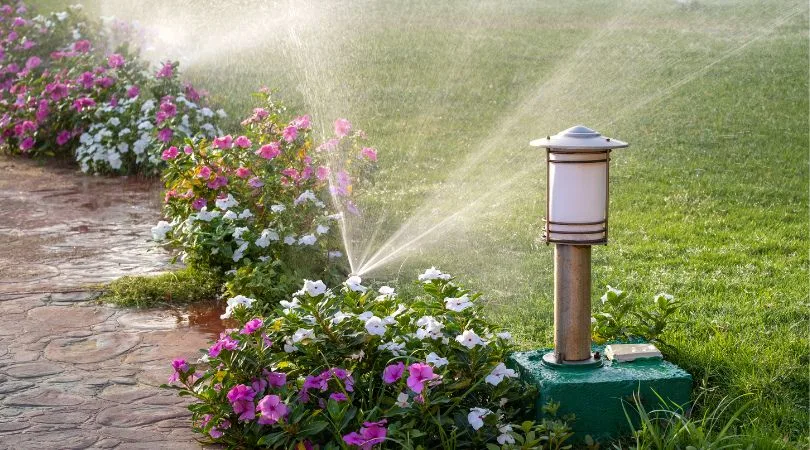
Trouble starts when the yard changes and the irrigation doesn't. Someone turns a mulch bed into rock and agave, and the old spray heads keep soaking it. Someone adds a pool, the excavator cuts through two zones, and the lines get capped wherever they ended up. New sod on a zone that no longer reaches it doesn't last long. That's why, on a full renovation, we plan the beds and the zones together instead of one after the other.
That planning is the part of a job Dennis likes to do with the homeowner, standing in the yard, not from a desk. One customer described it this way:
"Dennis from Epic Horizons Landscaping assured me that they would provide quality work and I was extremely happy with the outcome. He helped me with the final design and it only took 2 days to complete a lot of work."
— Elia Naughton, Google ReviewA good plan cuts down on brown spots and wasted water. It can't stop a head from snapping off under a mower tire or a valve from sticking open. That's the other half of irrigation, and it looks a little different in every town we work in.
Irrigation repair and upgrades in Venice, Port Charlotte, and Englewood
Most irrigation calls we get start the same way: a brown patch, a soggy patch, or a water bill that jumped. What's underneath usually depends on where you live.
- Venice. If you need irrigation repair in Venice FL, odds are good the spray zones are part of it. Shell-packed soil sheds fast water, so we often split a spray zone's run time into two shorter cycles with a break between them, letting the first round soak in before the second. Many Venice homes are in deed-restricted communities where a brown lawn gets noticed. When you compare irrigation companies in Venice FL, ask whether they'll set it up that way. See irrigation in Venice for more.
- Port Charlotte. Canal-front lots mean long pipe runs to the back of the property and heads close to the seawall, where overspray lands in the canal instead of on the lawn. Low spots can hide a slow leak for weeks. Real irrigation system repair in Port Charlotte starts with walking the whole run, not just the head you noticed. More on irrigation in Port Charlotte.
- Englewood. Fast-draining coastal sand and steady wind off Lemon Bay are hard on spray heads. The irrigation system upgrades in Englewood that pay off first are pressure-regulated heads, which keep the water in droplets instead of a mist that blows away, and drip on the bed zones so the wind can't take it. See irrigation in Englewood.
- North Port. A lot of homes water from shallow wells, and sand ends up in filters and nozzles. If every zone has slowly gone weak, a cleaned filter and fresh nozzles may be all it needs. More on irrigation in North Port.
There are plenty of Port Charlotte irrigation companies, and most of them will replace the one head you point at. That fixes today's problem. It doesn't tell you why the head broke or whether the zone was ever laid out right.
Dennis runs a first visit differently. He starts at the controller, runs every zone with you, checks whether the run times match what's actually planted, and prices the repair before anything gets dug up. If a zone was set up wrong from the start, he'll tell you, because another repair won't fix a layout problem. If you're weighing a new system against fixing the old one, our breakdown of what a sprinkler system costs lays out the numbers, and our irrigation page covers everything we install and repair.
Whether you're shopping irrigation companies in Port Charlotte or Venice, the same handful of questions come up on almost every call. Here are the straight answers.
Frequently asked questions
What is irrigation in simple words?
Irrigation is watering plants on purpose with water you supply, instead of waiting on rain. On a farm that can mean canals, center pivots, or drip lines. In a home yard it means a sprinkler system, drip tubing in the beds, or a hose.
What is sprinkler irrigation?
Sprinkler irrigation sends water through pressurized pipe to heads that throw it through the air like rain. Spray heads cover short distances, and rotors cover open lawn. It's the standard way to water lawns because it covers turf evenly when each head's spray reaches the next head.
What are the benefits of an irrigation system in Florida?
It waters on your legal day and hours without you being there, and it puts down a measured amount instead of a guess. Set up right, with separate lawn and bed zones and a working rain sensor, it uses less water than hand watering. The biggest benefit is protecting what you've already paid for. Sod and plants lost in a dry May cost far more to replace than the water would have.
How long should I run my sprinklers in Southwest Florida?
Long enough to put down 1/2 to 3/4 inch, which is what UF/IFAS recommends per watering. Spray zones often get there in 15 to 20 minutes, and rotor zones can take close to an hour. Do the tuna can test on each zone to get your real number, and water only on your allowed day.
Does every Florida yard need an irrigation system?
No. Bahia grass on a large lot can ride out the dry season by going dormant and greening back up when the rains return. Rock beds full of established drought-tolerant plants may need very little. St. Augustine in our sand is different. Without irrigation it often doesn't make it through April and May.
Do you do irrigation repair in Venice FL and Port Charlotte?
Yes. We repair and install irrigation in Venice, Port Charlotte, North Port, and Englewood. Dennis runs every zone with you on the free estimate and gives you a price before any digging starts. Call (941) 946-8403.
What irrigation system upgrades make sense in Englewood?
Start with a working rain or soil moisture sensor, since Florida law requires one anyway. After that, pressure-regulated heads to cut down on wind-blown mist, drip on the shrub and palm beds, and a smart controller you can reset from your phone when the watering rules change.
Not sure whether your yard is getting too much water or too little? Call Dennis at (941) 946-8403 or send a few photos through the contact form. He'll tell you whether you're looking at a run-time fix, a head repair, or a zone that needs rethinking. The estimate is always free.