Local Expertise
Venice's Gulf Proximity Changes Every Plant Decision.
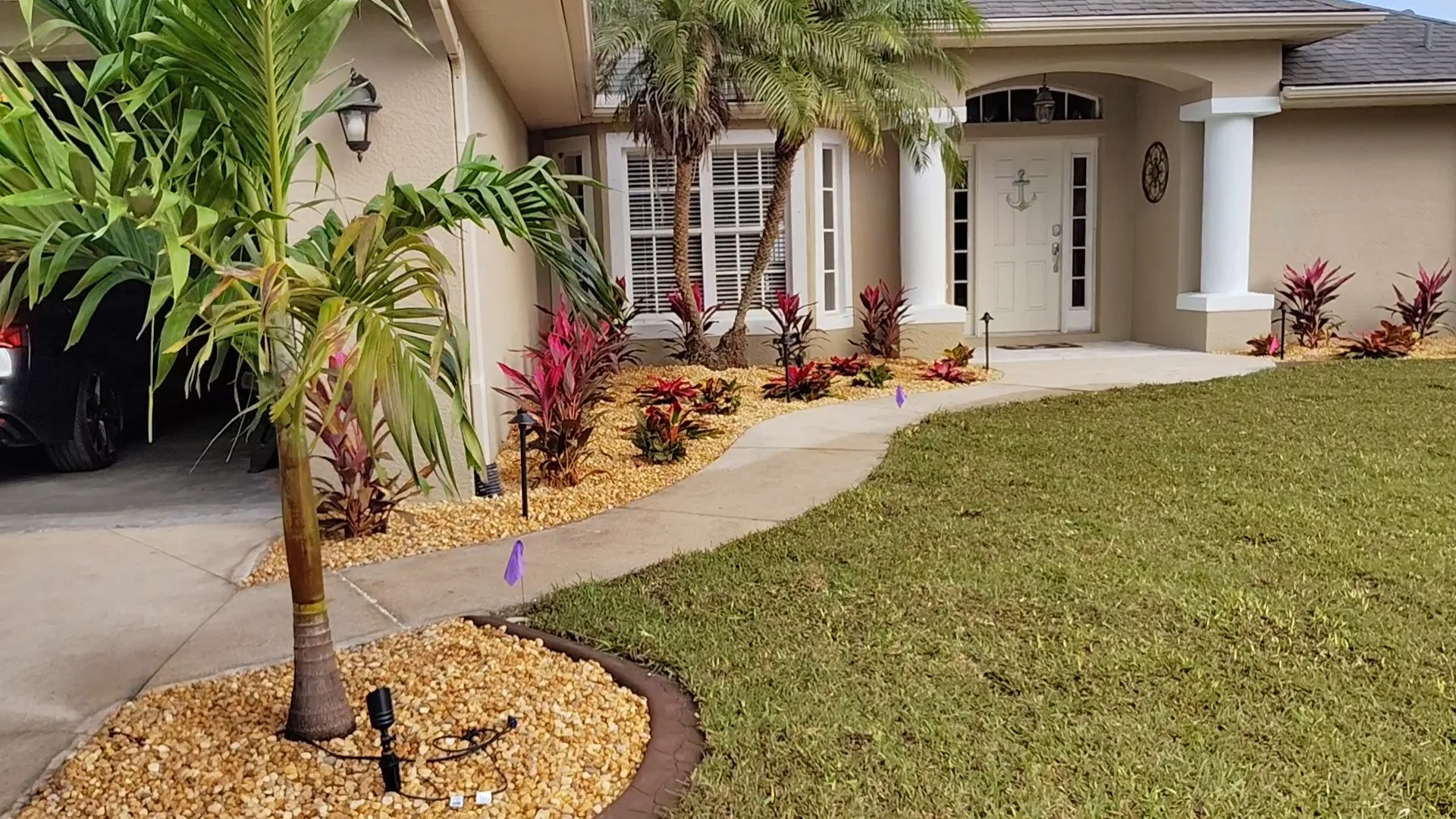
Plants specified for interior Florida — or even for North Port — often fail in Venice's coastal salt-spray zone. We carry a Venice-specific plant list organized by distance from the Gulf: the half-mile coastal exposure tier requires strictly salt-tolerant species like Sea Grape, Silver Buttonwood, Cocoplum, Muhly Grass, and Saw Palmetto. In HOA communities we submit the plant list and layout to the architectural committee before ordering any material — we won't plant first and ask forgiveness later.
Salt Spray Distance Threshold
Properties within 0.5 miles of the Gulf require salt-tolerant species exclusively — standard ornamental tropicals defoliate in one season at this exposure level.
Establishment Watering in Sandy Soil
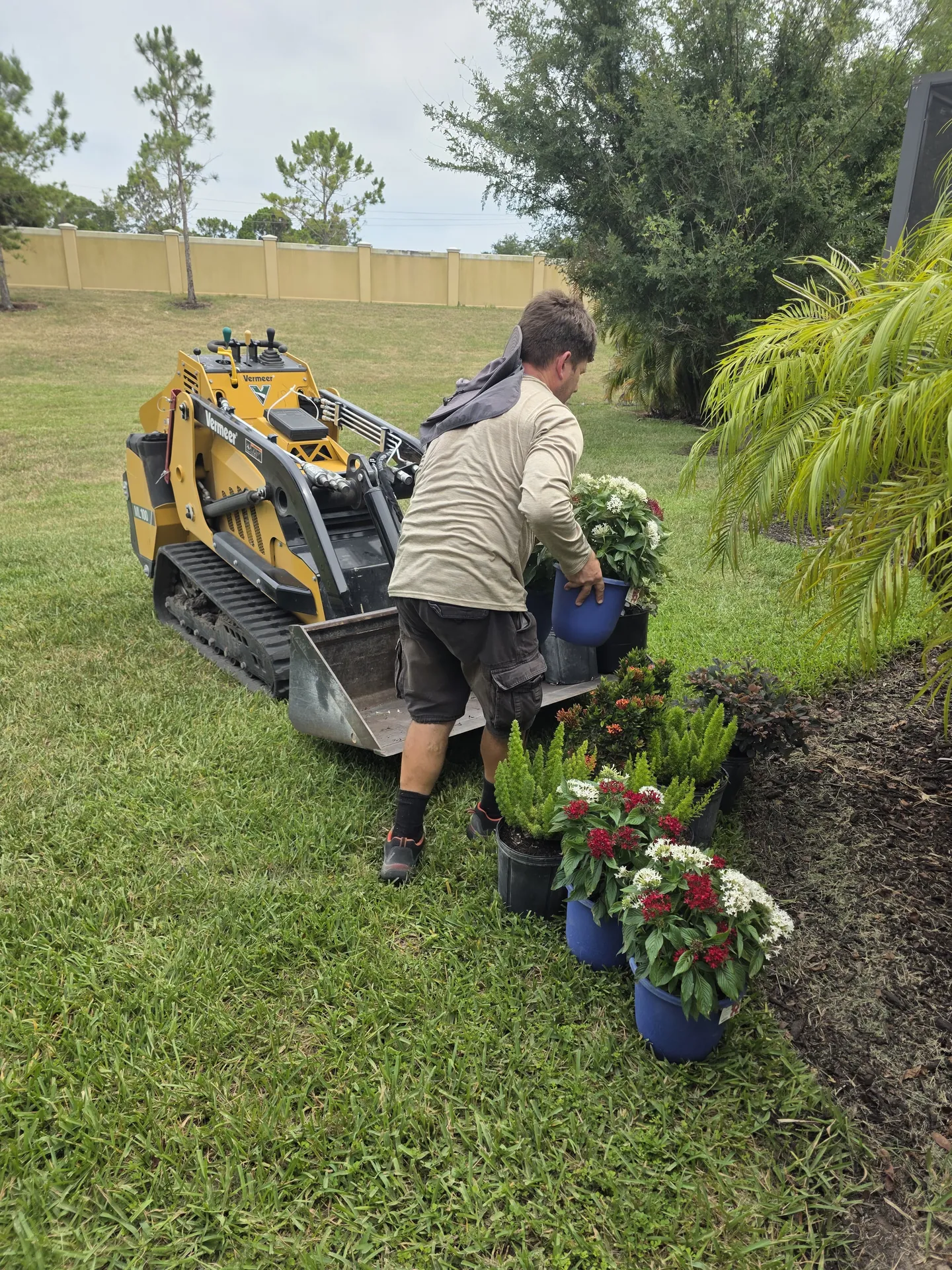
Venice's fast-draining sandy loam requires newly installed plants to be watered daily for 30–60 days — root systems need to extend into the native soil before they can sustain on rainfall and irrigation cycles alone.
HOA Plant List Requirements
Pelican Pointe, Gran Paradiso, and Stoneybrook maintain approved or restricted plant lists — we submit planting plans before ordering material in all HOA communities.
Soil Amendment Benefit
Backfilling with a 50/50 mix of native soil and quality planting mix improves moisture retention around new root balls in Venice's sandy soil — measurably improving establishment survival through the dry season.
Project Record
Plant Installation Jobs My Crew Has Done in Venice
Real projects from real neighborhoods — I was on every one of these. Click any file to see the full record: materials, scope, timeline, and outcome.
Venice, FL
Location
Venice, FL
Material / Scope
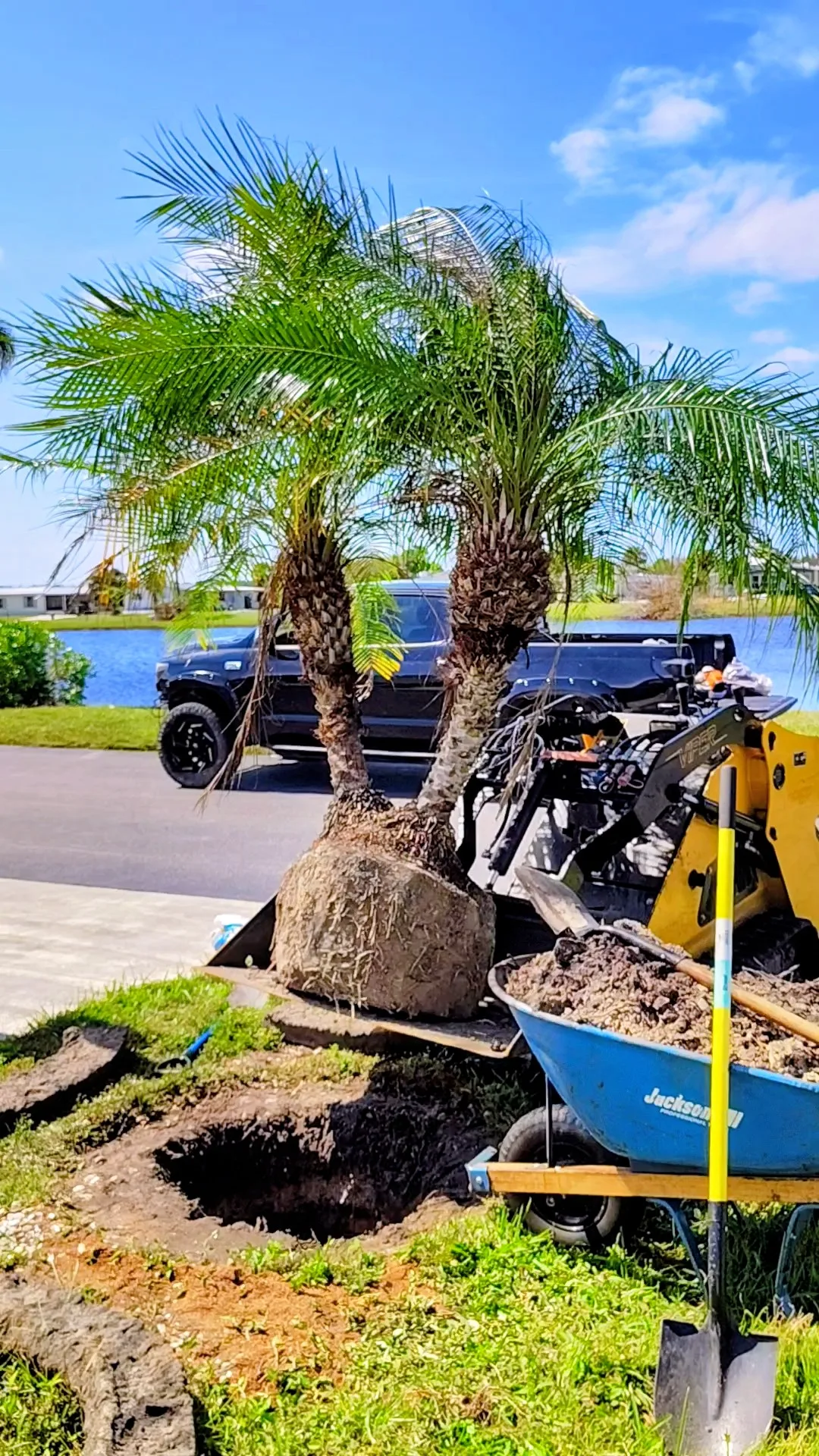
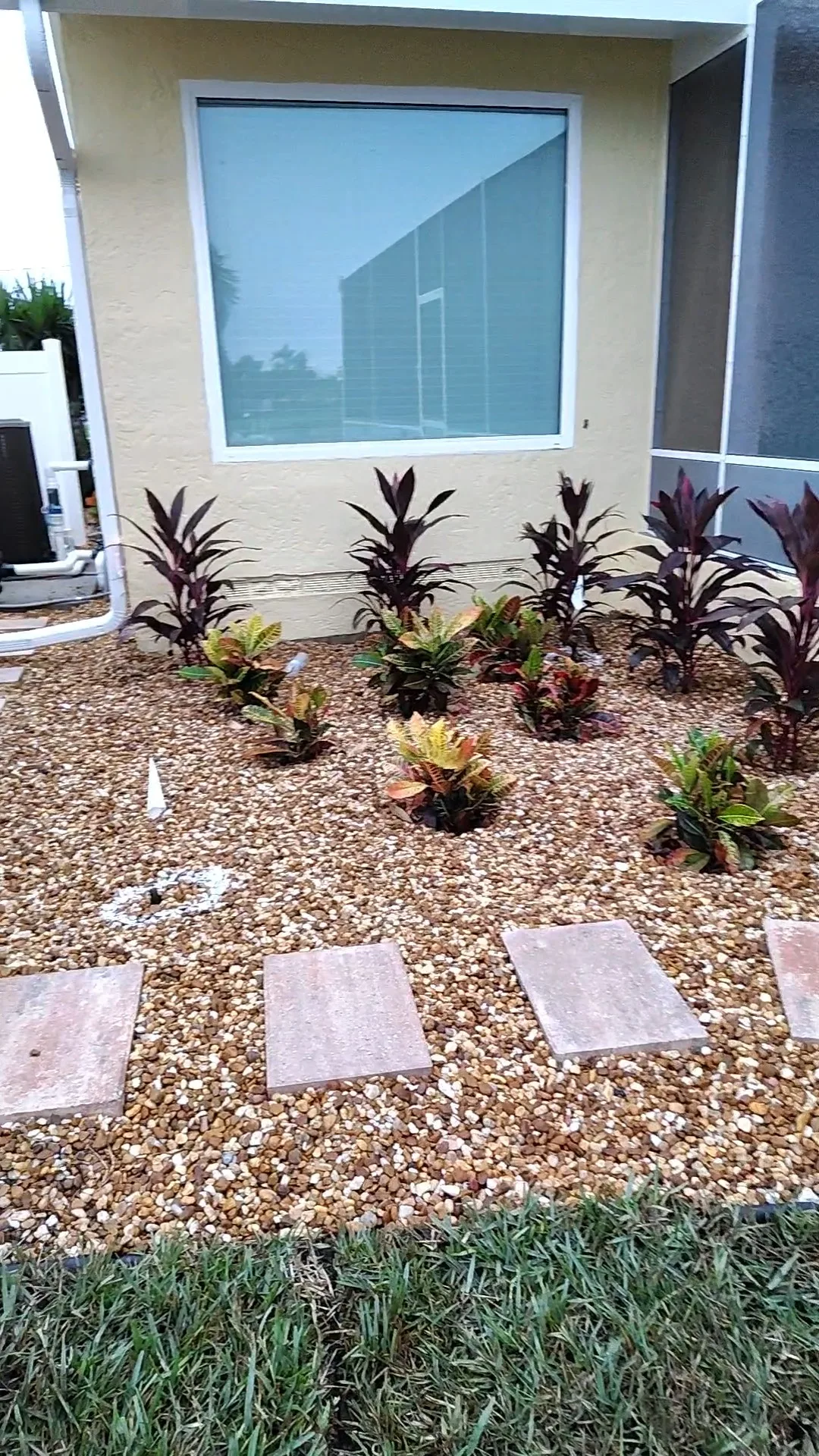
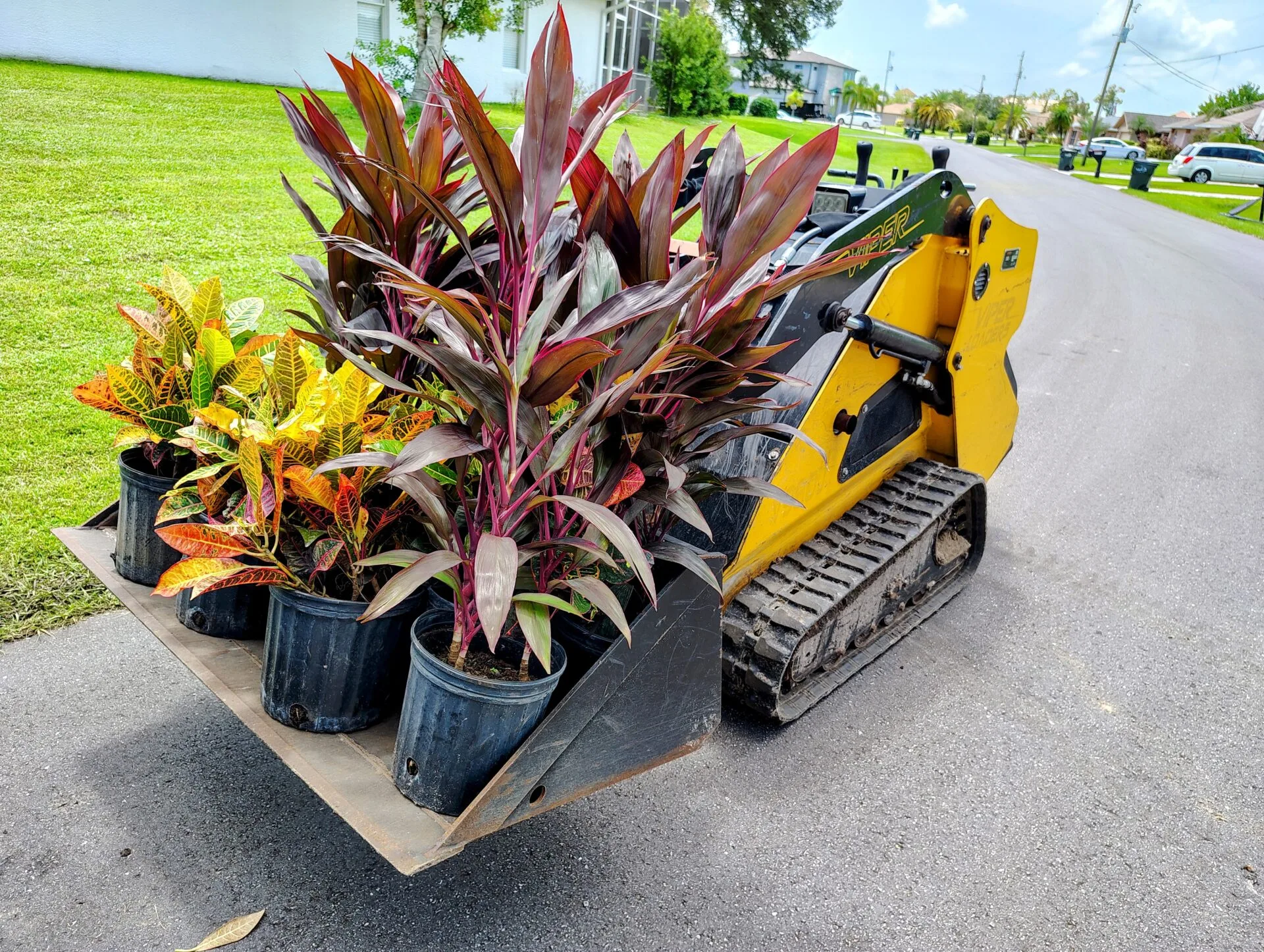
Tibouchina dwarf, blue daze, cordyline exotica, yellow hibiscus, agave desmettiana, podocarpus, pygmy date palm field grown, croton mammey, dipladenia, red hibiscus, 65 sq ft St. Augustine sod, flagstone, dripline reroute
Total Area
16 plant varieties, 65 sq ft sod, dripline reroute, flagstone
Timeline
2 days
Full plant bed redesign — 16 varieties chosen for a mix of color, texture, and height layering across the front and side yards. Tibouchina and hibiscus for flowering color, cordyline and agave desmettiana for architectural form, podocarpus as the primary screening hedge material, and pygmy date palms at the entry for height. Dripline was rerouted to match the new plant positions before any planting began. Flagstone stepping path and 65 sq ft sod patch completed the build.
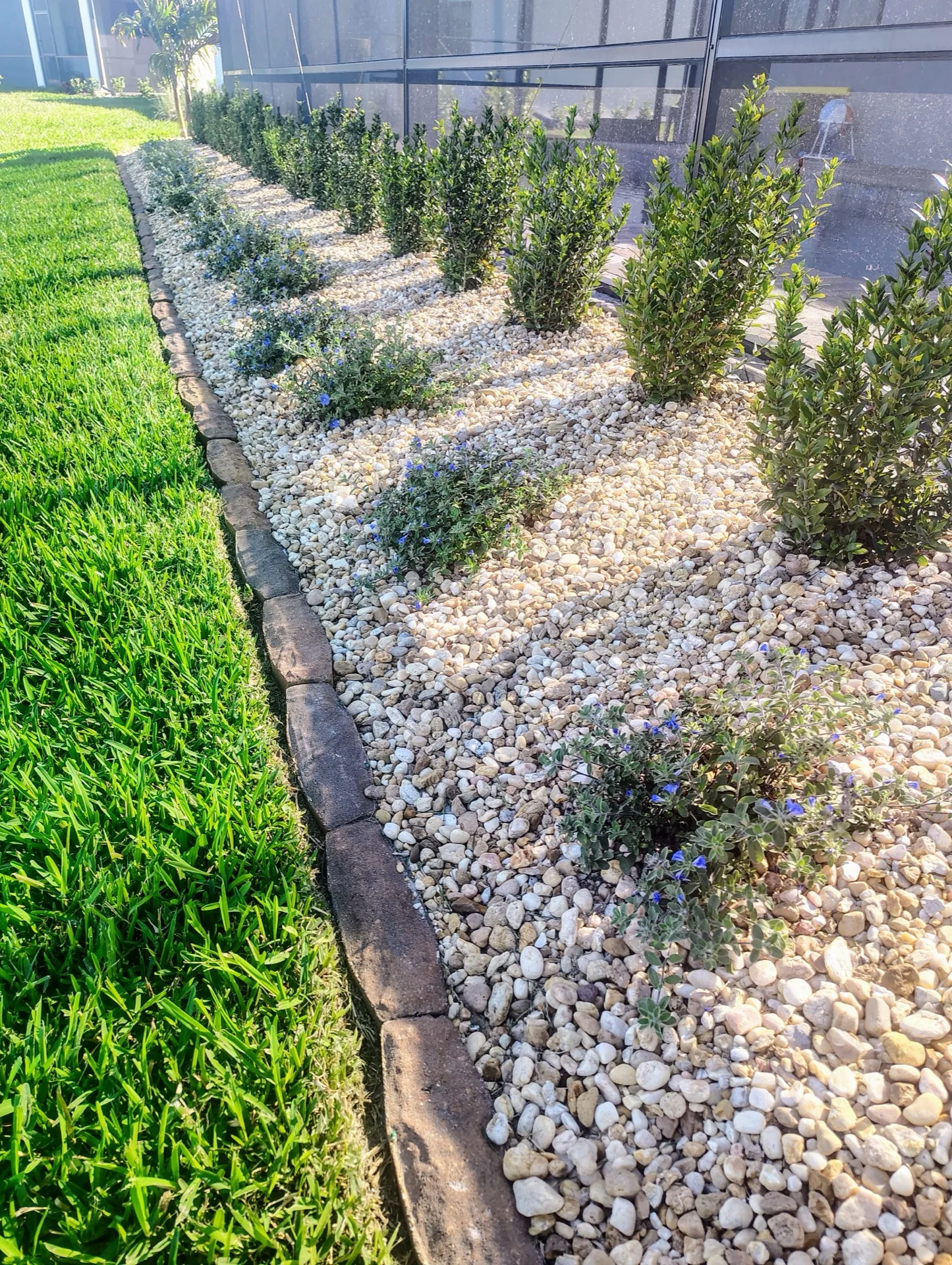
Location
Venice, FL
Material / Scope
Existing plants removed, 3 pitch apple (15-gallon specimens)
Total Area
Plant removal + 3 pitch apple (15-gal)
Timeline
Half-day
Declining foundation shrubs swapped out for pitch apple — a salt-tolerant, evergreen species with a dense growth habit that performs well in Venice's coastal conditions. Three 15-gallon specimens installed at spacing for fill coverage within one season. Dripline coverage confirmed before plants went in the ground. Pitch apple is one of the more underused species for coastal foundation beds — it handles both salt and occasional drought without the maintenance pressure of tropicals.
Location
Venice, FL
Material / Scope
1 cu yd salt-and-pepper decorative rock, bed edge re-establishment
Total Area
1 cu yd large salt-and-pepper rock + bed edging straightened
Timeline
Half-day
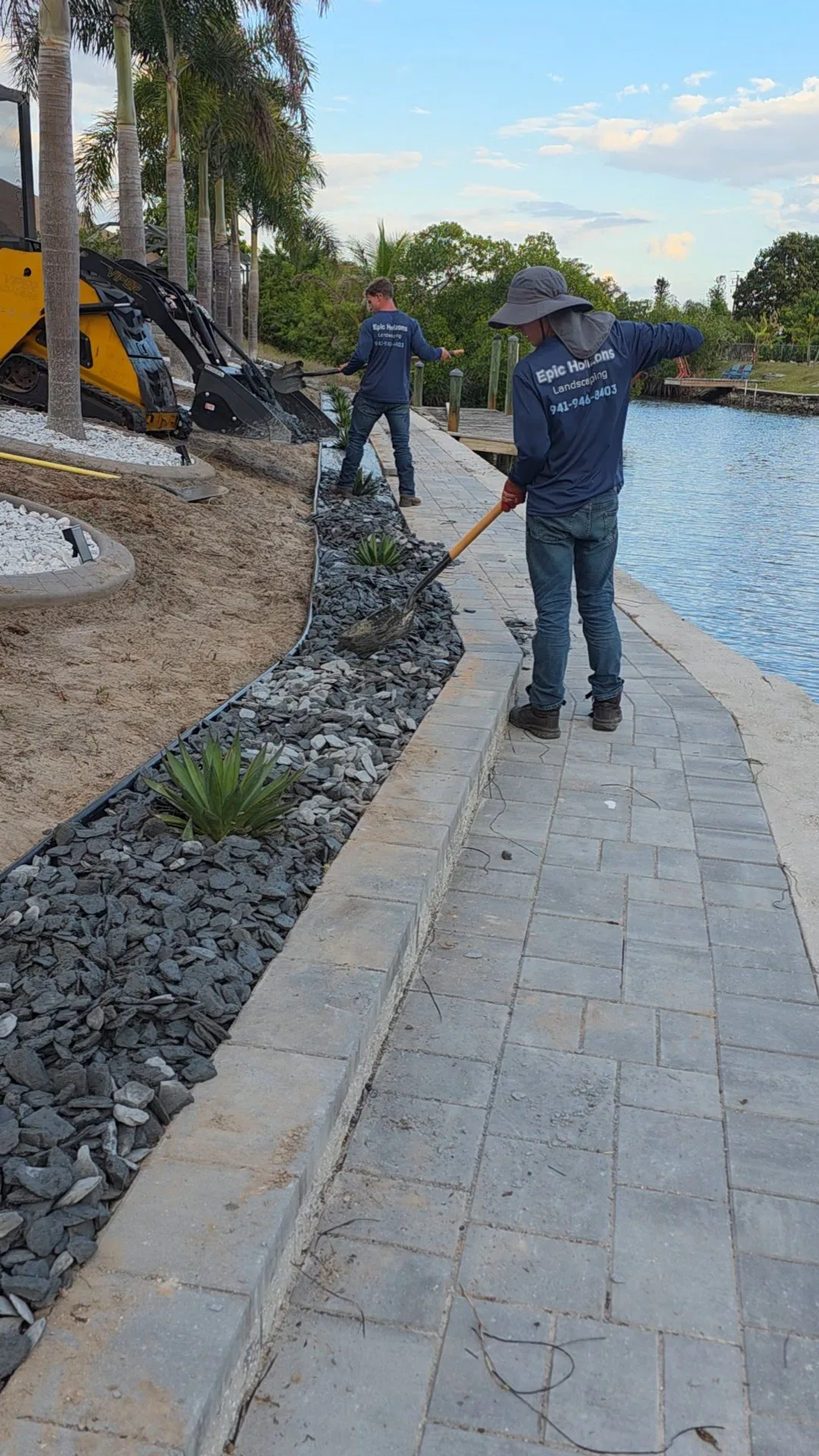
Existing bed edging had shifted and the rock coverage had thinned in several spots. We re-established the bed edge lines, topped off with 1 cu yd of large salt-and-pepper rock to restore full depth, and dressed the edges clean. No plants needed — the existing material was healthy. Rock at the right depth and straight edges do a lot for the overall appearance of a bed from the street.
Location
Venice, FL
Material / Scope
400 sq ft old sod removed, 1 pallet St. Augustine sod, base prep
Total Area
400 sq ft sod removal + 1 pallet St. Augustine
Timeline
1 day
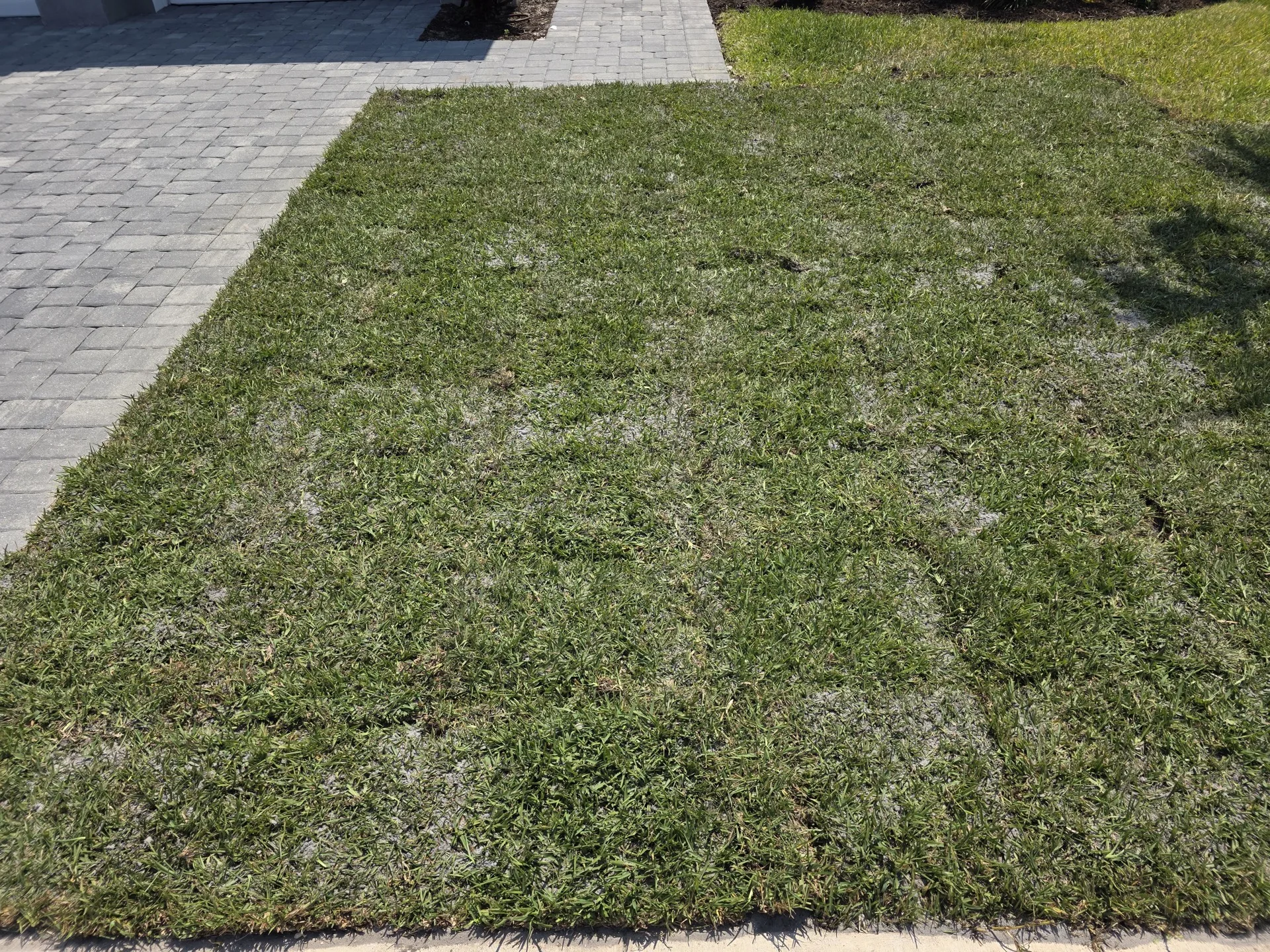
Worn-out section of lawn — weed pressure and thin coverage past the point of recovery. We pulled 400 sq ft of old material, prepared the base, and installed 1 pallet of St. Augustine. Existing irrigation head coverage was confirmed and adjusted on two heads before the sod was laid to ensure consistent moisture across the new install area.
How We Work
Plant Installation in Venice: What Actually Happens
I've done this job in Venice enough times to know what catches people off guard. Here's what actually matters — and what's specific to this area.
Step 01
Exposure Assessment + Species Selection
Dennis evaluates sun and shade hours across the bed, existing irrigation coverage, drainage conditions, and proximity to the coast. A species list is confirmed that matches the actual site conditions — not just what looks good in a catalog.
⏱ Before work begins
Step 02
Pit Excavation + Soil Amendment
Planting pits are excavated to twice the root ball width and to the correct depth. Native sand is amended with organic compost. Drainage is checked at the bottom of each pit before the plant goes in — water should drain from a pit in under an hour.
⏱ Day 1
Step 03
Plant Set + Depth Check + Backfill
Each plant is set so the root flare is at or just above grade — never buried. Position is checked from multiple angles before backfilling begins. Amended soil is filled in lifts and tamped gently. No volcano mounding against the trunk or stem.
⏱ Day 1
Step 04
Mulch + First Deep Water + Care Handoff
Mulch is spread at 2–3 inches — pulled back from the base of every plant. Each plant receives a deep first watering at the root zone. Dennis walks you through the establishment watering schedule and any species-specific care notes before leaving.
⏱ Installation day
From Dennis P. — Owner, Epic Horizons
"I've done this job in Venice enough times to know exactly what makes it different here — and what goes wrong when someone skips the steps that matter."
Venice has specific site conditions that change how Plant Installation is done. The soil, the water table, the HOA requirements — these aren't generic considerations. They're the actual job. Every estimate I give factors these in from the start.
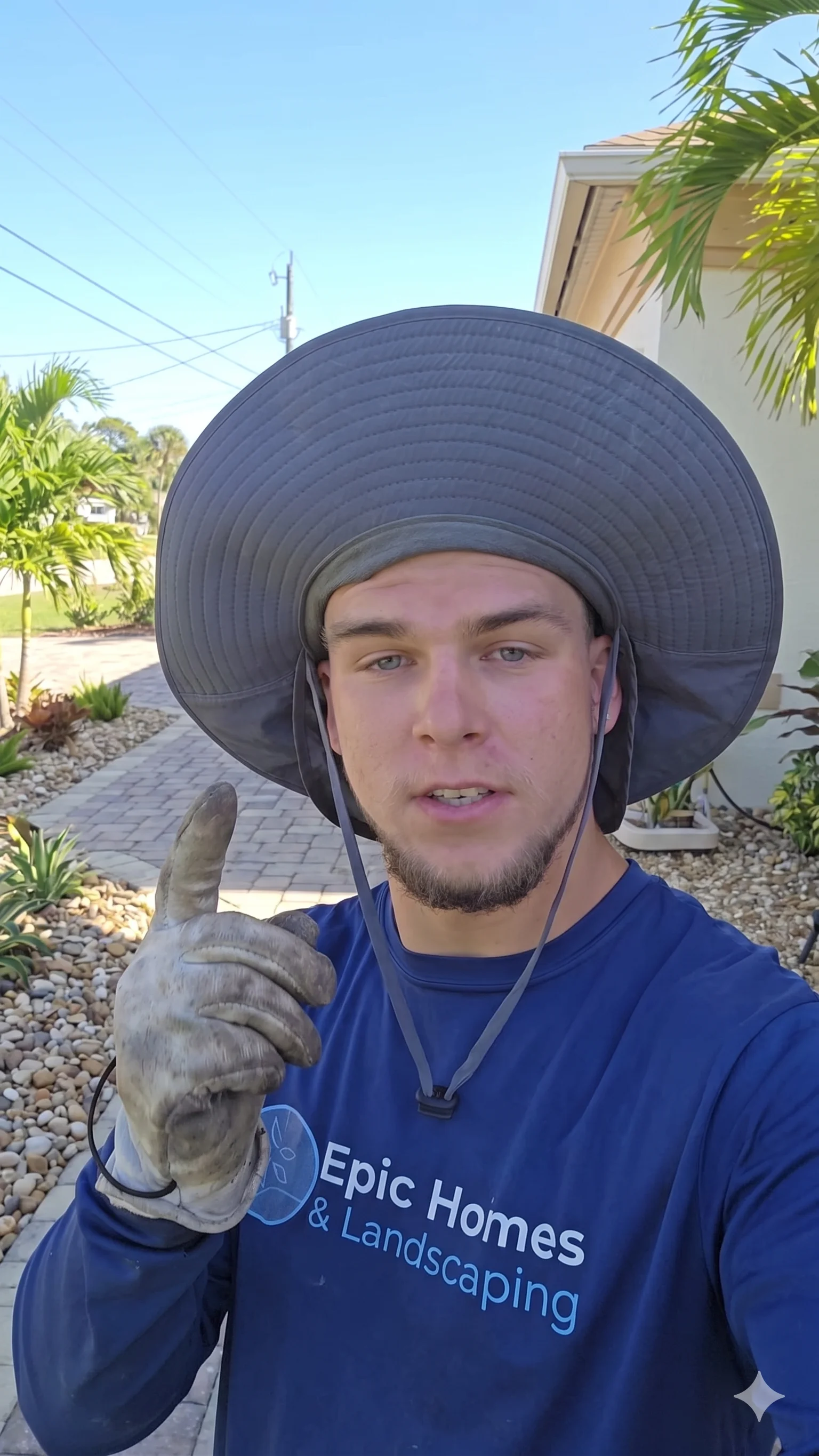
Dennis P.
Owner · Licensed Contractor · SW Florida since 2022
Venice, FL
Transparent Pricing
What Affects the Price in Venice
Venice has specific conditions that change what a Plant Installation project costs here. Here's what goes into your number.
Species and Size
Coastal-Tolerant Specimen Plants Cost More
Silver Buttonwood, Sea Grape, and established Saw Palmetto are more expensive than standard ornamental shrubs. The premium reflects their scarcity relative to interior-Florida species and their suitability for coastal Venice. Installing the wrong species at a lower material cost produces failure — not savings.
Number of Plants
Volume Affects Both Material and Labor Cost
Large volume installs — 50+ plants — receive a more efficient per-plant labor rate. Small spot installs — 3 to 5 plants — are priced at a slightly higher per-plant rate because mobilization and setup time is the same regardless of quantity.
HOA Submission
HOA Review Adds 1–3 Weeks to Schedule
We prepare and submit planting plans and species documentation to the HOA before ordering material. The review process doesn't add cost — it adds schedule time. We sequence this early in the project planning process to minimize the total timeline.
Mulch and Rock
Ground Cover Selection Affects Installation Cost and Maintenance
Organic mulch to 3 inches costs less upfront than river rock or shell stone but requires annual refresh. Rock and shell are higher initial cost but last longer. In Venice's coastal aesthetic, shell stone is particularly popular — it also resists storm scatter better than organic mulch.
Free on-site consultation — I walk the yard and bring a Venice-specific plant list.
Call (941) 946-8403 or fill out the form. Written quote within 48 hours. — Dennis
Questions & Answers
Plant Installation in Venice — Common Questions
More answers
Venice sod installation
Sod installation in Venice, FL runs roughly $1.00 to $1.85 per square foot fully installed, which covers old lawn removal, grading, fresh St. Augustine sod, and cleanup. A 3,000-square-foot front yard comes to about $3,000 to $5,550. Site conditions and grass variety decide where in that range your yard lands.
| Lawn size | Installed at $1.00/sq ft | Installed at $1.85/sq ft |
|---|---|---|
| 1,000 sq ft | $1,000 | $1,850 |
| 3,000 sq ft | $3,000 | $5,550 |
| 5,000 sq ft | $5,000 | $9,250 |
The sod itself is usually only 30 to 40 percent of the job. The rest is prep: pulling the old turf, grading so water runs away from the house, and filling low spots. On a yard that needs real grading, prep can reach 30 to 50 percent of the cost. A flat, clean lot sits at the low end. A yard with old beds, stumps, or a slope toward the foundation sits at the top.
Venice soil is sandy and drains fast, so new sod dries out quickly in the first weeks. We check the irrigation heads before the sod goes down and give you a watering schedule. Summer rain helps rooting, but heavy rain on a bad grade pools water and rots new sod. If you are in an HOA, confirm which grasses it allows before you order. Prices above are our all-in rates, so compare any other quote on what it includes.
Venice sod company
A Venice sod company should deliver fresh sod, remove the old lawn, grade the soil, lay the rolls tight, and water it in. Epic Horizons Landscaping does all of that for Venice homes, mostly with St. Augustine. Call (941) 946-8403 for a price on your yard. Ask any company what its quote includes.
| Sod variety | Material cost per sq ft | Sun | Best for |
|---|---|---|---|
| St. Augustine (Floratam) | $0.35 – $0.50 | Full sun | Most SW Florida lawns |
| St. Augustine (Palmetto / Seville) | $0.45 – $0.60 | Sun to partial shade | Yards under trees |
| Zoysia | $0.50 – $0.65 | Full sun to light shade | Lower mowing, tighter look |
| Bahia | $0.30 – $0.40 | Full sun | Large or rural lots |
About 80 percent of the residential sod we lay in this area is St. Augustine. Floratam suits open, sunny yards. A shade-tolerant type like Palmetto suits oak canopy. The table shows material cost only, not the installed price.
The question to ask is what the per-square-foot number covers. A low price that leaves out old lawn removal, grading, or haul-off is an incomplete quote, not a cheaper one. Sod is cut and laid the same day, so the crew and the grade have to be ready before the truck arrives.
Outdoor landscaping company venice fl
Epic Horizons Landscaping is an outdoor landscaping company serving Venice, FL. We install sod, plants, and irrigation, and do land clearing, hardscape, and drainage work. Call (941) 946-8403 and we will walk the property, measure it, and quote one all-in price.
- Sod and plant installation
- Irrigation
- Grading and drainage
- Land clearing, forestry mulching, and stump grinding
- Pavers, retaining walls, rock, and concrete curbing
Outdoor work in Venice comes down to the ground and the weather. The soil is sandy and drains fast, so new plants and sod need irrigation that works from day one. Summer rain can turn a bad grade into standing water. Near the Gulf, salt air is a factor when you choose plants. Many Venice neighborhoods have HOA rules on plants, grass, and hardscape, so check yours before the work starts.
Dennis, the owner, looks at each property before we price it. Every yard is different, and a number given without seeing the site is a guess.
Get Started
Free Plant Installation Quote in Venice
Plant Installation in other cities
More we do in Venice