Local Expertise
Englewood's Salt Air Eats Standard Irrigation Parts.
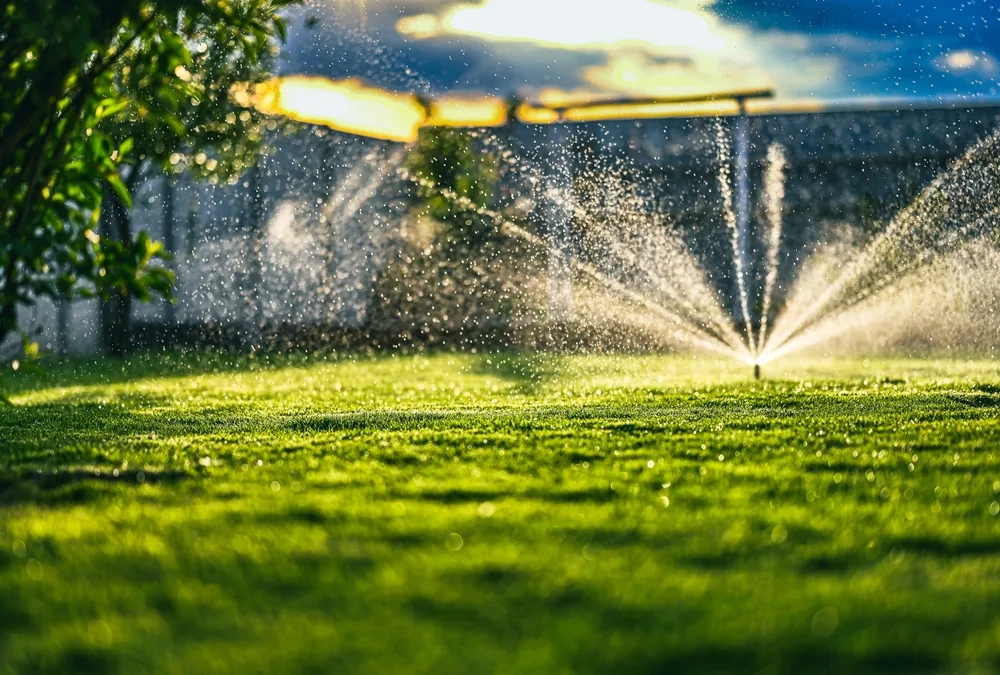
Standard irrigation systems installed in inland Florida use brass fittings, aluminum valve bodies, and basic spray heads — components that hold up fine away from the coast but corrode noticeably within 3–5 years in Gulf salt-air environments. Rotations stick, valves fail to close, and heads develop pinhole corrosion that wastes water and undetected dry spots kill turf. We specify marine-compatible components and program run cycles matched to Englewood's sandy soil infiltration rate from the first install. Managing an HOA, plaza or rental property? See our commercial irrigation installation and repair in Englewood.
Irrigation in Englewood, FL — new installs, irrigation system upgrades, and sprinkler repair on salt-corroded heads and valves. Smart irrigation controllers come standard on every system we design here.
Salt Corrosion Timeline
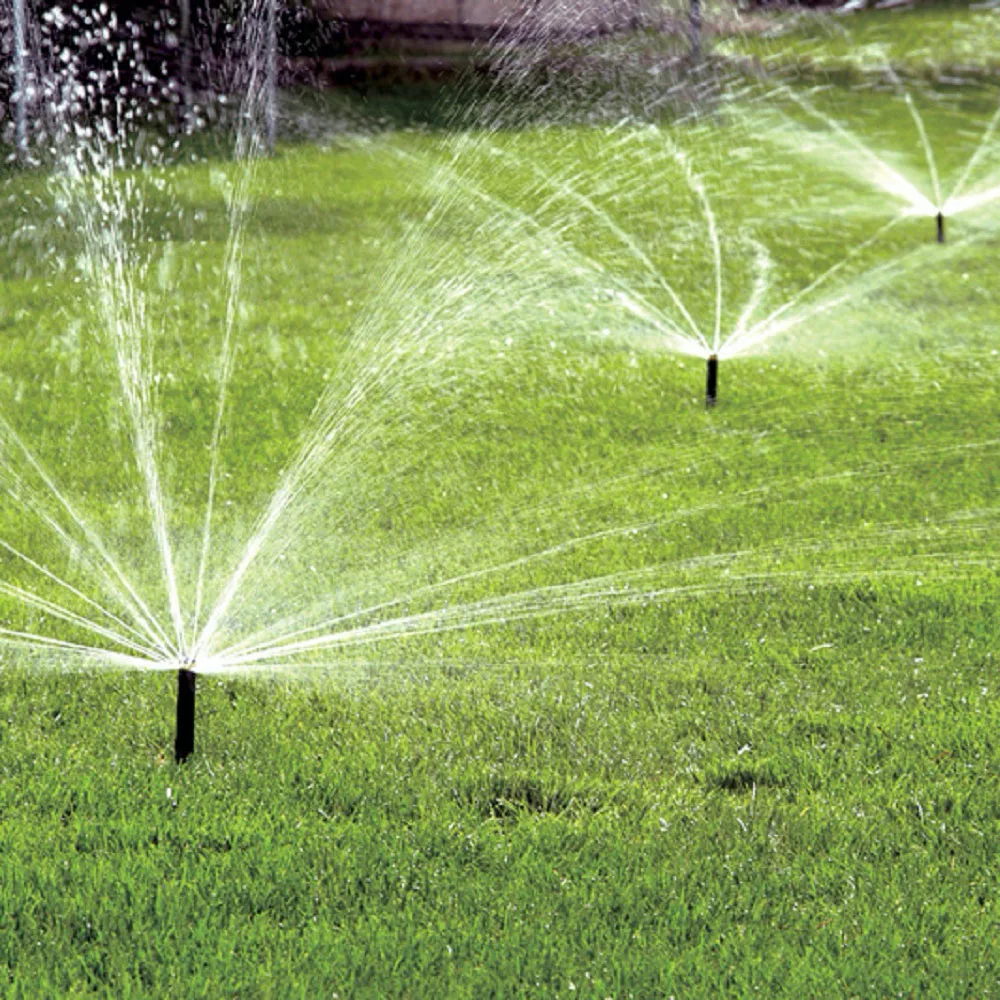
Brass fittings and aluminum valve boxes exposed to Gulf salt air in Englewood show visible corrosion within 3–5 years. PVC-bodied valves and stainless or polymer fittings last significantly longer in this environment.
Sandy Soil Cycle Timing
Englewood's coastal sandy soil has an infiltration rate of 3–6 inches per hour — water moves through it almost immediately. Short, frequent cycles (6–8 minutes every other day) keep the root zone moist without runoff; long single cycles produce runoff before the full volume absorbs.
Charlotte County Watering Rules
Charlotte County restricts irrigation to 2 days per week year-round. Rotonda West adds community-specific day assignments. Systems must be programmed within these rules to avoid fines — we set your controller correctly at install.
Seasonal Rainfall Swing
Englewood gets 52 inches of rain per year but most falls June–September. Smart controllers that use local ET data automatically reduce run time during the rainy season and increase it in the dry season — required for proper turf care on sandy soil with no moisture reserve.
Project Record
Irrigation Jobs My Crew Has Done in Englewood
Real projects from real neighborhoods — I was on every one of these. Click any file to see the full record: materials, scope, timeline, and outcome.
Englewood, FL
Location
Englewood, FL
Material / Scope
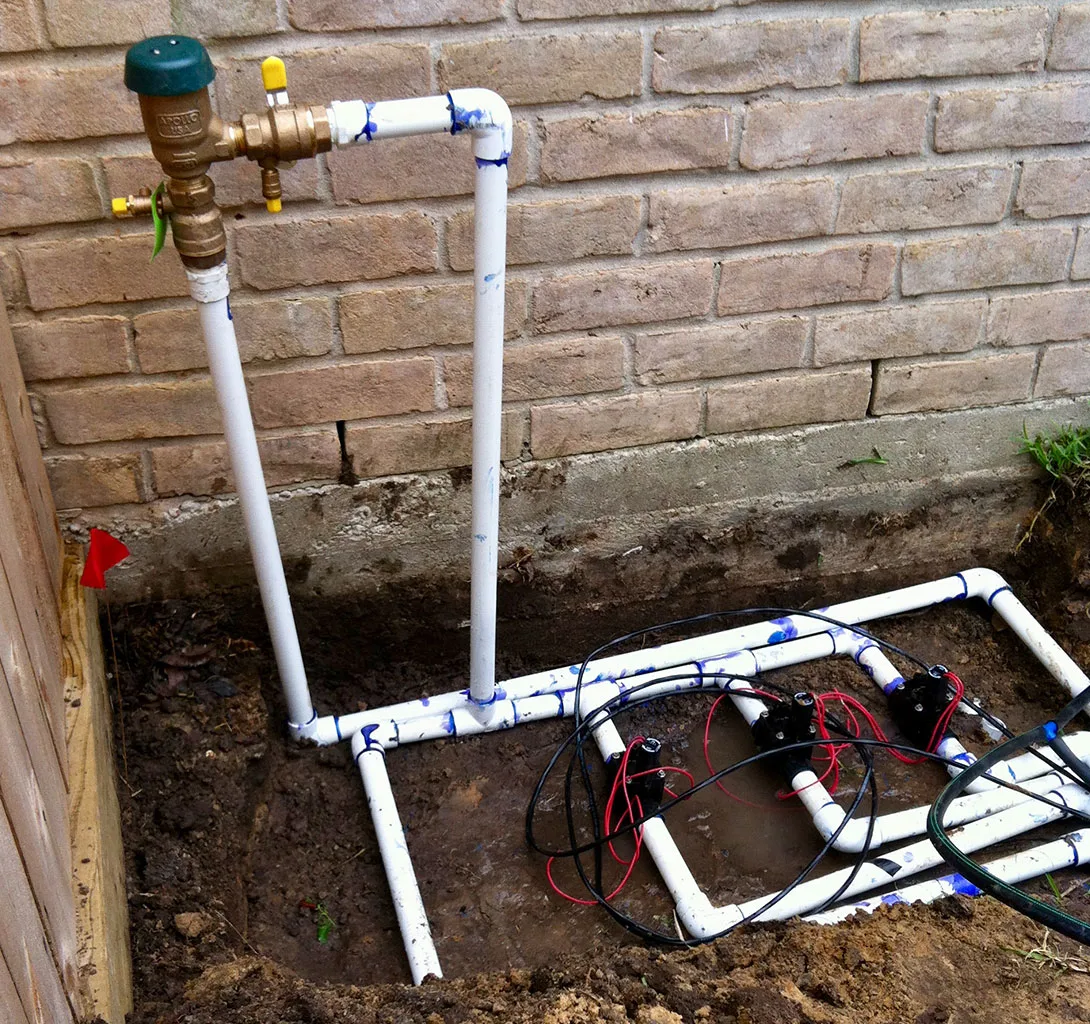
4-zone irrigation system, zone controller, heads, lateral lines
Total Area
Full 4-zone irrigation install — front, rear, and side yards
Timeline
1 day
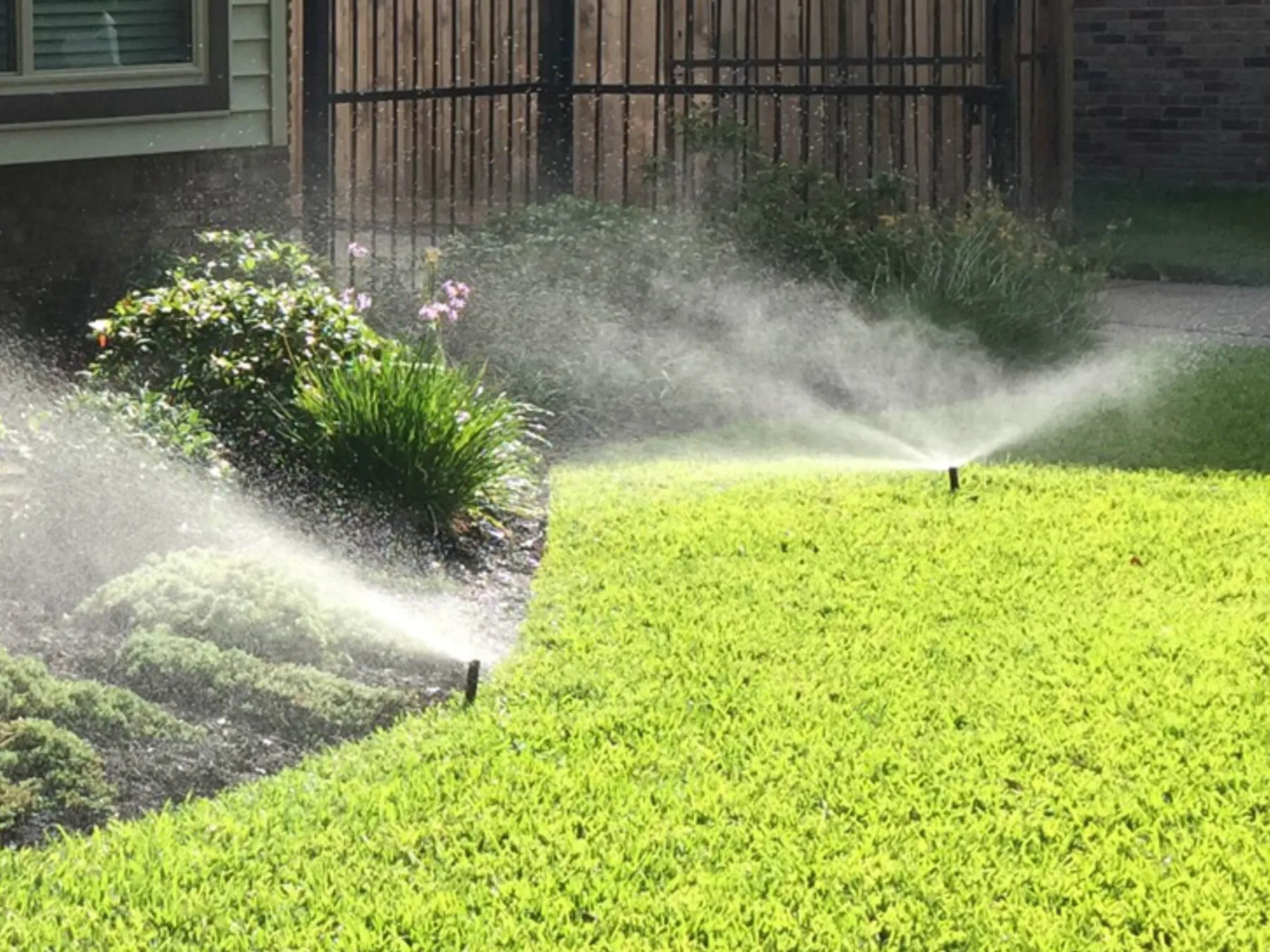
The property had no irrigation. In Englewood's coastal sandy soil, hand-watering can't keep up with the drainage rate during dry season — the soil dries out within hours of watering and plants begin showing stress within days. We installed a 4-zone system covering the full property: separate zones for turf and plant beds, each calibrated for the sandy soil's fast infiltration rate. Without consistent irrigation, nothing establishes here regardless of species.
Location
Rotonda West, Englewood, FL
Material / Scope
8 pallets St. Augustine sod, 3,234 sq ft removal, prep and grading
Total Area
Full lawn re-sod — 3,234 sq ft removal and replacement
Timeline
2 days
Existing lawn had declined past recovery — thin coverage, weed infiltration, and grade settling. Before installing new sod we confirmed existing irrigation coverage and corrected two zones that were underlapping at the edges. Re-graded, removed old sod, and installed 8 pallets of St. Augustine. Proper irrigation coverage is what separates a re-sod that lasts from one that thin-out again in a season.
Location
Placida, FL
Material / Scope
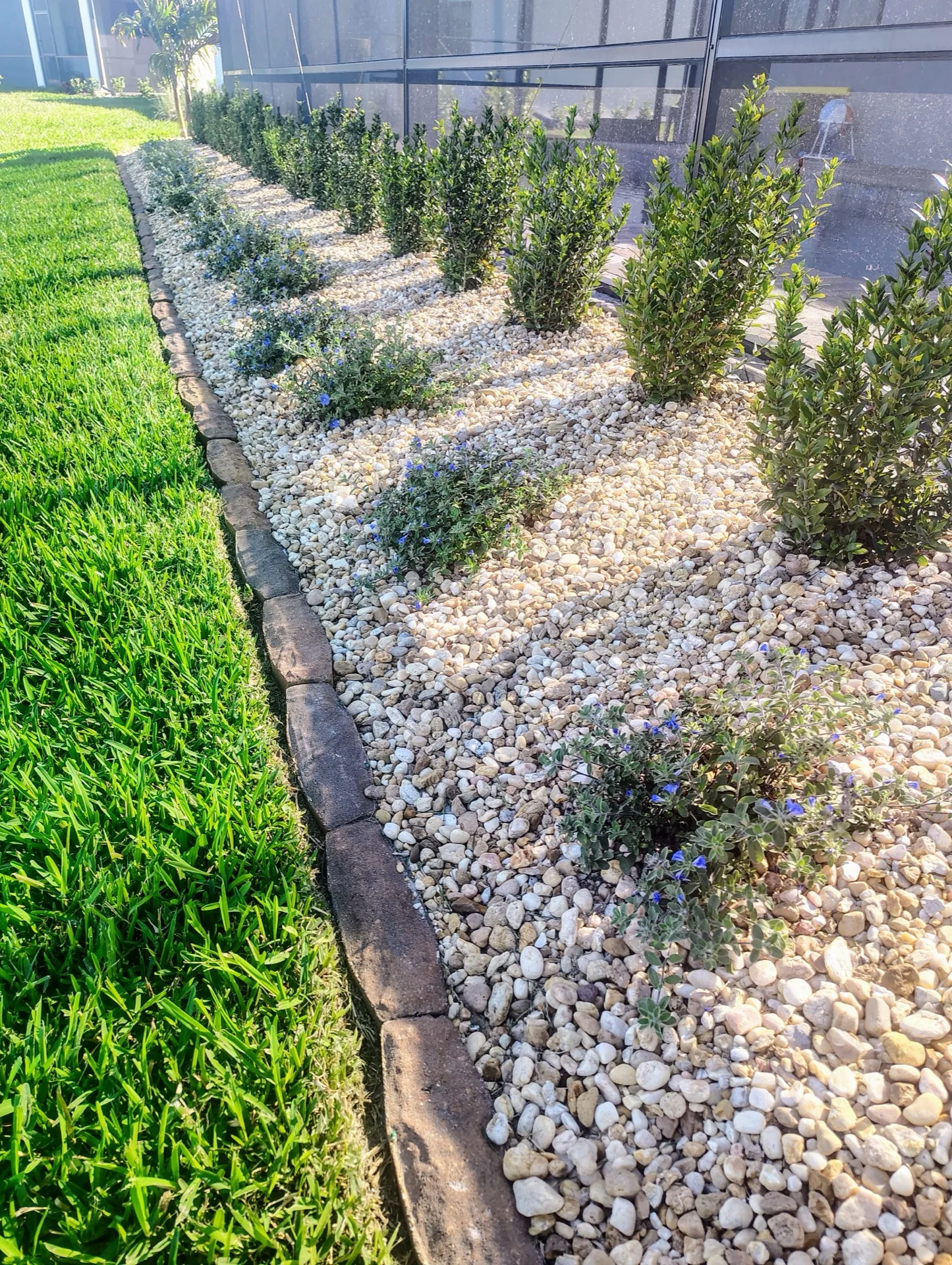
63 Tremron Munich blocks, 1,800 lbs river slick boulders, 30 dwarf ixora, 50 lantana, 6 ti plants, 4 croton petra, 36 podocarpus, 2 pygmy date palms, bougainvillea
Total Area
20-ft retaining wall + full border planting — 50+ plants
Timeline
2 days
Grade change at the rear of the property created an erosion path that undercut the lawn. We built a 20-ft retaining wall using 63 Tremron Munich blocks with a river slick boulder face, then planted the full border: dwarf ixora, lantana, podocarpus, and ti plants for the bed, pygmy date palms for height. Drip irrigation was extended to cover the new border planting before the river rock was set in place.
Location
Englewood, FL
Material / Scope
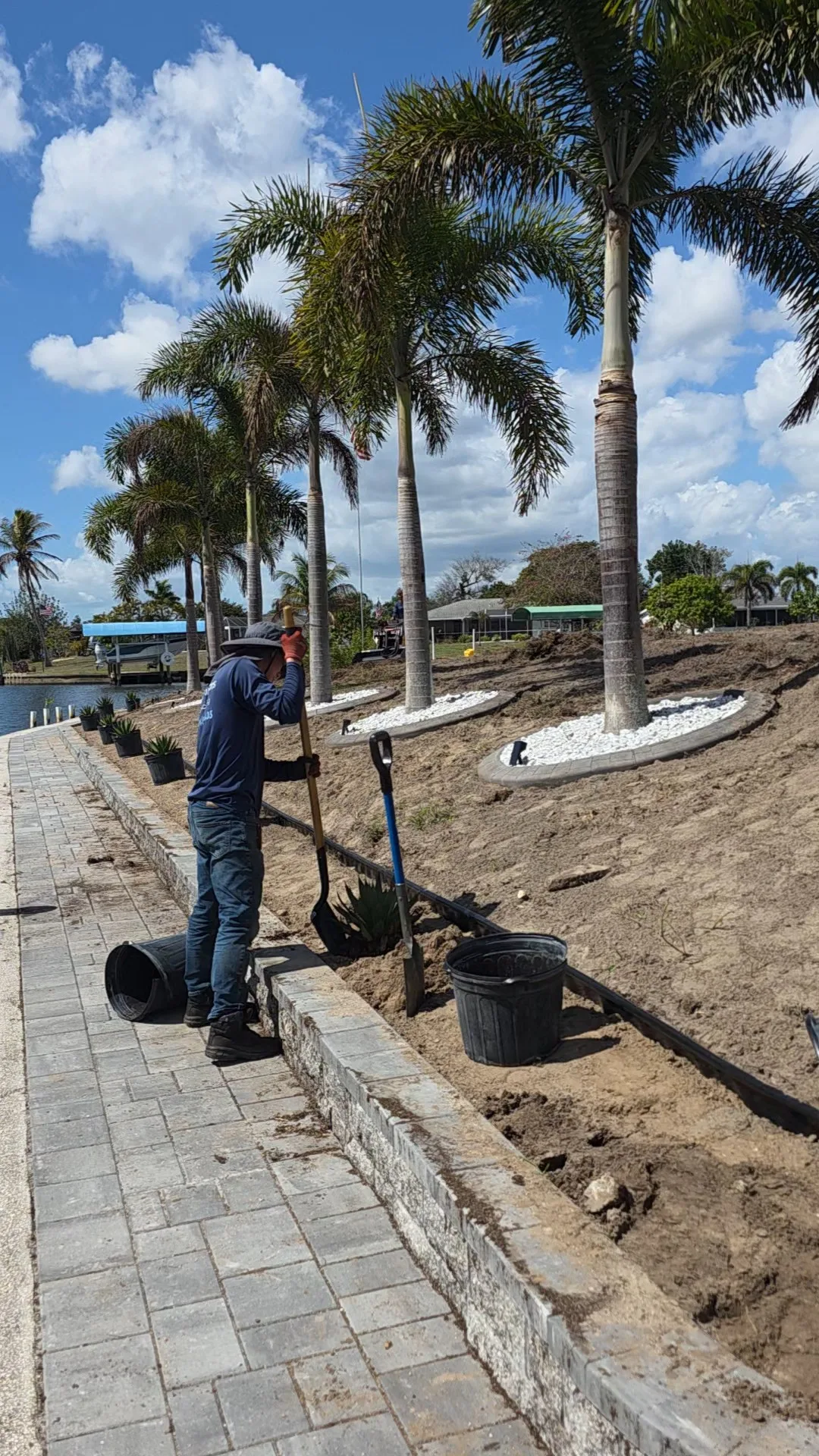
25 areca palms (25-gallon), 100+ linear feet
Total Area
Privacy screen planting — 25 areca palms across 100 linear ft
Timeline
1 day
Twenty-five 25-gallon areca palms planted along the rear property line as a continuous privacy screen. The property had existing irrigation coverage along the fence line — we verified head throw covered the planting zone before installing. Arecas at this size establish quickly with reliable irrigation and begin filling in within one growing season. We adjusted two heads that were underlapping the new planting zone before the plants went in.
How We Work
Irrigation in Englewood: What Actually Happens
I've done this job in Englewood enough times to know what catches people off guard. Here's what actually matters — and what's specific to this area.
Step 01
Zone Design + Head Layout
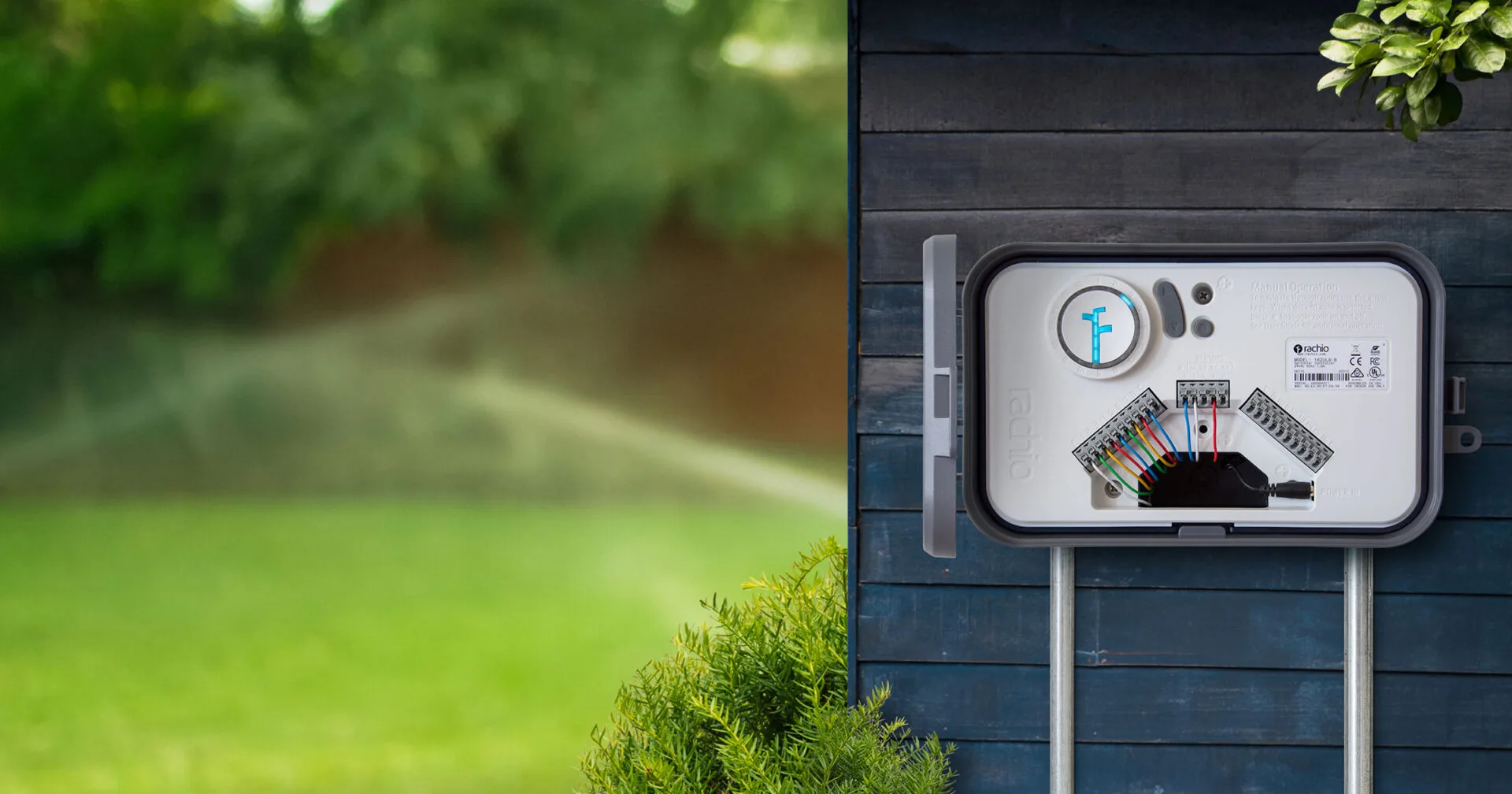
Dennis surveys the property, maps sun/shade zones, and designs the system — zones, head types, spacing, and mainline routing. Smart controller placement and power source are confirmed. The full layout is reviewed with you before a trench is cut.
⏱ Before work begins
Step 02
Trenching + Pipe Runs
Trenches are cut to the correct depth — typically 6–8 inches for lateral lines. Mainline and lateral pipes are run and connected. Sleeves are installed under driveways and walkways. All irrigation lines are flagged above utility lines at crossings.
⏱ Day 1–2
Step 03
Head Installation + Valve + Mainline Connections
Spray heads, rotor heads, or drip emitters are installed at design positions. Valves are set in valve boxes at grade. Backflow preventer is installed and positioned per code. All connections are pressure-tested before backfill.
⏱ Day 2–3
Step 04
Controller Programming + Zone Calibration
Smart controller is wired, connected to rain sensor, and programmed per SWFWMD or local schedule. Each zone is run and heads are adjusted for optimal coverage and throw. Any gaps or overlaps are corrected. Run times are finalized and left on record.
⏱ Final day
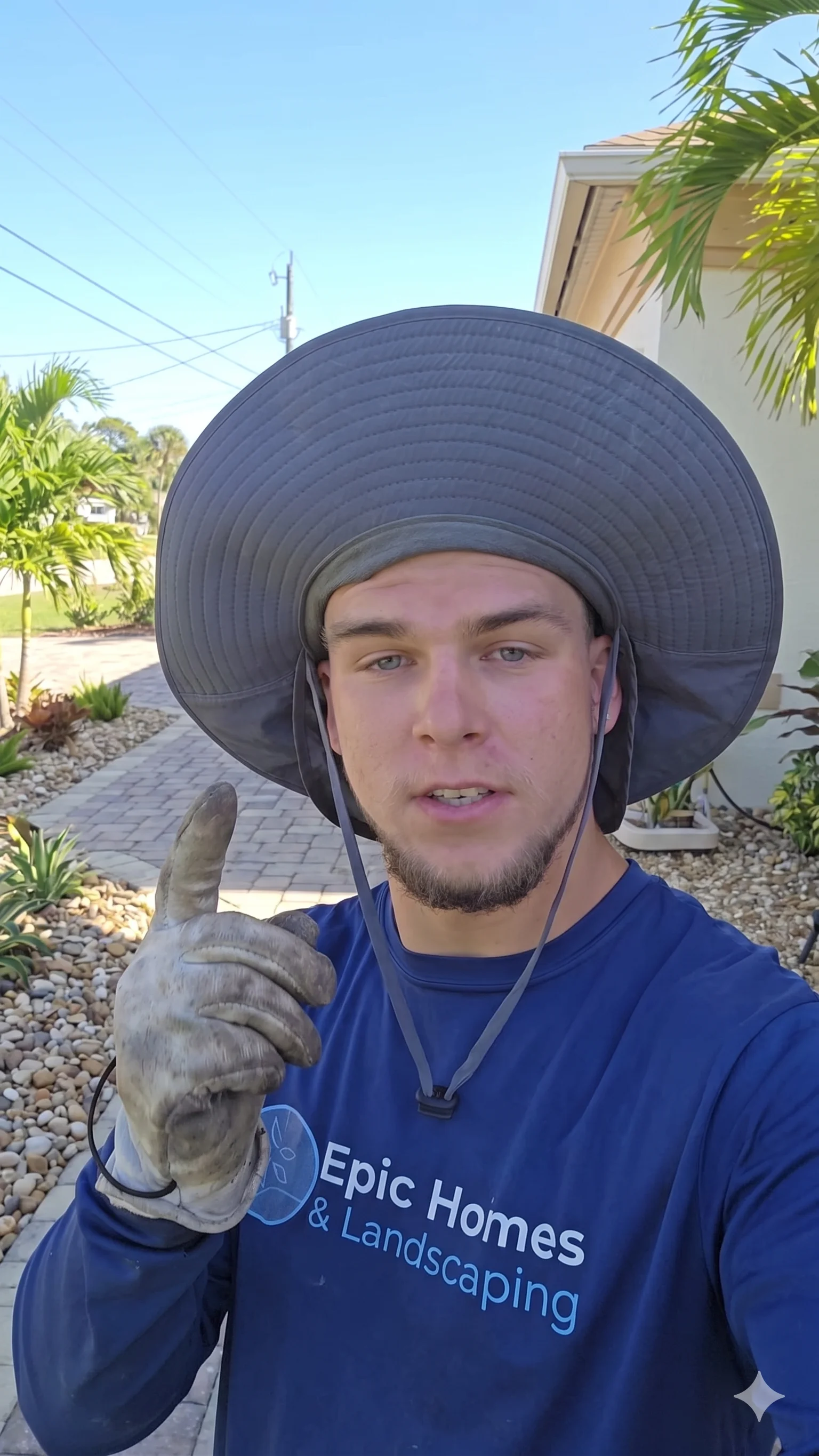
From Dennis P. — Owner, Epic Horizons
"I've done this job in Englewood enough times to know exactly what makes it different here — and what goes wrong when someone skips the steps that matter."
Englewood has specific site conditions that change how Irrigation is done. The soil, the water table, the HOA requirements — these aren't generic considerations. They're the actual job. Every estimate I give factors these in from the start.
Dennis P.
Owner · Licensed Contractor · SW Florida since 2022
Englewood, FL
Transparent Pricing
What Affects the Price in Englewood
Englewood has specific conditions that change what a Irrigation project costs here. Here's what goes into your number.
Component Specification
Corrosion-Resistant Parts Cost More Upfront — Worth It
Standard brass fittings cost less and degrade faster in salt air. Marine-compatible PVC valve bodies and polymer fittings cost 15–25% more per zone. For an Englewood coastal property, this is the right investment — replacing corroded valves every 4–5 years costs far more over time.
Zone Count
More Zones = Better Coverage on Sandy Soil
Sandy soil has no moisture buffer — a zone that covers too large an area will have dry edges before coverage completes. Proper zone sizing for sandy soil requires more zones per square foot of turf than inland clay soils. We size zones to keep run times under 10 minutes per cycle, which matches the sandy infiltration rate.
Water Source
Well Water vs. Municipal — Different System Sizing
Many Englewood properties use a shallow well for irrigation, which limits flow rate and affects how many heads can run per zone. We measure your well's GPM output before designing the system so every zone runs within the well's capacity without pressure loss.
Smart Controller
ET-Based Controllers Pay for Themselves in Englewood
Englewood's wide swing between the dry and rainy season — 52 inches per year concentrated in 4 months — makes ET-based smart controllers more valuable here than in lower-variability markets. A basic timer set for July wastes water in April; a smart controller adjusts automatically and keeps you within the 2-day county rule without thinking about it.
New Englewood irrigation systems typically run $2,200–$5,500.
Zone count and whether you have an existing water connection are the main variables. Tell me your property size and I'll give you a real number.
Questions & Answers
Irrigation in Englewood — Common Questions
More answers
Sprinkler repair englewood
Most sprinkler repairs in Englewood come down to five failures: a broken or sunk head, a cracked lateral pipe, a stuck or leaking valve, a dead controller or wiring fault, and clogged nozzles. Finding which zone and which part failed is most of the job. Epic Horizons Landscaping handles these; call (941) 946-8403.
Local conditions cause most of the damage. Sandy soil washes out around a leak and lets heads sink or tilt. Salt air corrodes solenoid wiring and connectors. Summer lightning kills controllers. Mowers and trimmers break heads all year. Daily summer rain can hide a leak, so a wet spot that stays wet in the dry months is worth checking.
A mixed zone also fails in a way that looks like a repair problem. Heads of different types on one zone water at different rates, so some spots drown while others dry out. These are typical manufacturer figures, so check the nozzle labels in your yard.
| Head type | Typical working pressure | Typical water output |
|---|---|---|
| Spray head | about 30 psi | 1.5 inches per hour or more |
| Rotor | 40 to 45 psi | about 0.5 inch per hour |
| Drip line (regulated) | 20 to 30 psi | measured in gallons per hour per emitter |
Irrigation contractor englewood
An irrigation contractor in Englewood designs, installs, repairs and tunes sprinkler and drip systems for lawns and beds. Epic Horizons Landscaping does that work alongside lawn and landscape care. Ask any contractor for their Florida license and insurance details in writing, and for a zone-by-zone plan, before you agree to anything.
Ask these before you hire anyone:
- Will the plan show each zone, its head type and what it waters?
- Will the system include a working rain shutoff device? Florida law requires one on automatic systems.
- Is a backflow preventer included, and who tests it?
- Who fixes problems that show up after the install, and how do you reach them?
- Will they call Sunshine 811 before digging?
If you live in an HOA, get approval before any trenching or visible equipment goes in. Dennis, the owner, is glad to talk through a property by phone at (941) 946-8403.
Spring sprinkler startup englewood
Florida has no winterizing season, so a spring sprinkler startup here is a checkup, not a pipe blowout. Run each zone, look for broken heads, leaks and clogged nozzles, reset the controller for the dry spring months, and confirm the rain sensor works. Do it before the heat and the rainy season arrive.
Spring is when your system works hardest. April and May are usually the driest stretch in Southwest Florida, and your lawn depends on the sprinklers then. A zone that failed quietly over the winter shows up as a brown patch within a couple of weeks.
- Run every zone by hand and watch each head pop up, spray evenly and retract.
- Look for geysers, soggy spots and heads that sit below the grass line.
- Clean or replace clogged nozzles. Sandy soil sends grit into the lines.
- Check the controller clock, the backup battery and the saved schedule.
- Test the rain sensor, and look over the backflow device for cracks.
Rare hard freezes can crack above-ground backflow parts, so look at those first after a cold winter.
Irrigation system repair englewood
The cost of irrigation system repair depends on what failed, not on lawn size. A head swap is small. A cracked main line, a failed valve or a fried controller means more parts and more digging. We find the fault first, then give you the number. Call (941) 946-8403 to start.
The symptom usually points to the cause. Salt air eats the wire splices that feed valves, summer lightning travels down those same wires into the controller, and sandy soil shifts enough to crack pipe at fittings. Rain can mask a leak for months, so a high water bill in a wet summer is worth investigating.
| What you see | Likely cause | Repair scale |
|---|---|---|
| One zone will not start | Bad solenoid, wire break or valve | Small to medium |
| Geyser at one head | Broken head or riser | Small |
| Soggy low spot, weak pressure elsewhere | Cracked lateral or main line | Medium, needs digging |
| Whole system dead | Controller, power or lightning damage | Varies |
| Dry patches while water runs | Clogged nozzles or sunk heads | Small |
Irrigation maintenance englewood
Irrigation maintenance in Englewood means checking every zone a few times a year: spray pattern, head height, leaks, clogged nozzles, controller schedule, rain sensor and backflow device. Reset the schedule at each season change, since lawns need far less water in summer rain than in the spring dry stretch. Water only on your area's allowed days.
Southwest Florida Water Management District rules limit lawn watering to two days a week. The usual schedule is below. Water-shortage orders and local ordinances can change it, so confirm with your utility or the District, especially if you use a well or reclaimed water.
| Property | Allowed days | Allowed hours |
|---|---|---|
| Odd-numbered or no street address | Wednesday and Saturday | Before 8 a.m. or after 6 p.m. |
| Even-numbered address | Thursday and Sunday | Before 8 a.m. or after 6 p.m. |
| Non-residential | Tuesday and Friday | Before 8 a.m. or after 6 p.m. |
A controller still set to the spring schedule in July wastes water on a lawn that rain is already feeding. Sandy soil drains fast, so run times should be set by testing each zone, not by guessing.
Sprinkler company englewood
Epic Horizons Landscaping is a sprinkler company serving Englewood, Florida. We install, repair and maintain lawn and bed irrigation, including spray, rotor and drip zones. Call (941) 946-8403 to describe the problem or the property, and we will tell you whether it needs a repair visit, a tune-up or a new layout.
Because we also do landscape work, we look at how the water meets the plants. Turf, shrubs and tropical beds need different amounts, so they should sit on separate zones. Sandy soil and salt air shape what we recommend for each.
Before any visit, it helps to know the following:
- Which zones misbehave, and what they do.
- Whether the water comes from the city, reclaimed supply or a well.
- Any HOA rules about digging or visible equipment.
Sprinkler installation in englewood
Sprinkler installation in Englewood is priced by the number of zones, the pipe run, the head types and how much digging the yard needs, so no honest flat number exists before someone walks the property. A plan splits the yard into zones by sun, soil and plant type. Call (941) 946-8403 for a walkthrough.
A few Florida details shape every install. State law requires a working rain shutoff device on automatic systems. A backflow preventer protects the drinking water supply. Sunshine 811 must be called for locates before digging, at least two full business days ahead. Your watering days are limited by district rules, so the controller should be set to match them from day one.
Sandy soil is easy to trench but trenches collapse, and sand holds little water. Lawns and plant beds should be on separate zones, with beds on drip. If a well or reclaimed supply feeds the system, the pump, filtration and pressure all change the design. In an HOA, get approval before work starts.
Sprinkler repair in englewood
If a sprinkler zone won't run, sprays a geyser, floods one spot or leaves dry patches, it needs repair, and a leak should not wait because it wastes water and can wash out sandy soil under the lawn. Shut the zone off at the controller, then call (941) 946-8403.
A few quick checks can save a visit. Run the zone by hand from the controller. Make sure the controller has power and a good backup battery. Check that the rain sensor is not stuck in the wet position after a storm. Look for a head hit by a mower, or a nozzle packed with sand.
- Nothing runs at all: check power, the controller display and the rain sensor first.
- One zone dead: likely a valve or wire fault, which needs testing.
- Water pooling or pressure low: likely a broken pipe, so shut the zone off.
Do not dig around a leak yourself without a locate if you are unsure what runs underground.
Tropical irrigation englewood fl
We are Epic Horizons Landscaping, not a company named Tropical Irrigation. If you searched for a business by that name, contact it directly. If you want irrigation built for Southwest Florida's tropical climate, with sandy soil, salt air and heavy summer rain, we install and repair it. Call (941) 946-8403.
The climate changes how a system should work. Englewood gets roughly 50 inches of rain a year or more, most of it from June through September, so a controller on a fixed schedule overwaters all summer. A rain sensor, which Florida law requires, and seasonal schedule changes handle most of that.
Tropical beds with palms, bromeliads and shrubs do better on drip with their own zone than on lawn sprays. Salt air attacks exposed metal and wire splices, so connectors and parts need to suit the setting. Sandy soil needs shorter, tested run times since water moves through it quickly.
Irrigation companies englewood fl
Epic Horizons Landscaping is one of the irrigation companies serving Englewood, FL. When comparing any of them, check five things: written scope, proof of Florida licensing and insurance, how they handle repairs after install, whether they set zones by plant and sun, and whether they set up the rain sensor and legal watering days.
Ask each company the same questions and compare the answers, not just the totals. Two quotes with the same total can cover very different work.
- Does the quote list zones, head types and pipe type?
- Is the backflow device included, and is testing covered?
- Who do you call when a zone fails in August?
- Do they handle your HOA approval paperwork or leave it to you?
- Do they explain the controller schedule so you can adjust it?
You can reach us at (941) 946-8403 with any of those questions, whether or not you hire us.
Get Started
Free Irrigation Quote in Englewood
Irrigation in other cities
More we do in Englewood