Local Expertise
Englewood Erosion Is a Coastal Sand Problem, Not a Slope Problem.
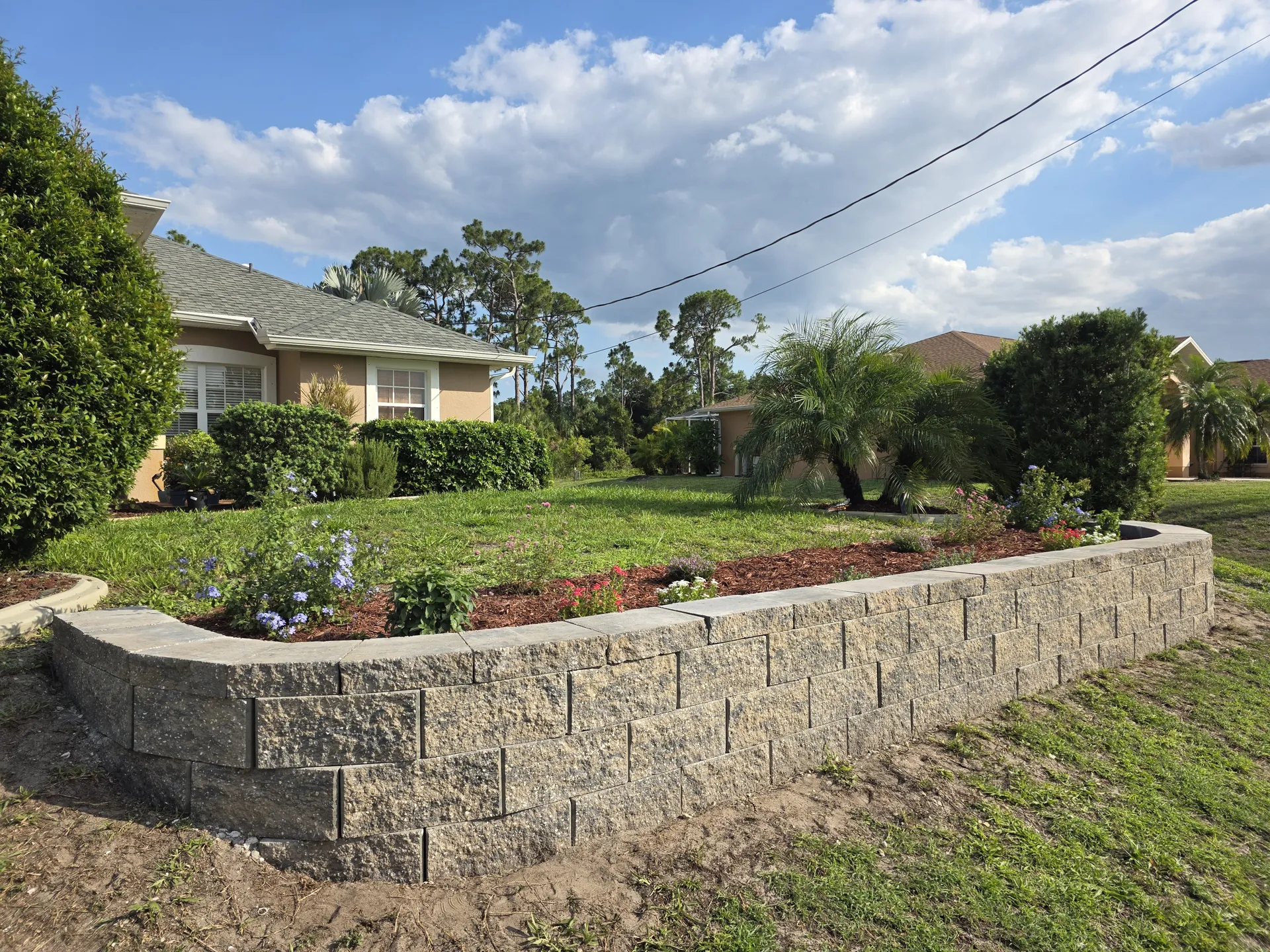
Most retaining wall applications in Englewood aren't dealing with steep slopes — they're dealing with loose coastal sand that migrates laterally with water movement, undermining beds, fences, and property edges. Near Lemon Bay and the canal network, seasonal water-table fluctuation accelerates this migration, and canal bank erosion takes the property line a few inches at a time. Walls here need to be properly backfilled, drained, and built with materials that don't degrade in salt-air and wet/dry cycling.
Sand Migration vs. Slope Erosion
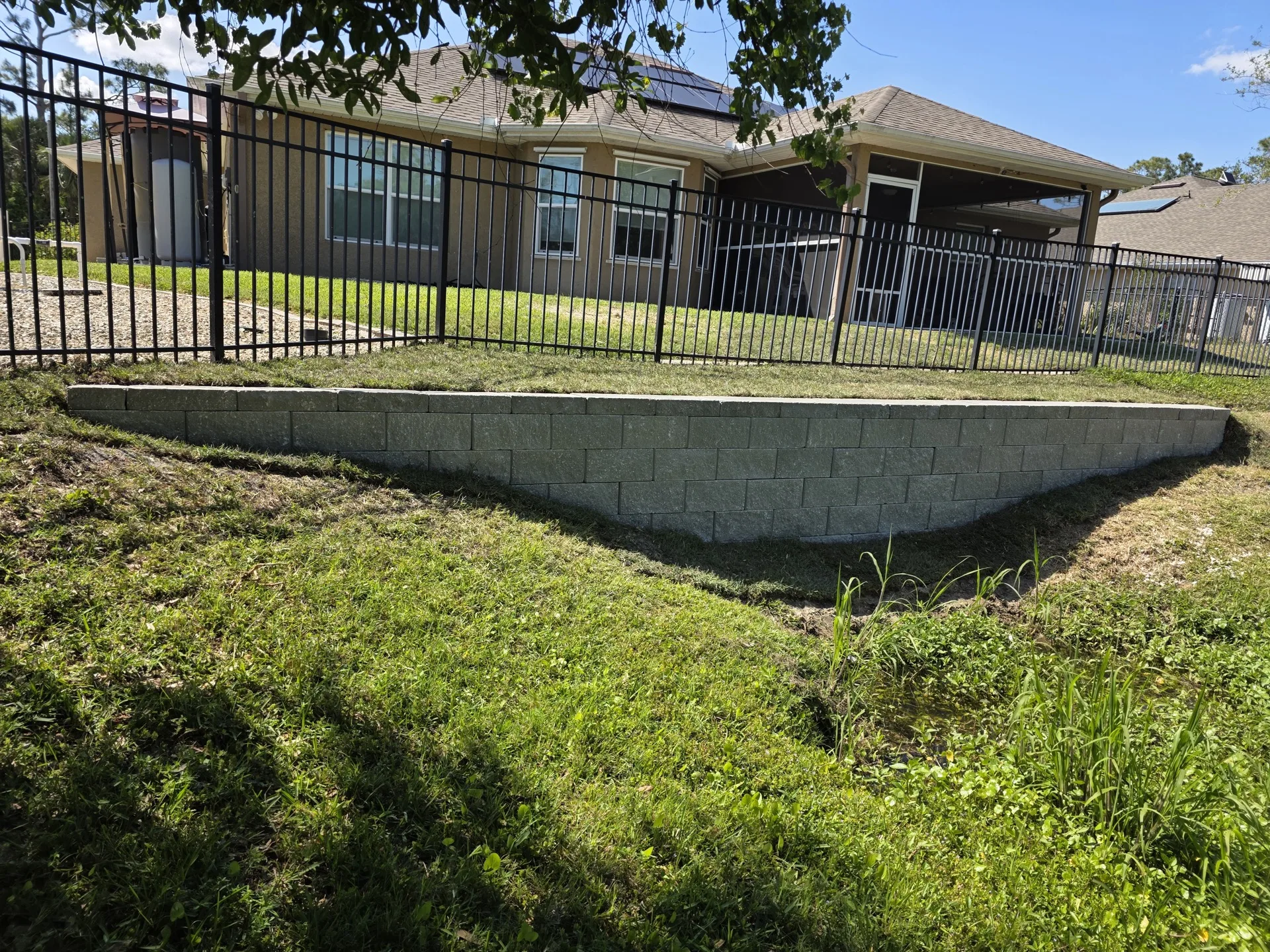
Unlike clay or mixed-soil markets where retaining walls hold back slopes, most Englewood applications hold back laterally migrating coastal sand. The design parameters — drainage behind the wall, base footing depth, block weight — differ meaningfully from slope-retention applications.
Lemon Bay Water Table
Properties within half a mile of Lemon Bay experience a seasonally rising water table that can create hydrostatic pressure behind improperly drained walls. Drainage aggregate behind the wall and weep holes in the base course are required — not optional.
Salt-Air Block Requirements
Cap adhesive, hardware, and any metal components used in retaining wall construction in Englewood must be rated for salt-air environments. Standard construction adhesive delaminates cap blocks within 2–3 coastal seasons.
Charlotte County Permit Rules
Retaining walls above a certain height require a building permit in Charlotte County, and canal-adjacent walls can require review regardless of height. Thresholds vary — check with the county. We assess permit requirements for every wall and pull permits when required.
Project Record
Retaining Walls Jobs My Crew Has Done in Englewood
Real projects from real neighborhoods — I was on every one of these. Click any file to see the full record: materials, scope, timeline, and outcome.
Englewood, FL
Location
Placida, FL
Material / Scope
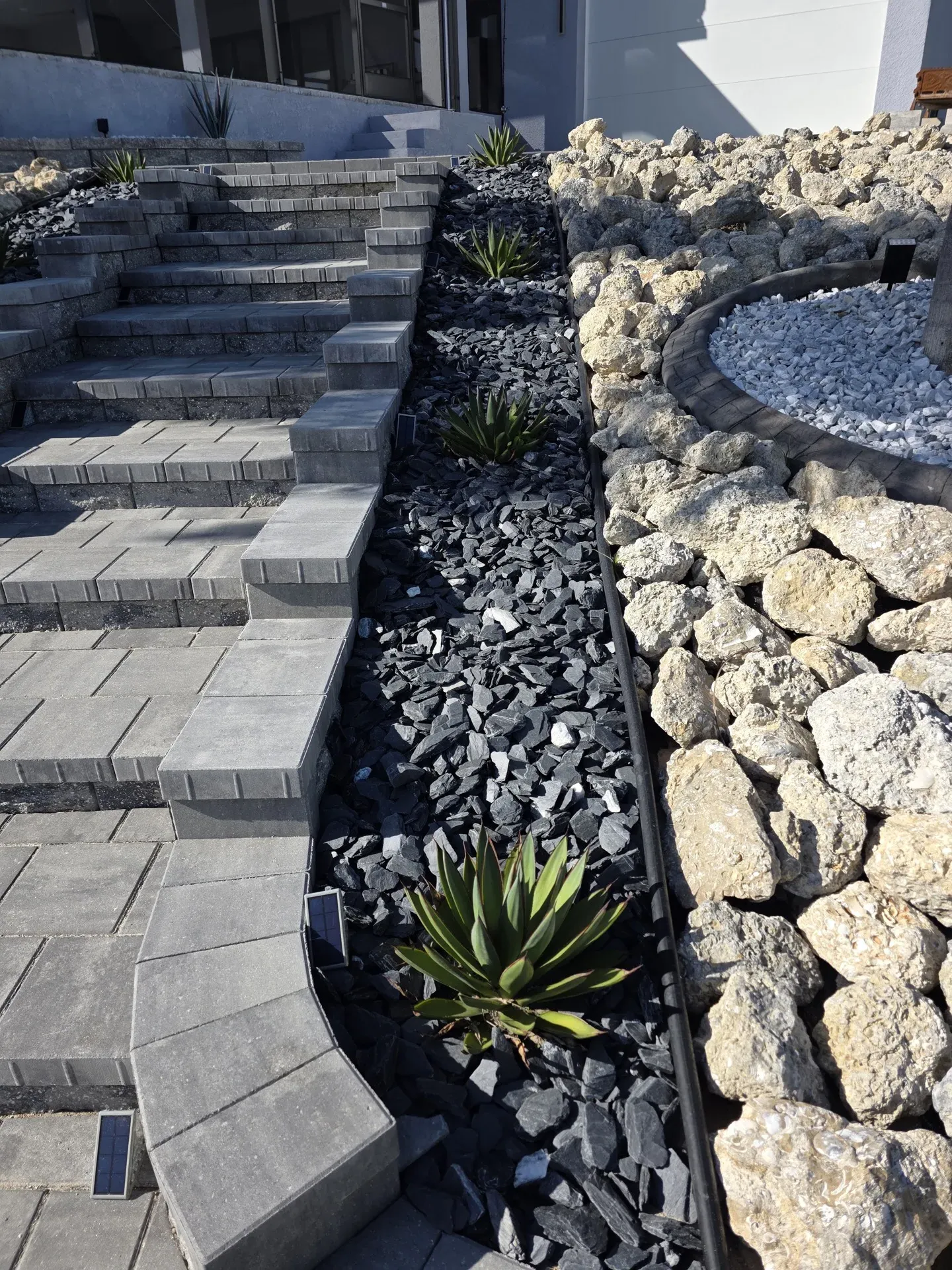
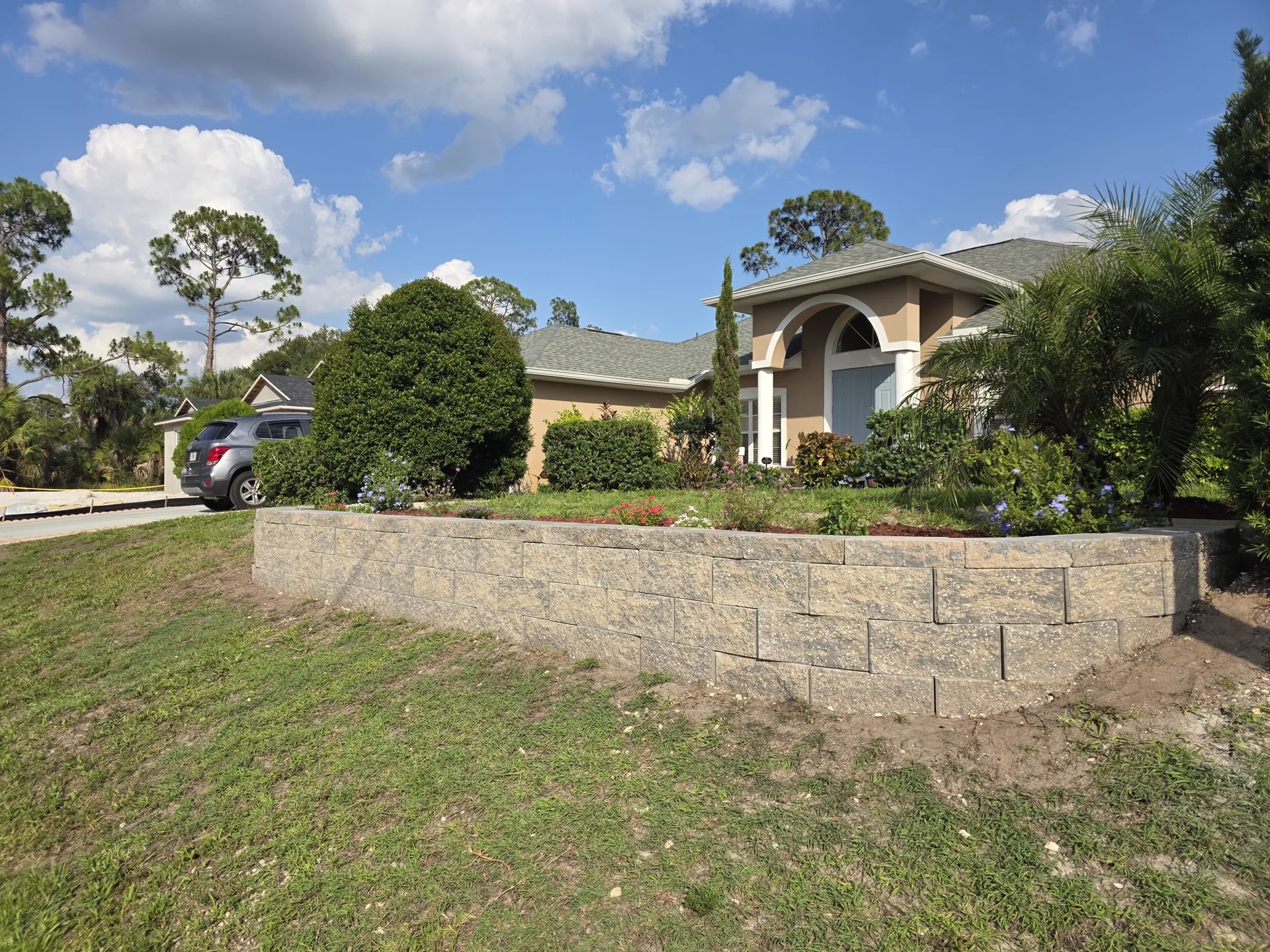
63 Tremron Munich blocks, 1,800 lbs river slick boulders, 30 dwarf ixora, 50 lantana, 6 ti plants, 4 croton petra, 36 podocarpus, 2 pygmy date palms, bougainvillea
Total Area
20-ft retaining wall (63 Tremron Munich blocks) + 1,800 lbs river slick boulders + 50+ plants
Timeline
2 days
Grade change at the rear of the property had created an erosion path that undercut the lawn and created pooling at the rear boundary. We built a 20-ft retaining wall using 63 Tremron Munich blocks with 1,800 lbs of river slick boulders integrated at the base for mass and visual weight. The full border was planted above and below the wall — dwarf ixora, lantana, podocarpus, and ti plants for the bed, pygmy date palms for height anchoring, bougainvillea cascading down the wall face.
Location
Rotonda West, Englewood, FL
Material / Scope
8 pallets St. Augustine sod, 3,234 sq ft removal, regrading
Total Area
3,234 sq ft sod removal + 8 pallets St. Augustine + prep and grading
Timeline
2 days
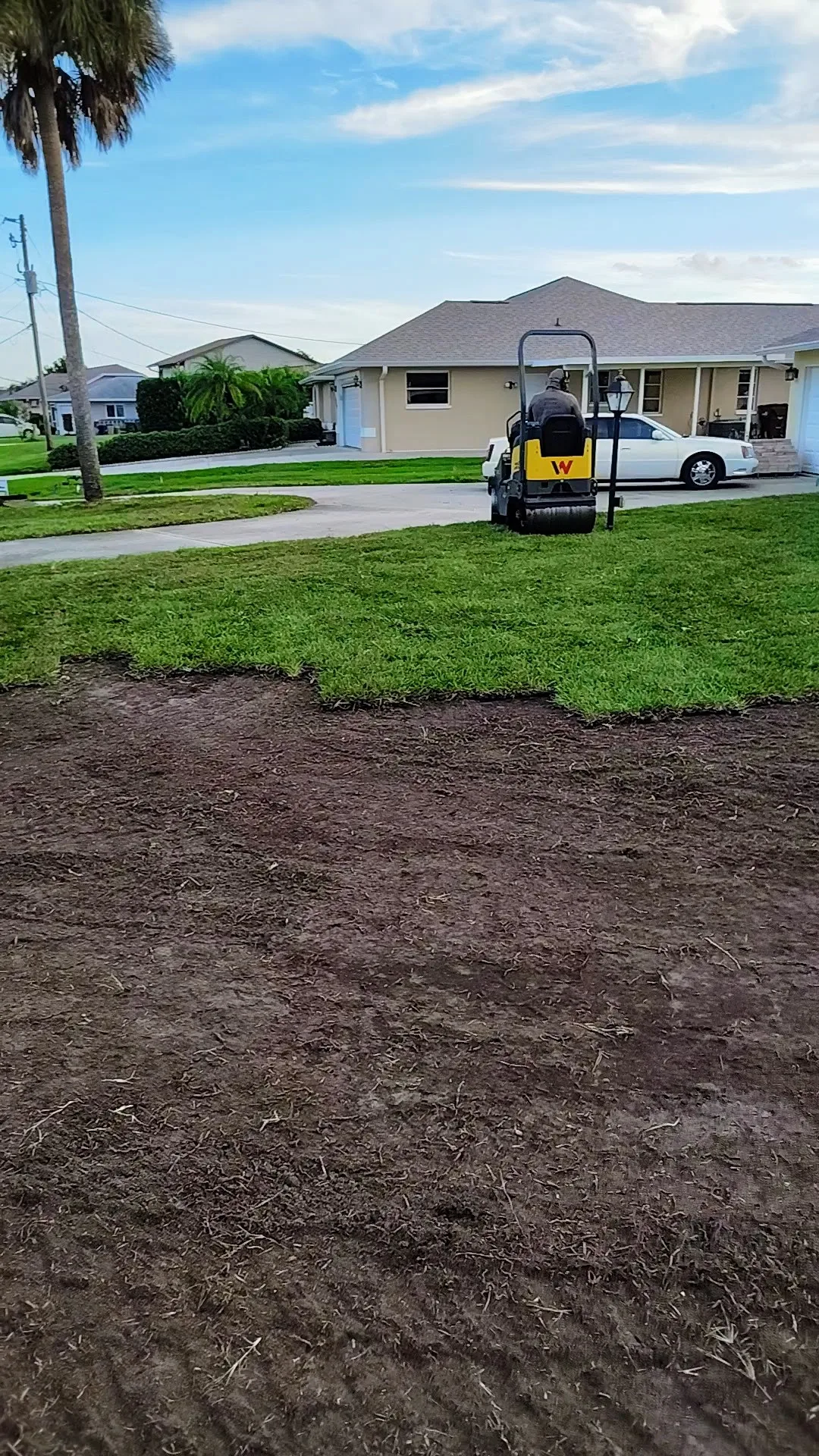
Lawn had declined past recovery — thin, weedy, and uneven grade from settling. We removed 3,234 sq ft of old material, regraded the surface to restore positive drainage away from the house, and installed 8 pallets of St. Augustine. The grade correction is the part that makes the re-sod last — without it the new sod inherits the same drainage problem that contributed to the decline of the old lawn.
Location
Englewood, FL
Material / Scope
4-zone irrigation system, controller, heads, lateral lines
Total Area
Full 4-zone irrigation install — full property coverage
Timeline
1 day
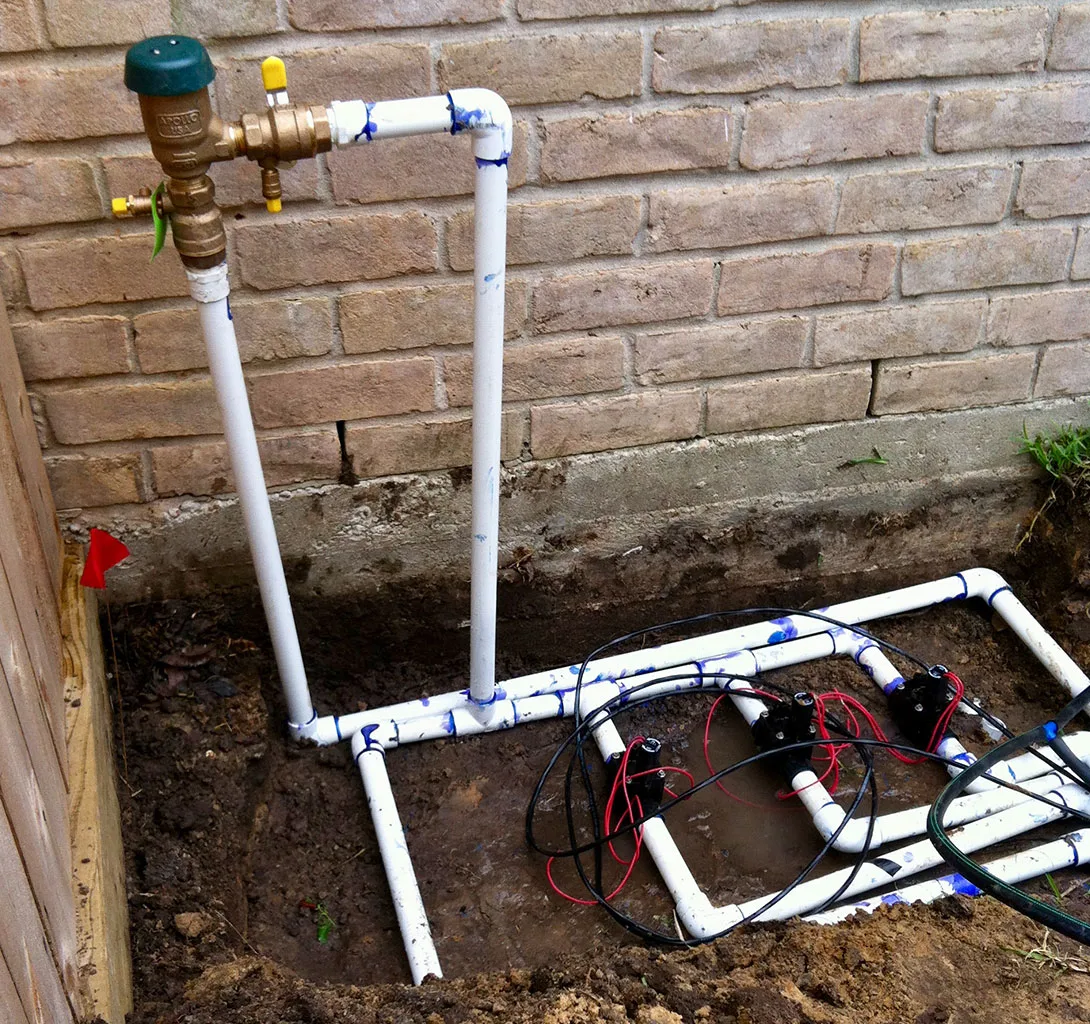
Irrigation install for a property with no coverage. In Englewood's sandy soil, irrigation is the first thing that needs to be right before any grade work or planting can hold long-term — the soil has almost no moisture reserve and plants fail quickly without consistent water. We installed a 4-zone system covering the full property and calibrated run times for the sandy soil's fast infiltration rate.
Location
Englewood, FL
Material / Scope
25 areca palms (25-gallon specimens), 100+ linear feet
Total Area
25 areca palms (25-gallon) — 100+ linear feet
Timeline
1 day
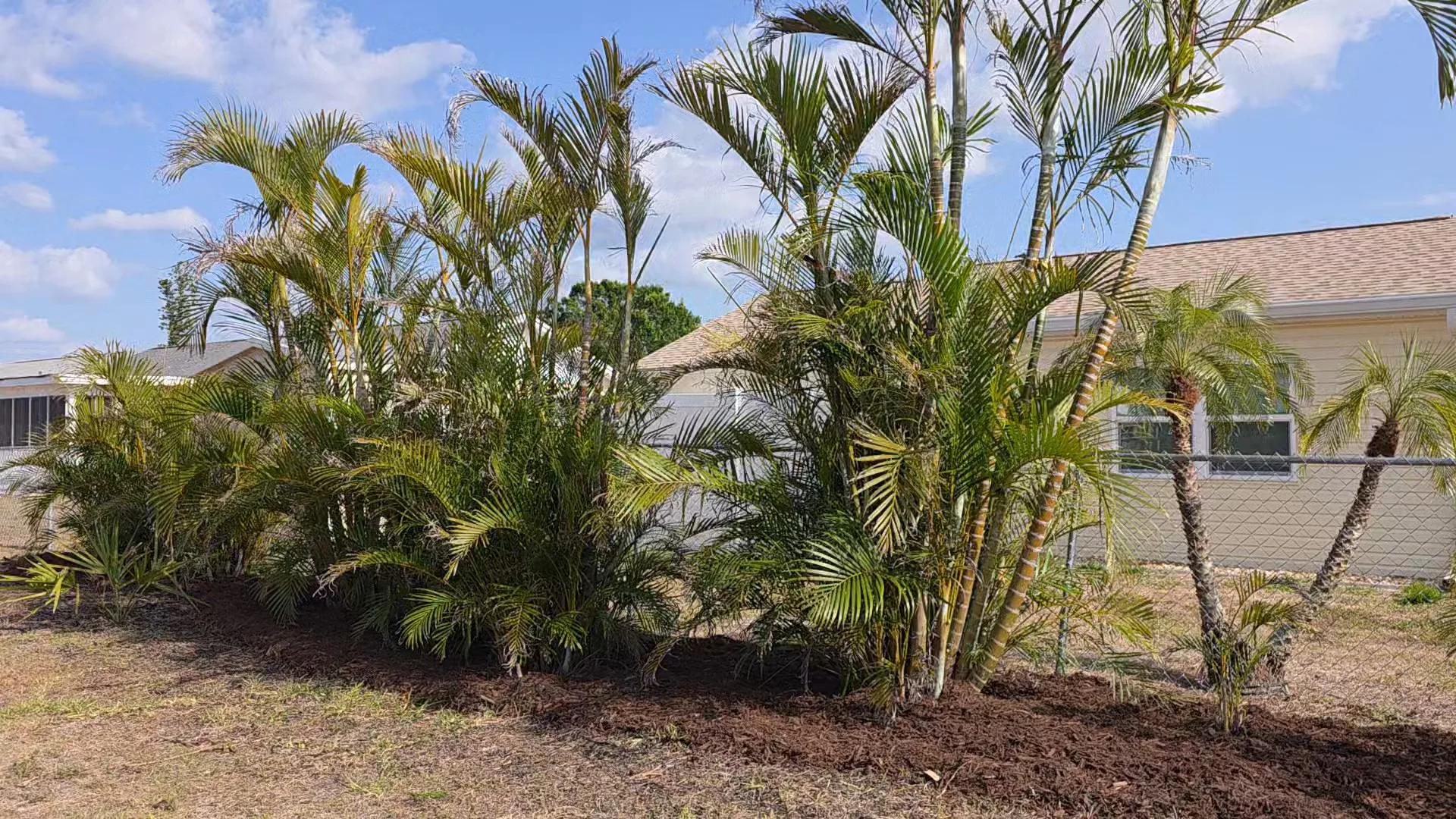
Privacy screen planting — 25 twenty-five-gallon areca palms across 100+ linear feet along the rear property line. Arecas at 25 gallons arrive at 8–10 ft tall and close canopy within one season. Existing irrigation coverage was verified and head throw adjusted before planting to ensure every palm in the row had consistent water access.
How We Work
Retaining Walls in Englewood: What Actually Happens
I've done this job in Englewood enough times to know what catches people off guard. Here's what actually matters — and what's specific to this area.
Step 01
Engineering Assessment + Permit Check
Dennis assesses the site — slope, soil type, surcharge loads, and drainage direction. Above a certain height a wall needs an engineer stamp and a building permit, and that threshold varies by county and by site — check with your county rather than planning around a number. We confirm requirements with the local authority before any design is finalized.
⏱ Before work begins
Step 02
Base Excavation + Foundation Course
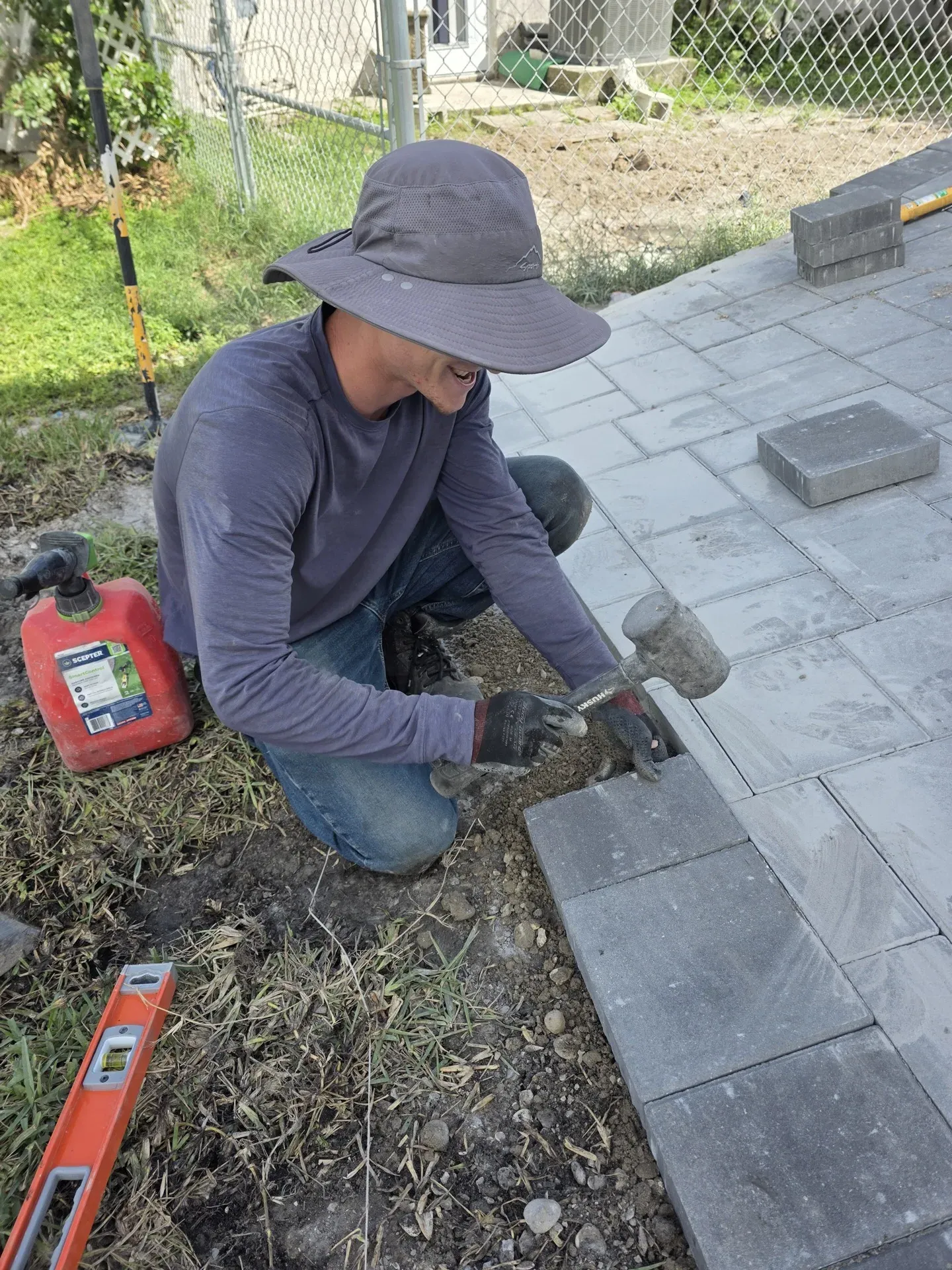
The trench is excavated to the correct footing depth — at minimum, one course buried below grade plus a gravel footing bed. The base course of block is set and leveled precisely. Level and batter are confirmed before the second course is set.
⏱ Day 1
Step 03
Wall Build + Block-by-Block Level Check
Courses are stacked with the correct batter — each course set back slightly toward the slope. Every third course is leveled across the full wall length. Geogrid is installed at specified intervals for walls over 3 feet. Drainage aggregate is packed behind the wall as courses rise.
⏱ Day 1–3
Step 04
Backfill + Cap Course + Final Grading
Clean fill is backfilled behind the wall in compacted lifts — no large rocks or construction debris. Cap course is set with adhesive and checked for level and overhang. The retained area is graded to drain away from the back of the wall. Disturbed sod or plantings are restored.
⏱ Final day
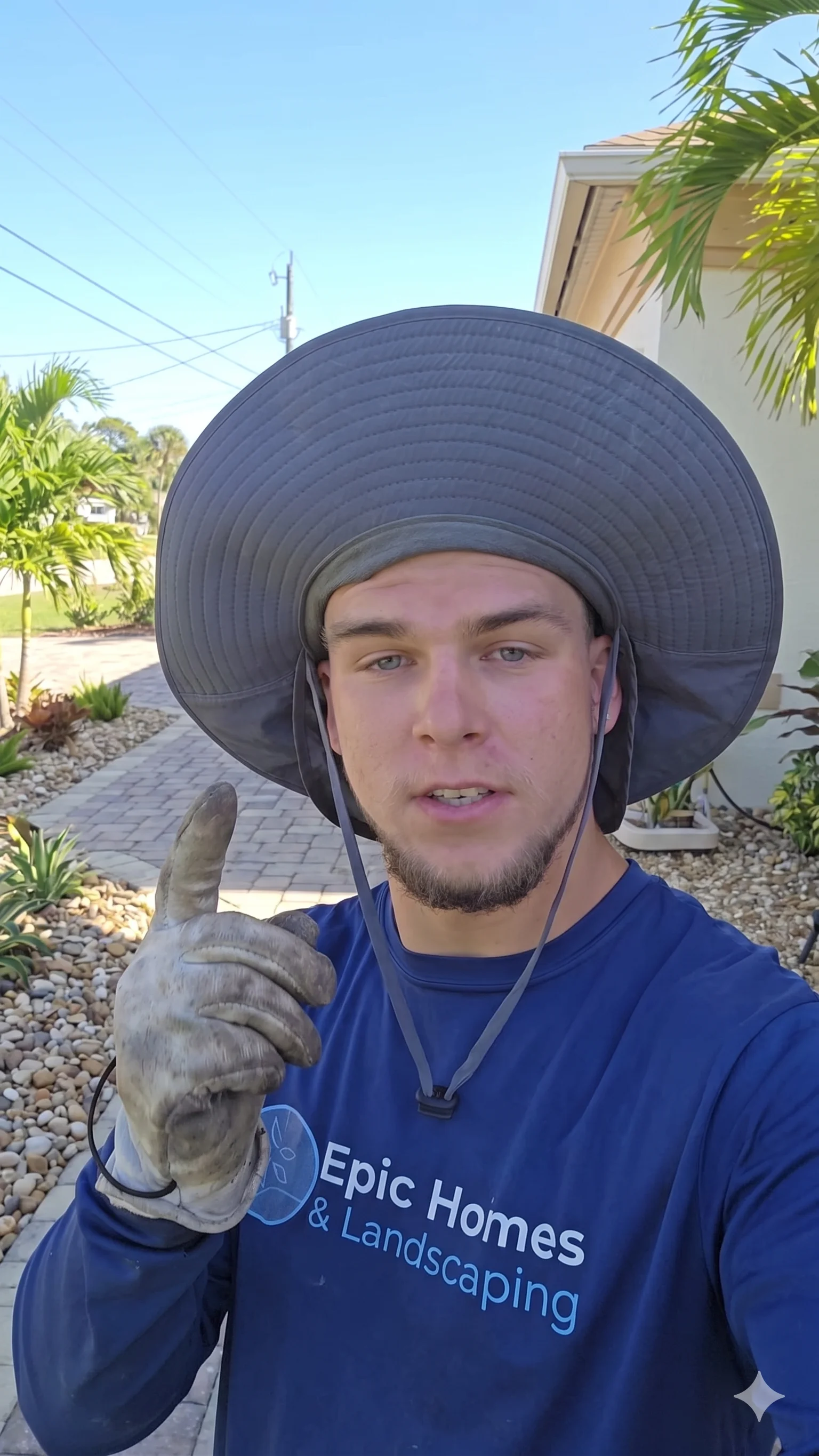
From Dennis P. — Owner, Epic Horizons
"I've done this job in Englewood enough times to know exactly what makes it different here — and what goes wrong when someone skips the steps that matter."
Englewood has specific site conditions that change how Retaining Walls is done. The soil, the water table, the HOA requirements — these aren't generic considerations. They're the actual job. Every estimate I give factors these in from the start.
Dennis P.
Owner · Licensed Contractor · SW Florida since 2022
Englewood, FL
Transparent Pricing
What Affects the Price in Englewood
Englewood has specific conditions that change what a Retaining Walls project costs here. Here's what goes into your number.
Wall Length
Linear Footage Is the Primary Cost Driver
Most Englewood retaining walls are low (2–4 feet) and priced primarily by linear footage. A 40-foot wall costs roughly twice a 20-foot wall, all else equal. We provide linear foot pricing after assessing the specific site conditions.
Drainage Requirement
Walls Near Lemon Bay Need Drainage Behind Them
Walls near Lemon Bay or the canal network require drainage aggregate behind the wall and weep holes in the base course to prevent hydrostatic pressure buildup. This adds material cost but is the difference between a wall that holds for 20 years and one that bows out in year 3.
Material Grade
Salt-Air-Rated Adhesive Is Required
Marine-rated adhesive for cap blocks adds modest material cost but is essential in Englewood's coastal environment. Walls built with standard construction adhesive in this market routinely need cap blocks re-bonded within 3–5 years.
Access
Canal-Adjacent Sites Limit Equipment Access
Canal-side properties in Englewood often have limited equipment access due to fencing, landscaping, or proximity to the water. Wall jobs where block must be moved by hand rather than equipment take longer and cost more in labor. We assess access before quoting.
Englewood retaining wall projects typically run $2,800–$9,500.
Length, height, and proximity to the water are the key variables. Tell me what's eroding and I'll give you a real number.
Questions & Answers
Retaining Walls in Englewood — Common Questions
Get Started
Free Retaining Walls Quote in Englewood
Retaining Walls in other cities
More we do in Englewood