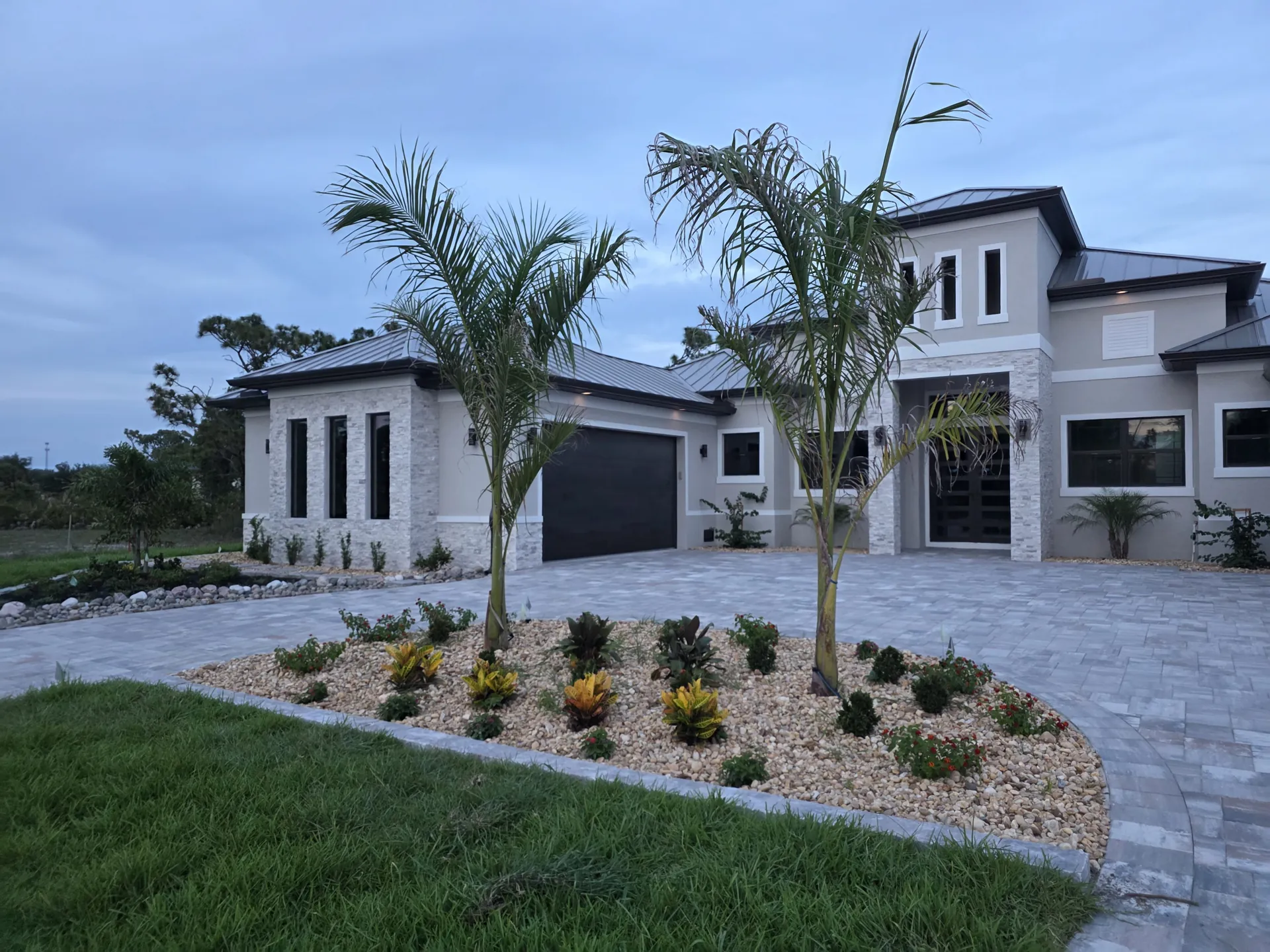
Paver Installation
Driveways, patios, and pool decks — concrete, travertine, and brick installed over properly compacted base for Englewood's soil conditions.
Paver Installation in EnglewoodWhy Englewood Is Different
Englewood yards have specific challenges that generic landscaping companies either miss or ignore. These are the ground-level realities every job here requires planning around.
Englewood sits between Lemon Bay and the Gulf, and the prevailing sea breeze carries salt across the entire coastal area — not just beachfront properties. Homeowners in Englewood Beach, Cape Haze, and even parts of Rotonda West routinely lose standard nursery plants to salt burn within one season, often blaming irrigation or disease when the real culprit is the air.
↳ ✓ We specify salt-tolerant species for every Englewood install: sea grape, silver buttonwood, fakahatchee grass, coontie, and similar proven coastal performers that hold up year after year against the salt load.
A large portion of Englewood properties are on private well water rather than public supply, which means no county irrigation restriction applies — but it also means no external check on how much water is being used. Well-irrigated yards commonly over-water in the rainy season and under-water in the dry season because the schedule is never adjusted, leading to fungal problems in summer and drought stress in spring.
↳ ✓ We install and program smart irrigation controllers on well-fed systems that adjust automatically based on local evapotranspiration data — preventing both the waste of over-watering and the damage of dry-gap stress.
Englewood's coastal sandy soil drains extremely fast and holds almost no nutrients or moisture between waterings. Plants that establish well in Charlotte County's inland organic-mix soil struggle to anchor and feed themselves in Englewood's near-beach substrate. Sod laid on unamended coastal sand often fails to fully root and thins out within a single dry season.
↳ ✓ We amend the top layer before any sod or plant install — adding organic matter and appropriate soil amendments to improve moisture retention and give roots a fighting chance in fast-draining coastal sand.
Englewood faces the Gulf directly and has less landmass shielding it from incoming storms than more inland Charlotte County areas. Properties in Englewood Beach and along Lemon Bay absorb higher wind loads and storm surge risk than their addresses would suggest on a county-wide map. Landscape design here needs to account for exposure — tall canopy trees and weak-rooted hedges become projectiles in a bad storm.
↳ ✓ We recommend low-profile, wind-resistant plant palettes for exposed Englewood properties and can assess existing canopy trees for storm-risk pruning or removal before season.
Coastal sandy environments in Englewood are prime territory for salt-adapted invasive species — air potato, beach naupaka, torpedo grass — that thrive where ornamental plants struggle. Without regular intervention these species colonize beds and turf edges faster than most homeowners expect, especially on lots that sit near natural coastal habitat.
↳ ✓ We identify and remove invasives as part of every bed preparation, and we recommend a planting density and mulch depth that suppresses re-invasion naturally rather than relying on repeat chemical treatment.
Pavers and concrete curbing installed in Englewood's loose coastal sand require a different base approach than inland projects. Standard compacted base depths that work fine in Port Charlotte or Venice leave pavers shifting and rocking within two rainy seasons when the substrate is coastal sand with minimal cohesion.
↳ ✓ We extend base depth and use a stabilized base layer on all Englewood hardscape installs — a step that adds time but means your driveway or walkway is still flat in five years.
Know Your Neighborhood
Englewood isn't one landscape. Rotonda West canal lots and Englewood Beach barrier-island properties face completely different problems. Pick your area — the advice changes completely. Pick your neighborhood to see what makes it specific — and what services we do most there.
Rotonda West
Rotonda West is Englewood's largest planned community — a circular master-planned neighborhood with canals, a golf course, and a moderate community association with deed restrictions. Soil here is coastal sandy but slightly less severe than properties directly on the water, giving it marginally better moisture retention than Englewood Beach-area lots. The canal network creates drainage complexity on waterfront lots, and the community association monitors property appearance without the intensity of a full HOA board review process.
Most-requested services here
Cape Haze
Cape Haze is a peninsula community between Charlotte Harbor and the Gulf, with elevated salt exposure and some of Charlotte County's most coastal residential lots. Properties here need full salt-tolerant planting palettes, and many lots have direct Gulf or Charlotte Harbor exposure. Well water is common in Cape Haze, and irrigation on these properties needs careful seasonal management to avoid both over-watering in the wet season and drought stress in the dry season.
Most-requested services here
Englewood Beach
Englewood Beach occupies the barrier island of Manasota Key, separated from mainland Englewood by Lemon Bay. Lots here face maximum salt exposure from both the Gulf side and the Lemon Bay side, and the sandy substrate is among the most nutrient-poor in the region. Native coastal species and xeriscaping approaches are the most sustainable solution on the beach island — any landscape design that ignores the exposure will fail. HOA rules vary by individual community on the key.
Most-requested services here
Rum Bay
Rum Bay is a smaller residential pocket on the southern end of the Cape Haze peninsula with direct access to Placida Harbor. Properties here are often larger, with more natural coastal vegetation on the lot edges and a mix of modern elevated homes and older ranch-style construction. Salt exposure is high, lot sizes give more design flexibility than the densely packed beach areas, and many properties have existing native vegetation worth integrating rather than replacing.
Most-requested services here
Lemon Bay Estates
Lemon Bay Estates sits on the mainland edge of Lemon Bay, with properties that face the bay directly or are one street back from the water. Salt exposure here is high but slightly buffered compared to the barrier island. The neighborhood has minimal formal HOA structure, giving homeowners significant design freedom. Older lots here often have decades-old irrigation systems and overgrown plant beds that need full reassessment before any upgrade work begins.
Most-requested services here
On Taking the Right Jobs
I don't take every job I'm offered. I take the ones where I can do it right — with the right materials, the right timeline, and the right expectations on both sides.
— Dennis P., Epic Horizons Landscaping
Englewood, FL
Local Context
Englewood is the most coastal market we work in, and that creates challenges that genuinely don't exist in North Port or Port Charlotte. The soil is fast-draining, nearly nutrient-free coastal sand that requires amendment before any sod or plant installation. The air carries enough salt to kill non-tolerant species within a single season — and most nursery stock is not tolerant. A large portion of the area runs on well water, which removes the county irrigation restriction but adds its own complexity around over-watering in the wet season. And Rotonda West's canal network adds a Port Charlotte-style drainage dimension on top of all of it. Dennis has worked across all of these neighborhoods long enough to know which species survive, which base depths hold, and which lot types need what.
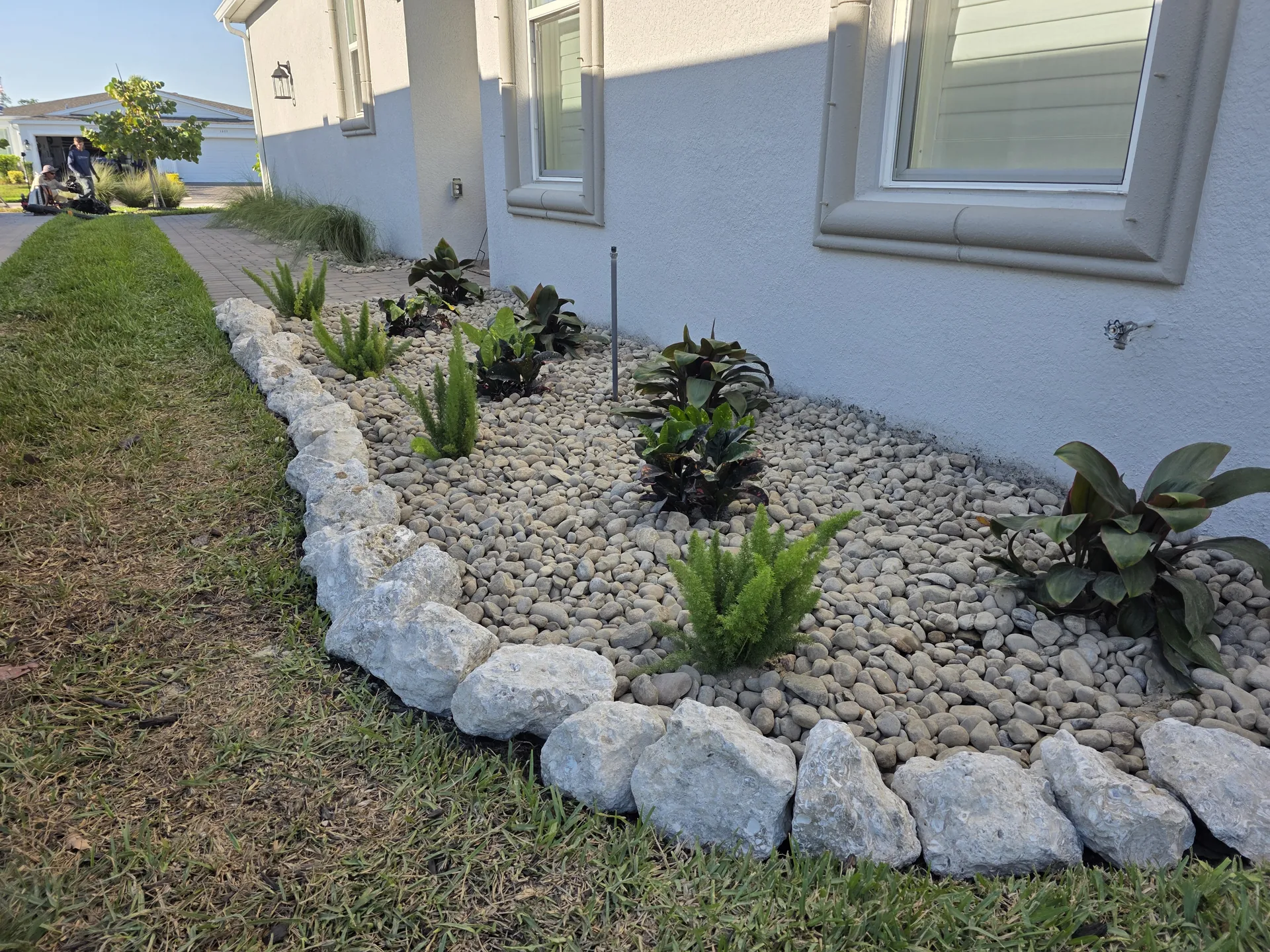
Englewood, FL
Everything We Do in Englewood
My crew works Englewood regularly — we know the soil, the HOA requirements, and the neighborhoods. Every service below links to a dedicated Englewood-specific page with local pricing context, Charlotte permit information, and property-specific details.
Driveways, patios, and pool decks — concrete, travertine, and brick installed over properly compacted base for Englewood's soil conditions.
Paver Installation in EnglewoodSt. Augustine, Bahia, and Zoysia varieties matched to Englewood's sun exposure, soil drainage, and once-a-week watering restrictions.
Sod Installation in EnglewoodFull landscape design and installation — tropical plants, bed creation, edging, and mulching that actually fits the Florida climate.
Landscaping in EnglewoodPatios, walkways, outdoor kitchens, and seating walls — permanent structures built to withstand Florida's intense sun and summer rain.
Hardscaping in EnglewoodSystem repair, smart controller upgrades, and new installs — calibrated for SWFWMD Modified Phase III once-per-week watering restrictions.
Irrigation in EnglewoodTrimming, removal, stump grinding, and palm pruning — fully compliant with Charlotte tree ordinances and permit requirements.
Tree Work in EnglewoodBlock, natural stone, and poured walls — engineered for Englewood's water table, soil load, and local permit thresholds.
Retaining Walls in EnglewoodRiver rock, lava rock, and decorative stone with commercial-grade weed barrier — permanent, HOA-safe, and maintenance-free.
Rock Installation in EnglewoodContinuous extruded borders in mower's edge, slant, and Victorian profiles — custom color, HOA-approved, lasts 20–30 years.
Concrete Curbing in EnglewoodPrivacy hedges, specimen palms, and tropical beds — selected for Englewood's sun exposure, salt proximity, and soil conditions.
Plant Installation in EnglewoodFull rip-and-replace: demolition, drainage correction, new irrigation, curbing, rock, plants, and sod — turnkey from start to finish.
Landscape Renovation in EnglewoodFrench drains, catch basins, swales, and regrading — essential in Englewood's flat terrain where standing water is a recurring problem.
Grading & Drainage in EnglewoodTiming Your Yard Work Right
SW Florida doesn't have four seasons — it has two real ones: wet and dry. But those two seasons create four distinct windows when different yard work is optimal or completely off-limits. Click any season to see what it means for Englewood.
Season 1
Spring Prep
January – March
Englewood's dry season is the most demanding for coastal-sand irrigation. Without the moisture retention of inland organic soils, turf and plant beds dry out between irrigation cycles faster than any other market we work in. Well-water properties with no restriction still need smart scheduling to avoid both drought stress and off-peak waste. This is the best window for paver installs, soil amendment, and new plant bed construction.
Season 2
Early Wet Season
April – June
The first rains of May bring both welcome moisture and increased wind-carried salt as Gulf storm activity ramps up. Plants that survived the dry season on well irrigation now face the test of higher salt load. New plant installs done in May–June establish quickly with the rain but should always use salt-tolerant species.
Season 3
Storm Season
July – September
Englewood's fast-draining coastal soil means the rainy season rarely causes the prolonged ponding issues seen in North Port or Port Charlotte. But turf that stays damp from daily rain, especially on Rotonda West canal lots, can develop fungal issues if irrigation isn't scaled back to near zero. Well-water homeowners need controllers that recognize when the rain is doing the work.
Season 4
Renovation Window
October – December
Englewood Beach and Cape Haze properties face elevated storm surge and wind risk compared to inland areas. Post-storm recovery here often involves full salt-flush and replanting of coastal beds that absorbed surge spray, in addition to debris clearance and turf replacement. Native species recover faster than ornamentals in post-storm conditions.
Real Work in Englewood
Actual jobs completed in Englewood — with the details on scope and what made each one specific to this city's conditions.
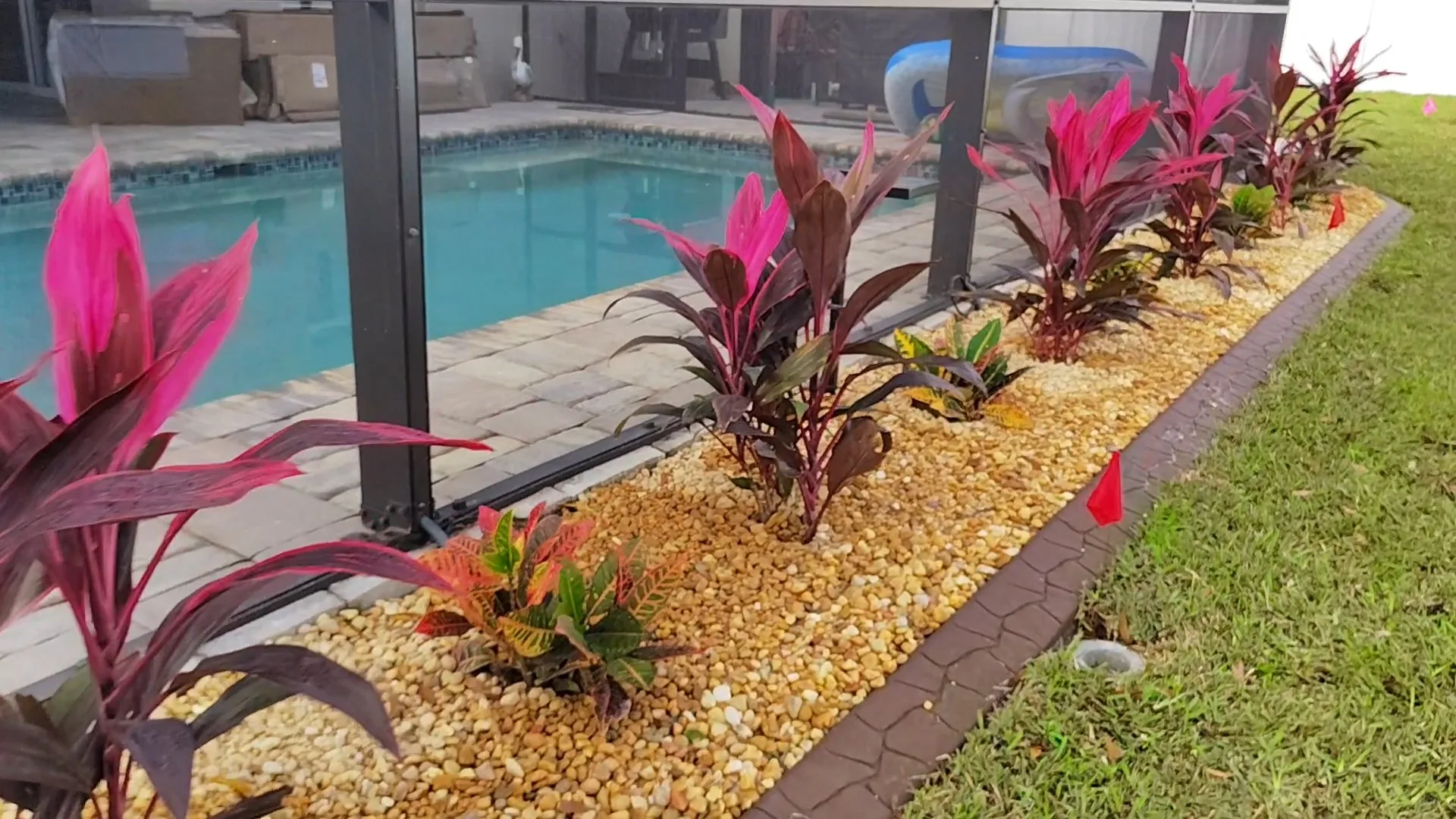 Cape Haze, Englewood
Plant Installation
A Cape Haze homeowner had lost three rounds of standard nursery plantings to salt burn. The front beds had been bare for over a year. We designed a full planting plan using exclusively salt-tolerant species: silver buttonwood hedges, sea grape anchor specimens, coontie ground cover, and beach sunflower border. The well irrigation system was reprogrammed to a smart ET-based schedule. 14 months later the planting is dense and requires only seasonal irrigation adjustments.
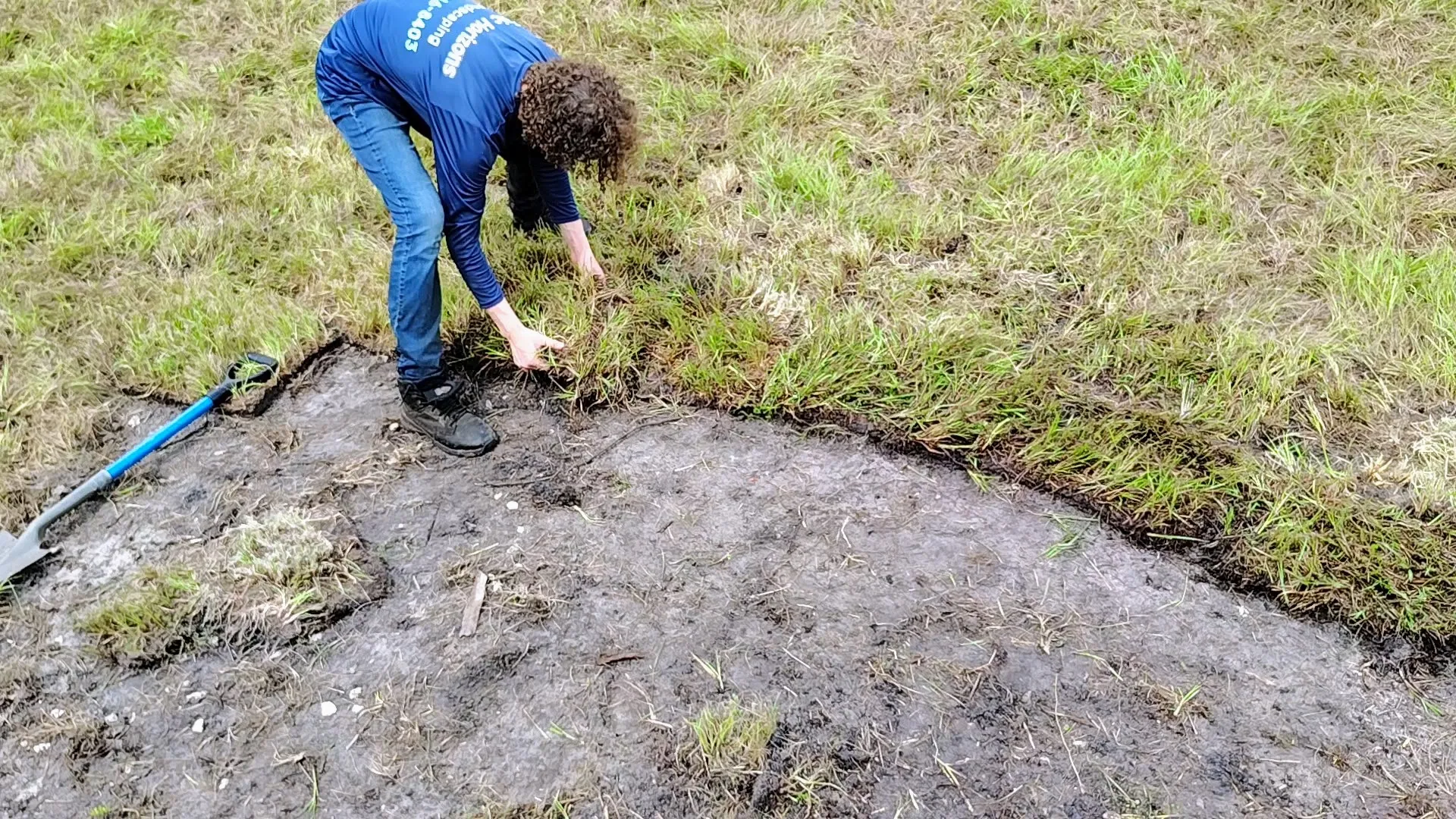 Rotonda West, Englewood
Sod + Soil Amendment
A Rotonda West homeowner had replaced their sod twice in three years, with each install thinning out and dying back in the same areas during the dry season. The problem was the underlying coastal sand — almost no moisture retention, no organic matter, and no buffer for the roots between irrigation cycles. We stripped the failed areas, incorporated a 3-inch organic amendment layer, tilled and settled the mix, and laid fresh St. Augustine Floratam. The third sod install held. Green and full through the first dry season.
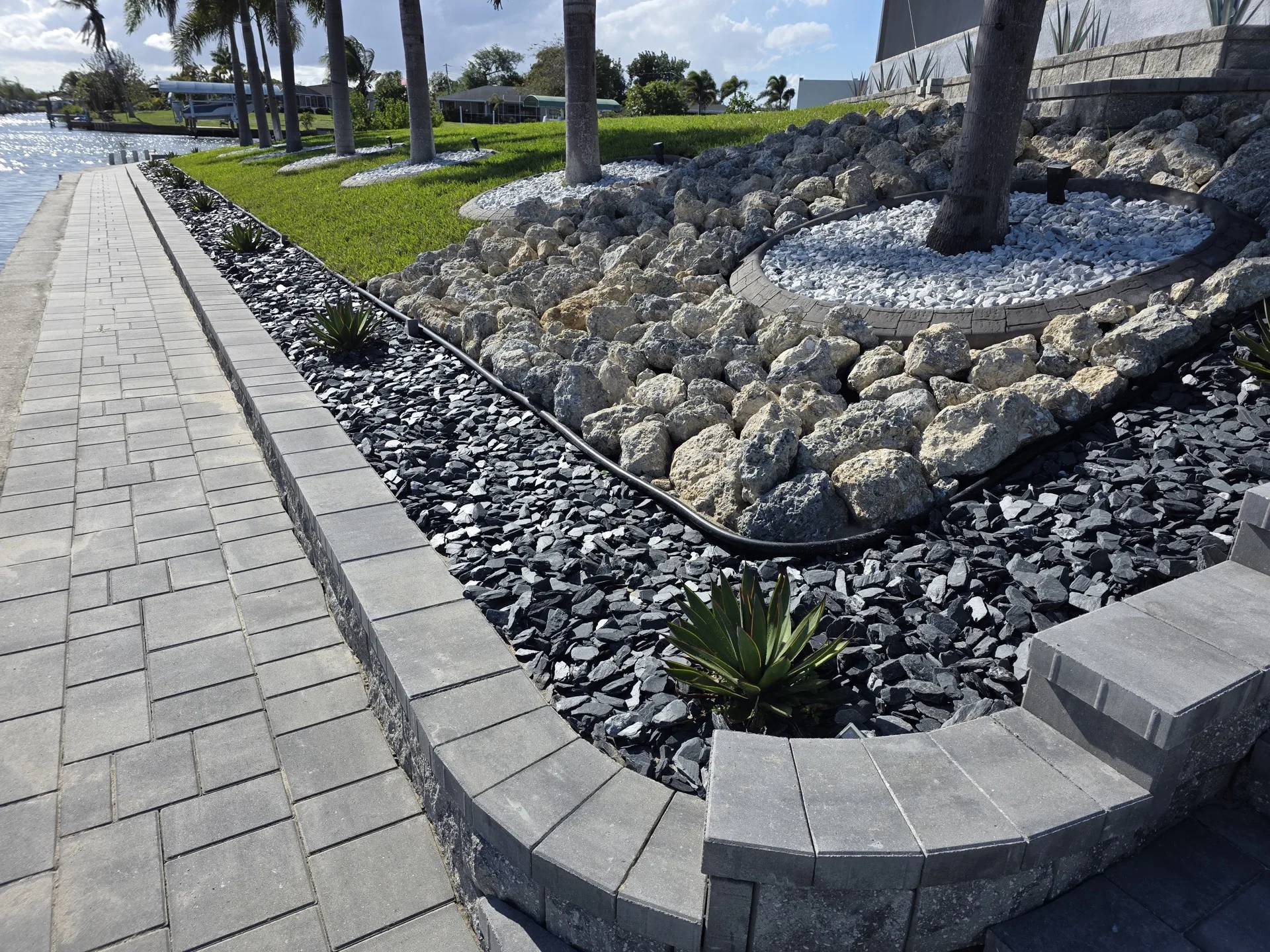 Lemon Bay Estates, Englewood
Irrigation Upgrade
An older Lemon Bay Estates property had a 1990s-era irrigation system with corroded heads in three zones, a controller running a fixed 20-minute-per-zone schedule year-round, and no rain sensor. The turf was simultaneously over-watered in summer and drought-stressed in winter. We replaced all corroded heads, installed a Rachio smart controller connected to local weather data, added a rain shutoff sensor, and zoned the property properly. Water use dropped measurably in the first full season.
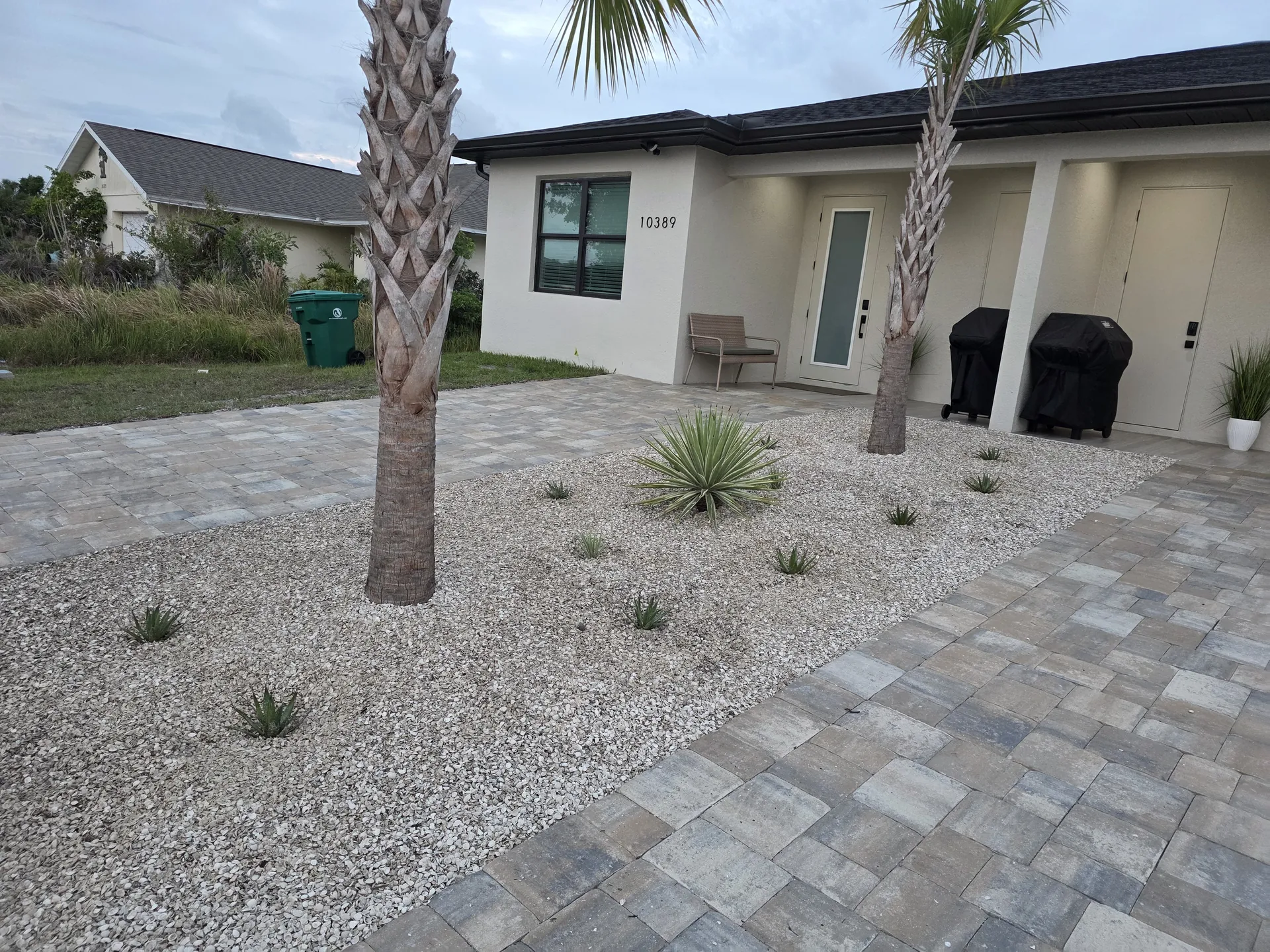 Englewood Beach area, Englewood
Paver Installation
A homeowner near Englewood Beach had a paver walkway and partial driveway installed by a previous contractor that was rocking and shifting within 18 months. We pulled the failing sections, found inadequate base depth (3 inches in coastal sand that needed at least 6 inches plus stabilized base layer), excavated to proper depth, installed a geo-fabric and stabilized gravel base, and re-laid the pavers. The result is solid underfoot. We also extended the driveway apron the homeowner had been wanting, built to the same standard.
What Englewood Homeowners Say
Verbatim from Google — unedited, unabridged. I don't ask for reviews. These come because the work speaks for itself.
This company is Top Notch! They are reliable, detail oriented, and affordable. Dennis is kind, accommodating, and communicative. If you are looking for great service at a great price, look no further!
I have very many good things to say about these guys, they've been mowing my lawn almost every week or when the grass got tall since February 2023, work is very good they work together (two brothers) very respectful team, the quality is very good, I'm absolutely satisfied with their work, they do it very quick and the price is very good for the work that's done, if you try to low ball them, DONT!!! They deserve more than what they ask for and very humble, I'll give them a 5 ⭐️⭐️⭐️⭐️⭐️ any day and I'll keep them as my lawn guys as long as I'm gonna be in the area.
I hired Epic Horizons Landscaping again..to remove shrubs/plants that got ruined by frost and cold weather. Dennis designed and installed new beautiful plants..my yard looks nice again..Thank you for excellent job!
Englewood Questions
Where We Work
If you're in Englewood, we service your property. No minimum project size required for a quote. No area of the city is "too far" — we're here every week.
Get Started in Englewood
We also serve:
We also serve nearby