Local Expertise
Englewood Plant Placement Starts With Wind Direction.
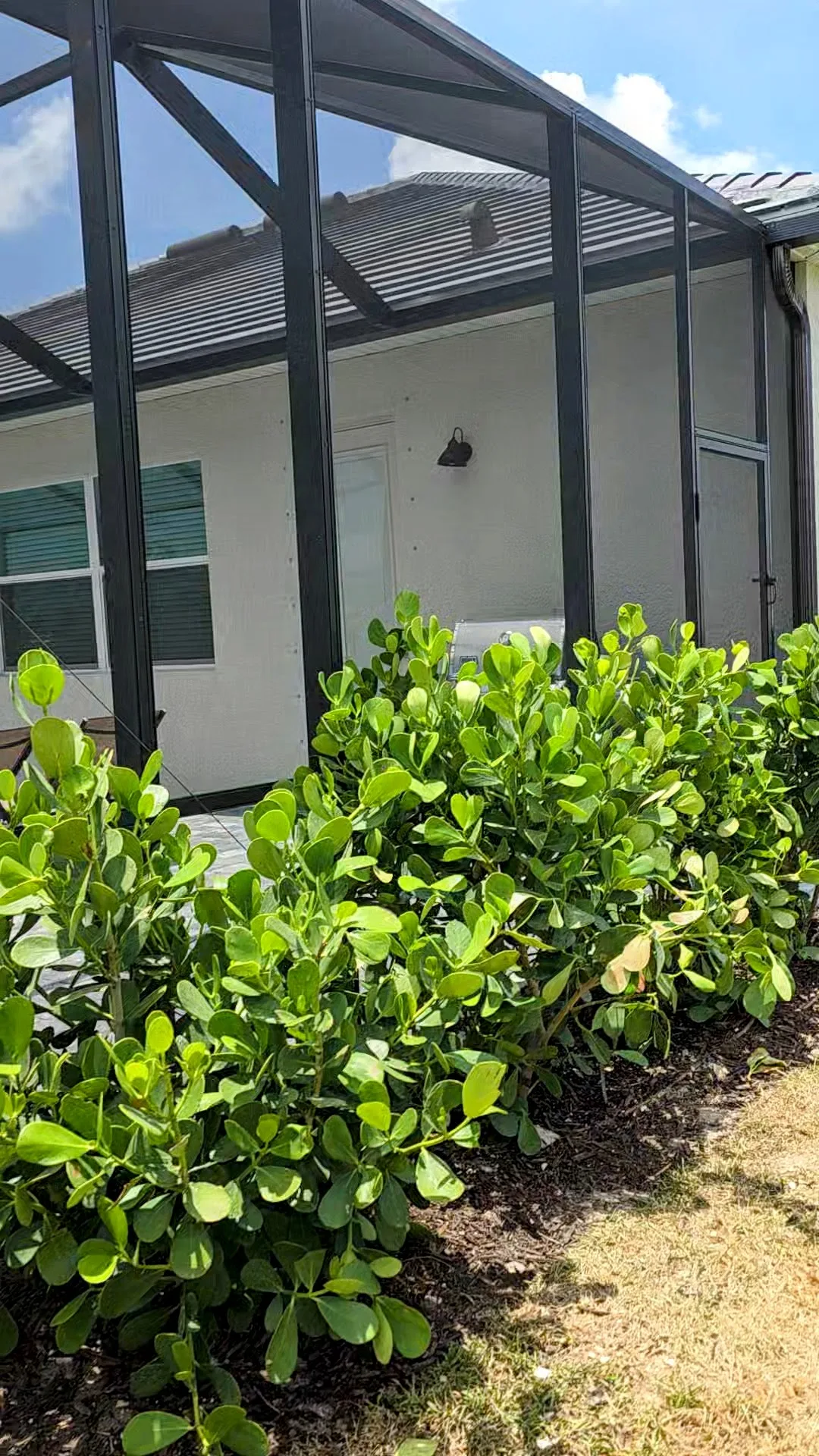
Salt spray in Englewood comes predominantly from the southwest Gulf wind. The plants on that windward side of a property need a completely different salt-tolerance specification than those on the sheltered north or east side. We map wind direction and exposure level before we map plant locations — and we amend the soil in every bed because Englewood's coastal sand will not sustain root health without organic matter added at install.
Directional Salt Spray
Southwest-facing beds in Englewood receive the highest salt-spray load from Gulf wind. East-facing and sheltered interior beds have moderately lower exposure and can support a slightly wider plant palette. We map exposure before designing the plant list.
Coastal Sandy Soil
Englewood's coastal sand has almost no organic matter and drains water within minutes. Plants installed into unamended sandy soil exhaust the soil's minimal nutrient and moisture reserve within 30 days. Every bed we install into gets organic amendment mixed in before the first plant goes in the ground.
Rotonda West Approved Palette
Rotonda West maintains a list of approved plant species for front-yard installations. The list includes enough salt-tolerant species that we can design a beautiful and properly specified front yard within the HOA constraints without compromise.
Establishment Watering
Plants in Englewood's sandy soil need establishment watering twice daily for the first 14 days. Miss a cycle in week one and root tip dieback begins almost immediately. We set the irrigation schedule on install day and walk you through it.
Project Record
Plant Installation Jobs My Crew Has Done in Englewood
Real projects from real neighborhoods — I was on every one of these. Click any file to see the full record: materials, scope, timeline, and outcome.
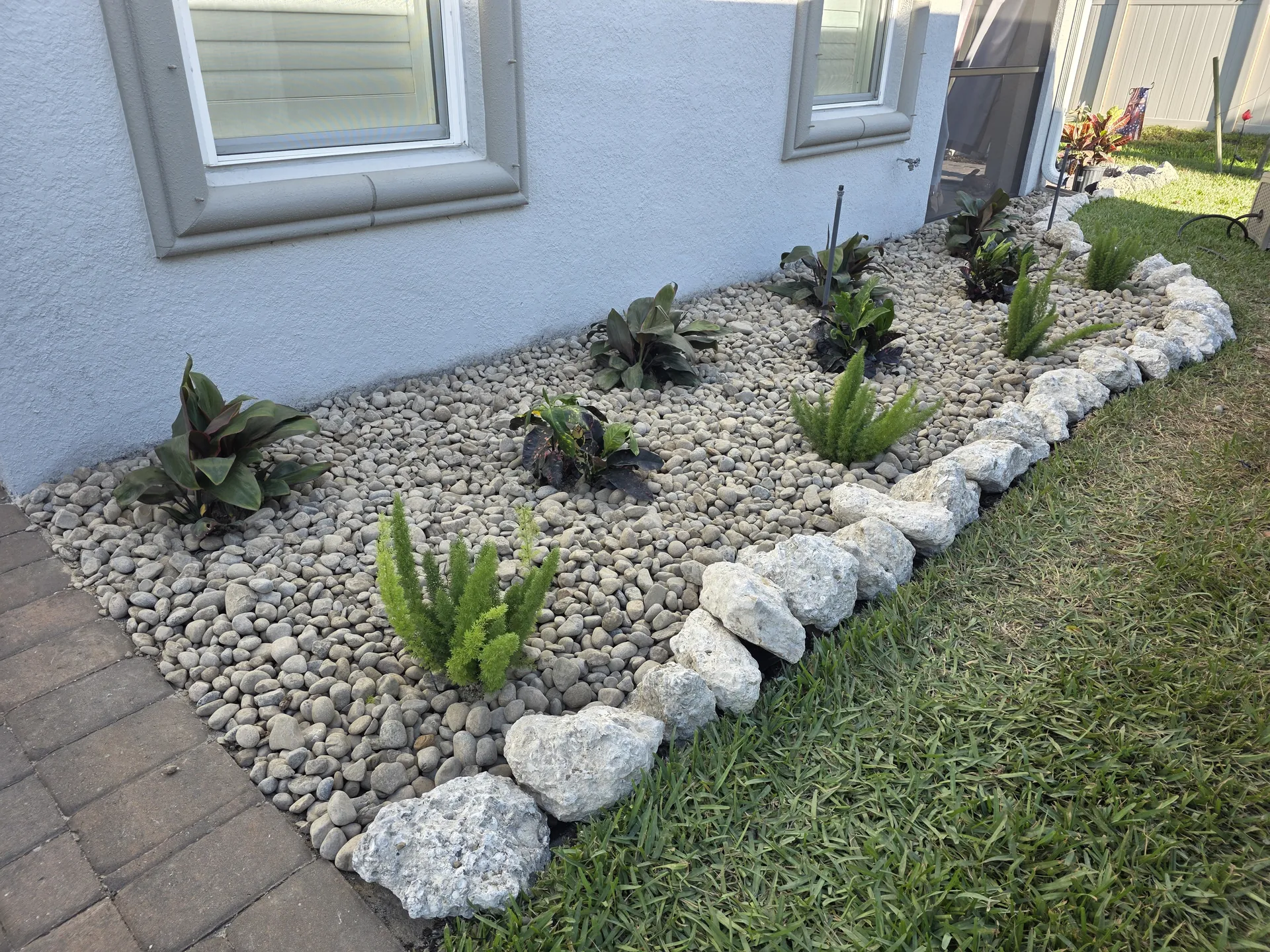
Englewood, FL
Location
Placida, FL
Material / Scope
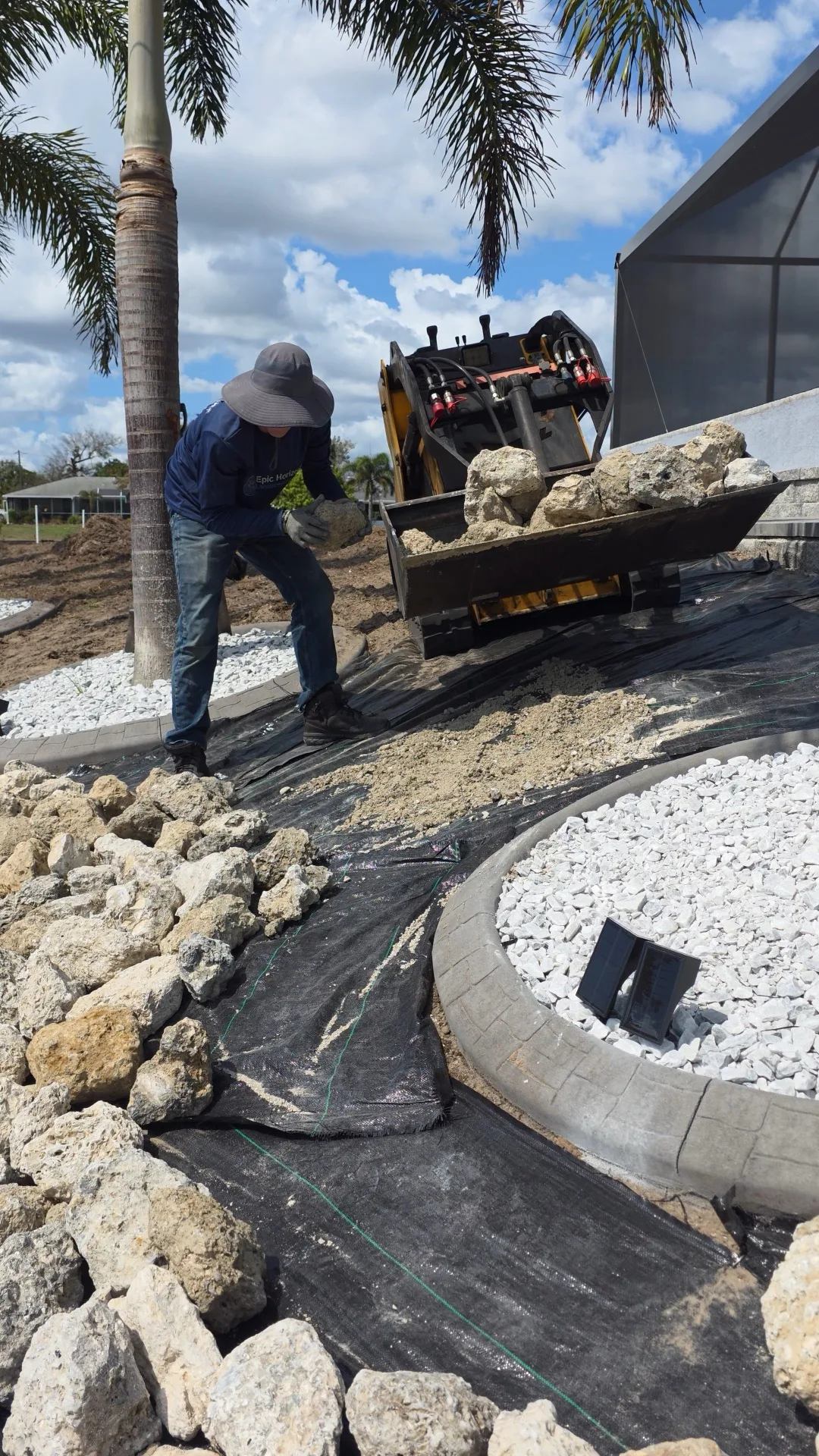
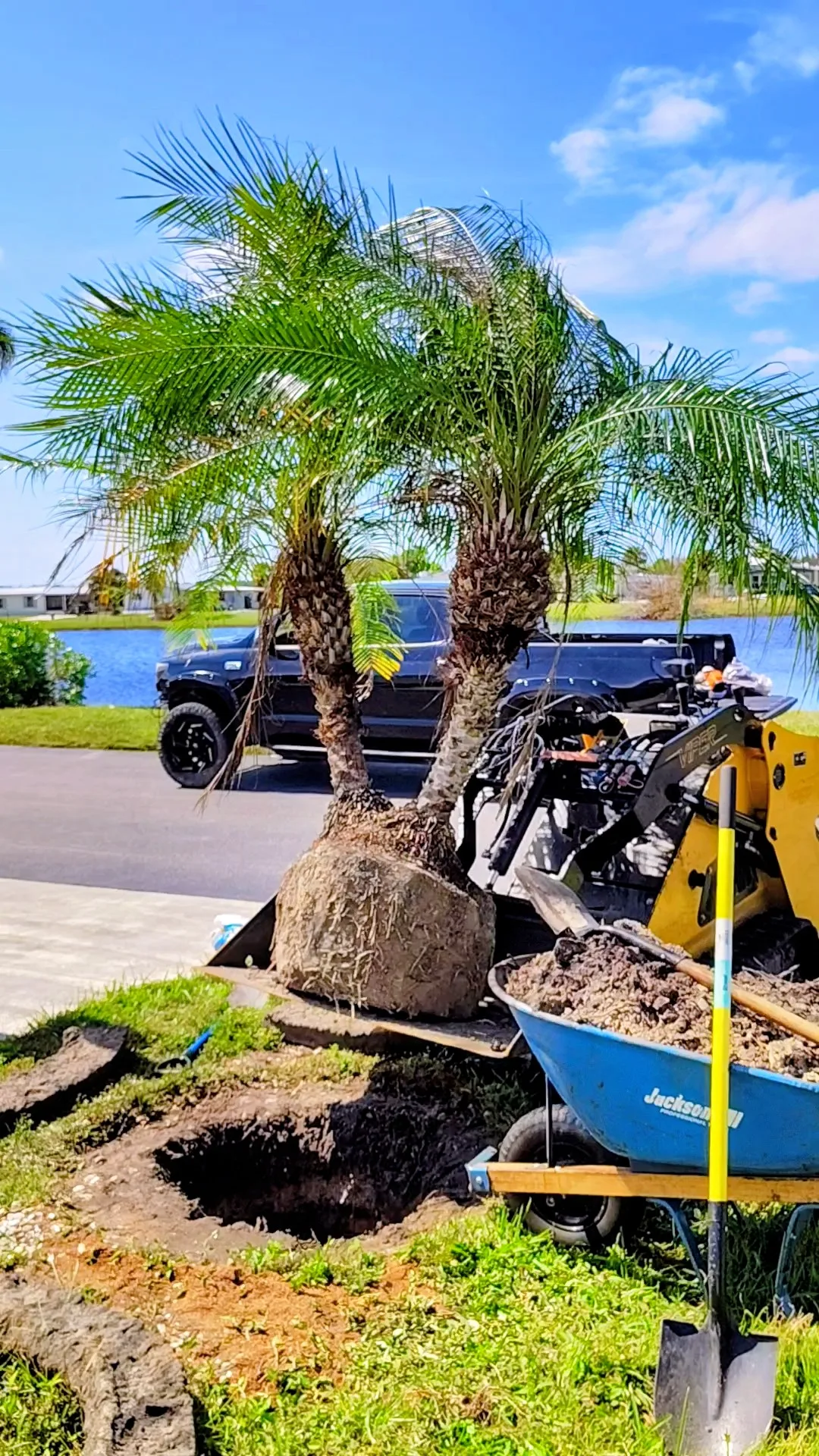
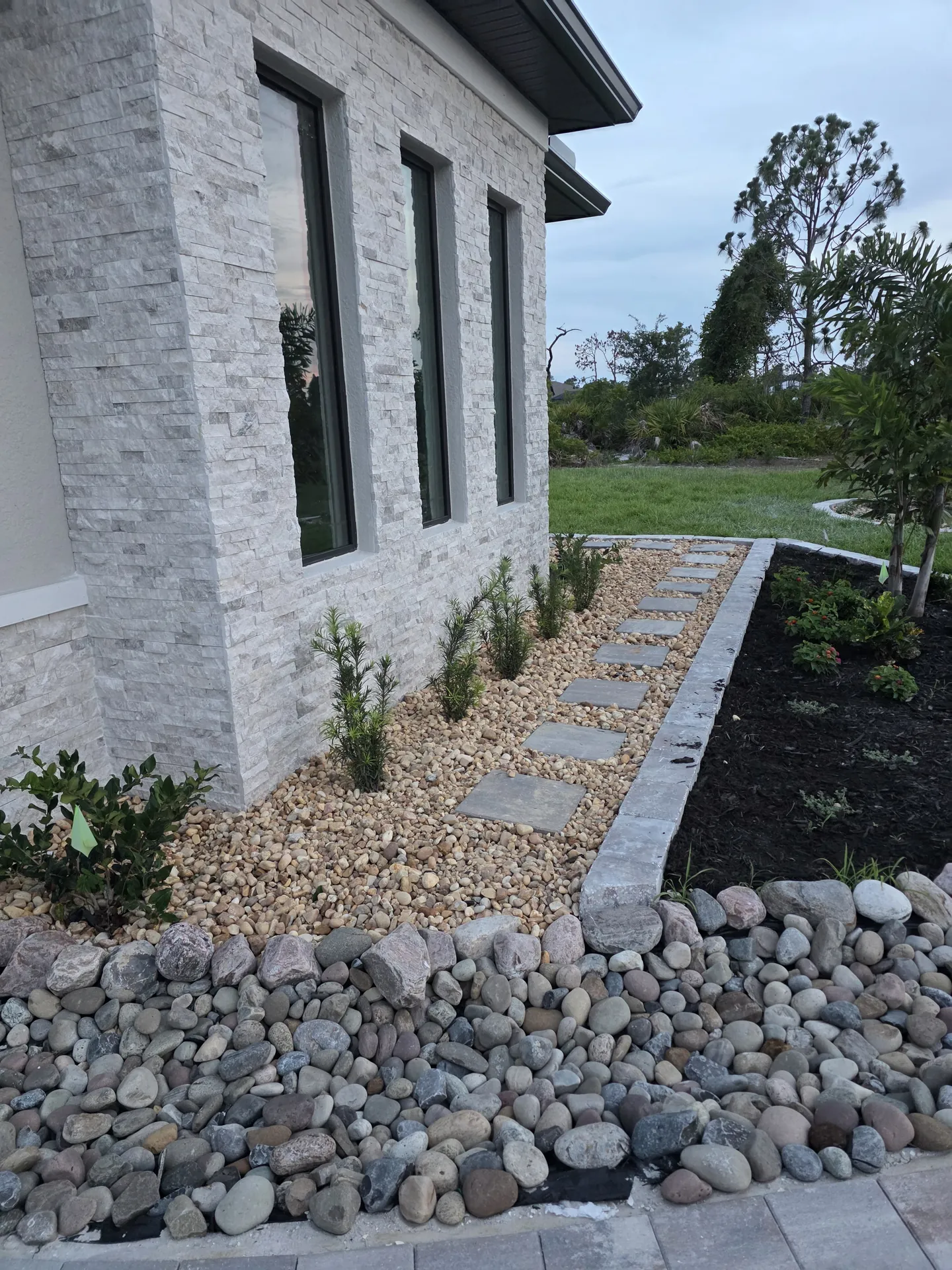
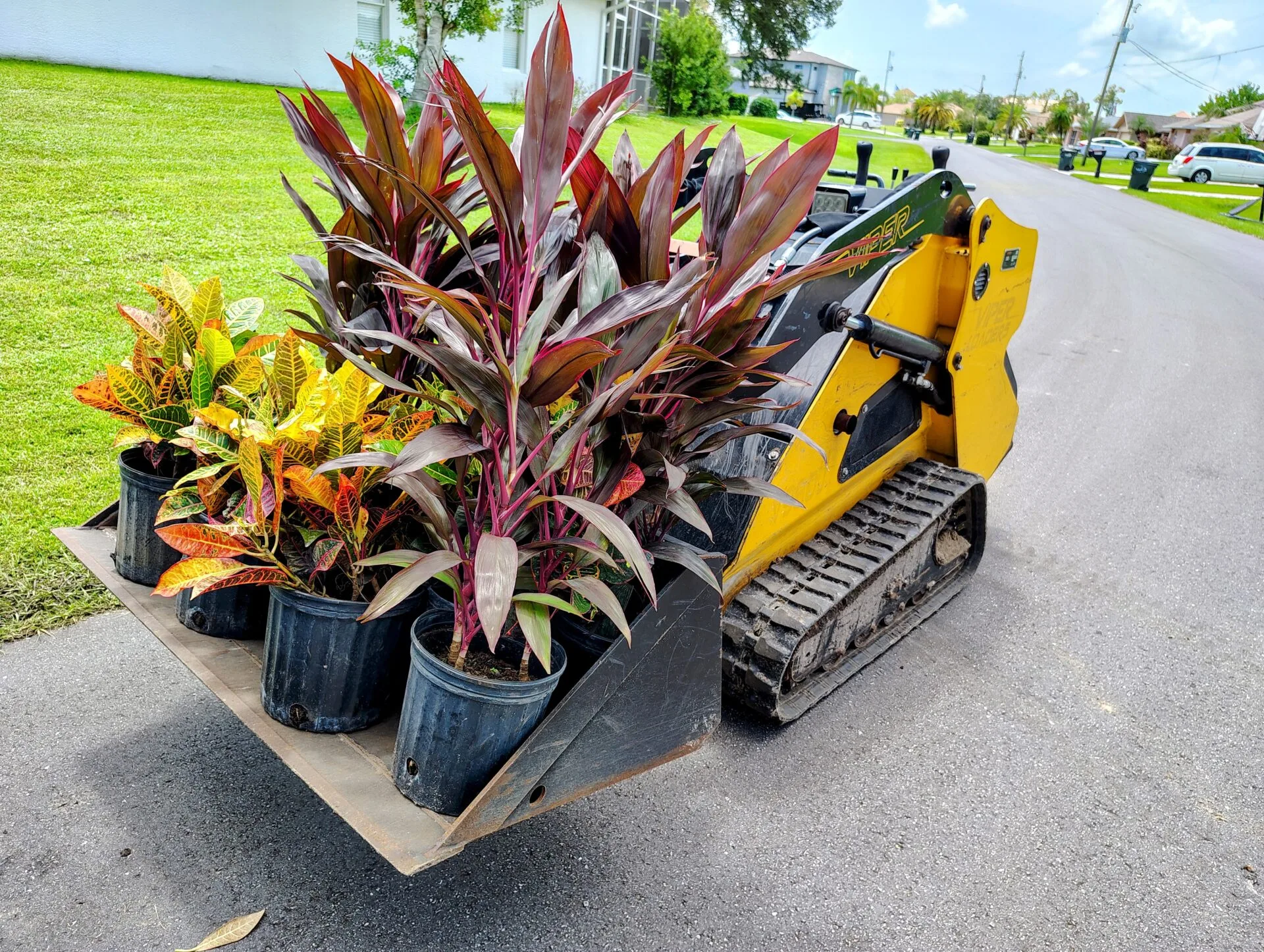
63 Tremron Munich blocks, 1,800 lbs river slick boulders, 30 dwarf ixora, 50 lantana, 6 ti plants, 4 croton petra, 36 podocarpus, 2 pygmy date palms, bougainvillea
Total Area
20-ft retaining wall + full border — 30 dwarf ixora, 50 lantana, 6 ti plants, 4 croton petra, 36 podocarpus, 2 pygmy date palms, bougainvillea
Timeline
2 days
Retaining wall and full border planting combined — 20-ft wall built first to hold the grade, then the border planted above and below: dwarf ixora and lantana for color at the base, ti plants and croton for mid-height contrast, 36 podocarpus for long-term screening along the back line, and two pygmy date palms for vertical height anchoring at the corners. Bougainvillea added at the end for the cascade effect down the wall face.
Location
Englewood, FL
Material / Scope
25 areca palms (25-gallon specimens), 100+ linear feet installation
Total Area
25 areca palms (25-gallon), 100+ linear feet
Timeline
1 day
Privacy screen planting along the rear property line using 25 twenty-five-gallon areca palms. At this size they're 8–10 ft tall at install — the homeowner didn't want to wait years for a small plant to grow to screening height. We spaced them for canopy closure within one season and verified irrigation coverage before installation. Areca palms are one of the most reliable privacy screens in the Gulf Coast climate — fast growing, dense, and salt-tolerant at reasonable distances from the coast.
Location
Rotonda West, Englewood, FL
Material / Scope
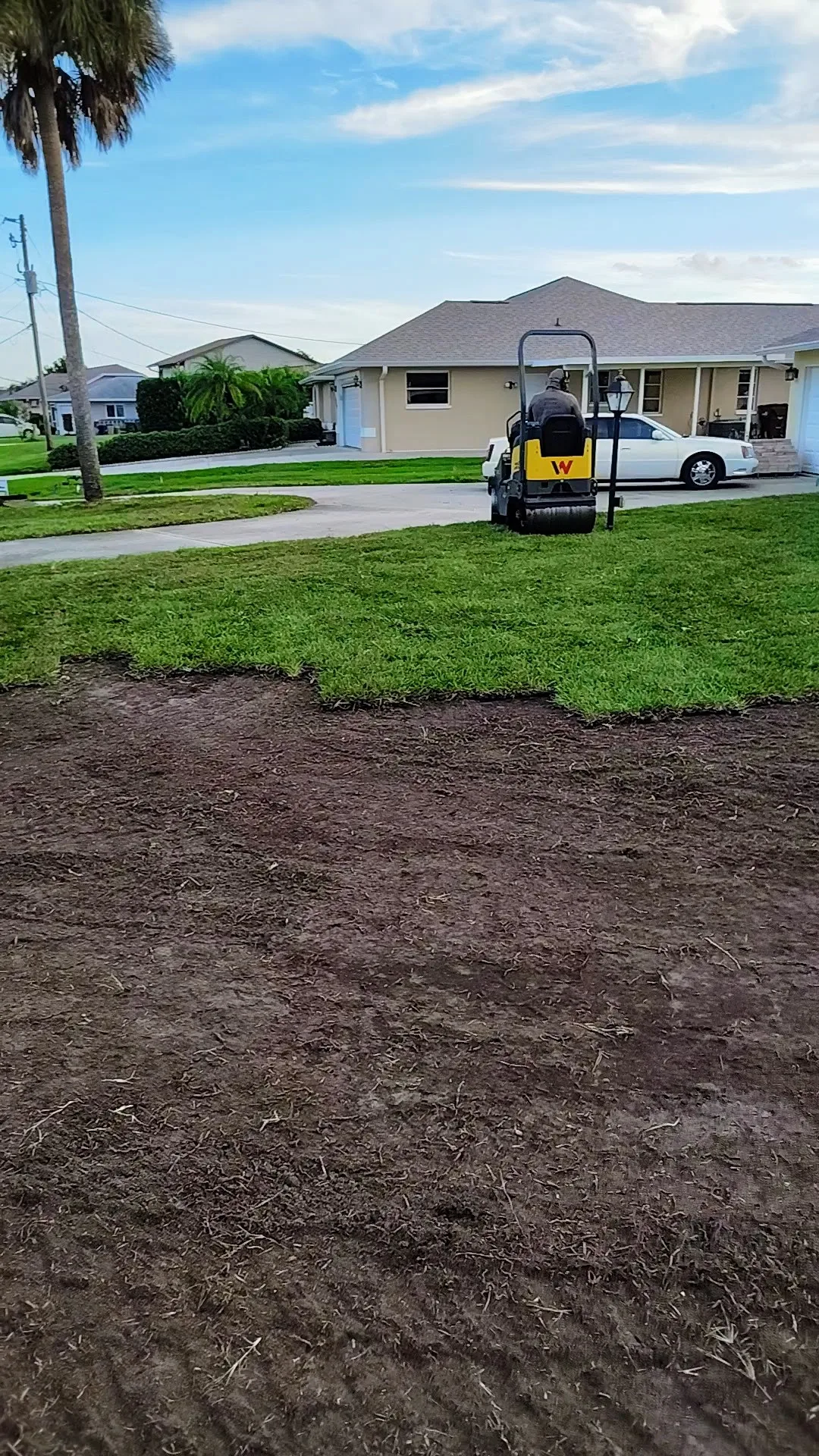
8 pallets St. Augustine sod, 3,234 sq ft removal, prep and grading
Total Area
Full lawn re-sod — 3,234 sq ft removal and replacement with 8 pallets St. Augustine
Timeline
2 days
Lawn had declined past recovery — thin, weedy, and uneven. We removed 3,234 sq ft of old sod, re-graded the surface to restore proper drainage pitch, and installed 8 pallets of St. Augustine. The prep work is what determines whether a re-sod lasts — we don't rush through it. Grade restored to slope away from the house on all sides before any sod went down.
Location
Englewood, FL
Material / Scope
4-zone irrigation system, zone controller, heads, lateral lines
Total Area
Full 4-zone irrigation install — front, rear, and side yards
Timeline
1 day
No irrigation on the property — hand watering in Englewood's coastal sandy soil cannot keep up with the drainage rate. The soil dries within hours and plants begin showing stress within days without consistent coverage. We installed a 4-zone system covering front, rear, and side yards, with zones sized for the sandy soil infiltration rate. Controller programmed for the county 2-day restriction schedule.
How We Work
Plant Installation in Englewood: What Actually Happens
I've done this job in Englewood enough times to know what catches people off guard. Here's what actually matters — and what's specific to this area.
Step 01
Exposure Assessment + Species Selection
Dennis evaluates sun and shade hours across the bed, existing irrigation coverage, drainage conditions, and proximity to the coast. A species list is confirmed that matches the actual site conditions — not just what looks good in a catalog.
⏱ Before work begins
Step 02
Pit Excavation + Soil Amendment
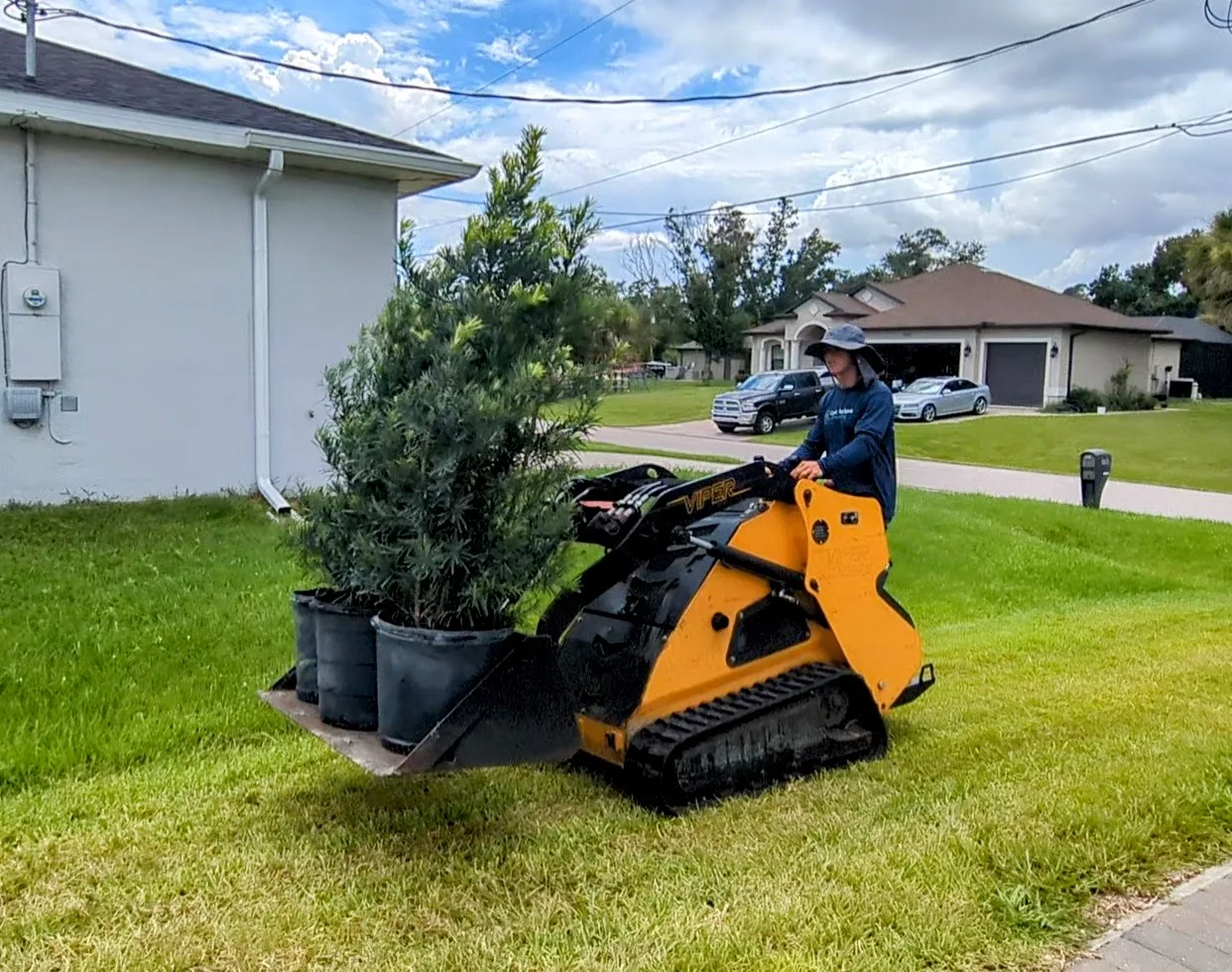
Planting pits are excavated to twice the root ball width and to the correct depth. Native sand is amended with organic compost. Drainage is checked at the bottom of each pit before the plant goes in — water should drain from a pit in under an hour.
⏱ Day 1
Step 03
Plant Set + Depth Check + Backfill
Each plant is set so the root flare is at or just above grade — never buried. Position is checked from multiple angles before backfilling begins. Amended soil is filled in lifts and tamped gently. No volcano mounding against the trunk or stem.
⏱ Day 1
Step 04
Mulch + First Deep Water + Care Handoff
Mulch is spread at 2–3 inches — pulled back from the base of every plant. Each plant receives a deep first watering at the root zone. Dennis walks you through the establishment watering schedule and any species-specific care notes before leaving.
⏱ Installation day
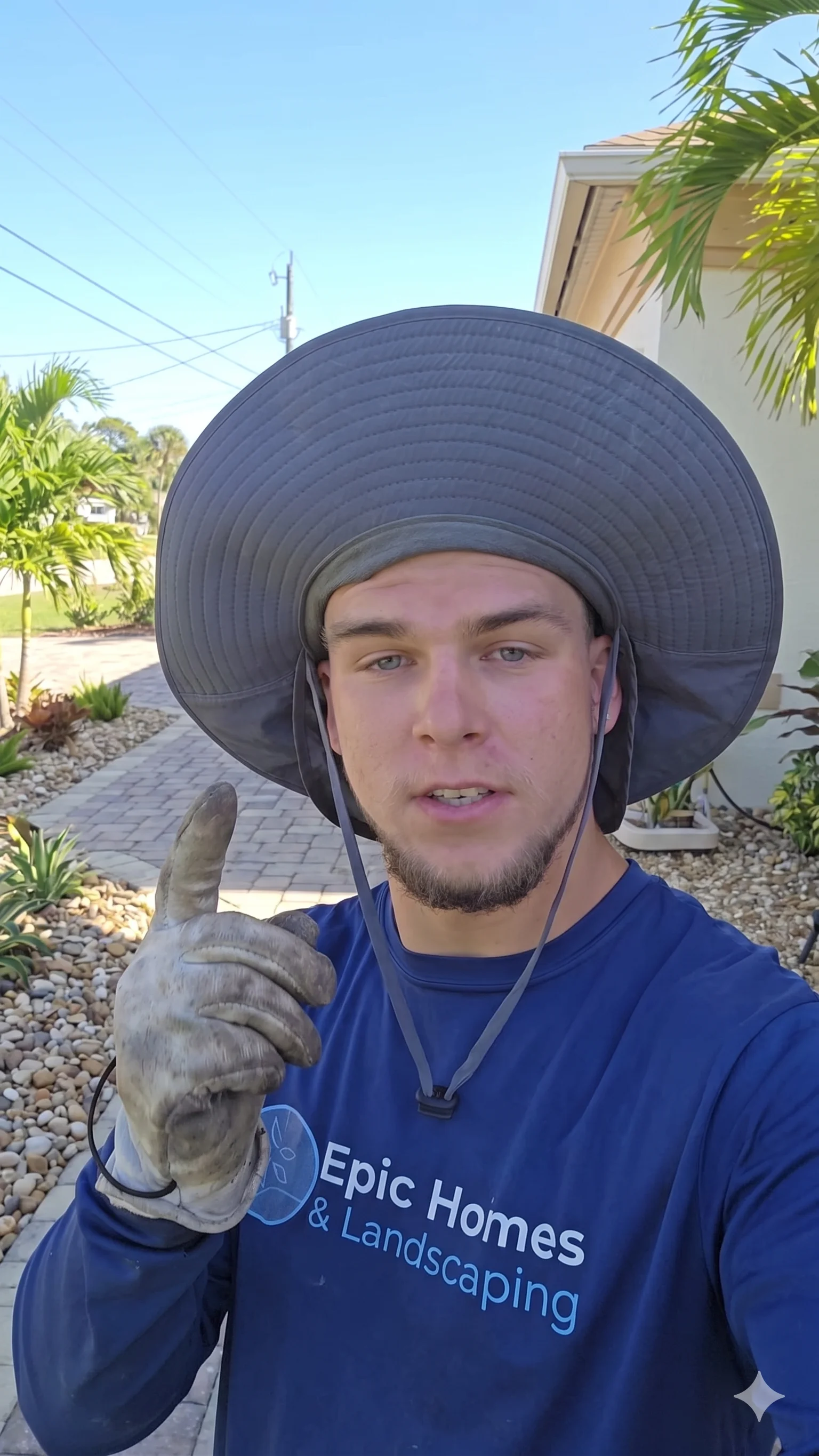
From Dennis P. — Owner, Epic Horizons
"I've done this job in Englewood enough times to know exactly what makes it different here — and what goes wrong when someone skips the steps that matter."
Englewood has specific site conditions that change how Plant Installation is done. The soil, the water table, the HOA requirements — these aren't generic considerations. They're the actual job. Every estimate I give factors these in from the start.
Dennis P.
Owner · Licensed Contractor · SW Florida since 2022
Englewood, FL
Transparent Pricing
What Affects the Price in Englewood
Englewood has specific conditions that change what a Plant Installation project costs here. Here's what goes into your number.
Plant Count and Size
Larger Plants Establish Faster — But Cost More
3-gallon and 7-gallon container plants are the most common install sizes. 3-gallon is more affordable but takes 12–18 months to look established. 7-gallon looks established faster — 6–9 months — and is the right choice for high-visibility areas. We let you choose by location.
Soil Amendment
Every Englewood Bed Needs Organic Material Added
Coastal sandy soil has essentially zero organic content. Amendment at install adds material cost but is the difference between a planting that thrives and one that slowly fails. We never skip this step on Englewood coastal sites.
Species Selection
Salt-Tolerant Specialty Plants Cost More Than Generic Nursery Stock
Coastal-rated species like silver buttonwood, sea grape, and muhly grass are specialty nursery material. They cost 15–30% more per plant than generic inland species. Using the correct species once is far less expensive than replacing failed plants after a coastal season.
Palm Installation
Palms Near the Gulf Need Specific Nutritional Prep
Palms installed in Englewood's coastal sand need slow-release palm fertilizer in the backfill at install and a coastal exposure species selection — not all palms tolerate direct salt spray. Sylvester, sabal, and sea grape palms are good choices; many ornamental palms are not rated for direct Gulf exposure.
Englewood plant installs typically run $1,500–$8,500.
Plant count, container size, and soil amendment scope are the main variables. Tell me what you're working with and I'll give you a real quote.
Questions & Answers
Plant Installation in Englewood — Common Questions
Get Started
Free Plant Installation Quote in Englewood
Plant Installation in other cities
More we do in Englewood