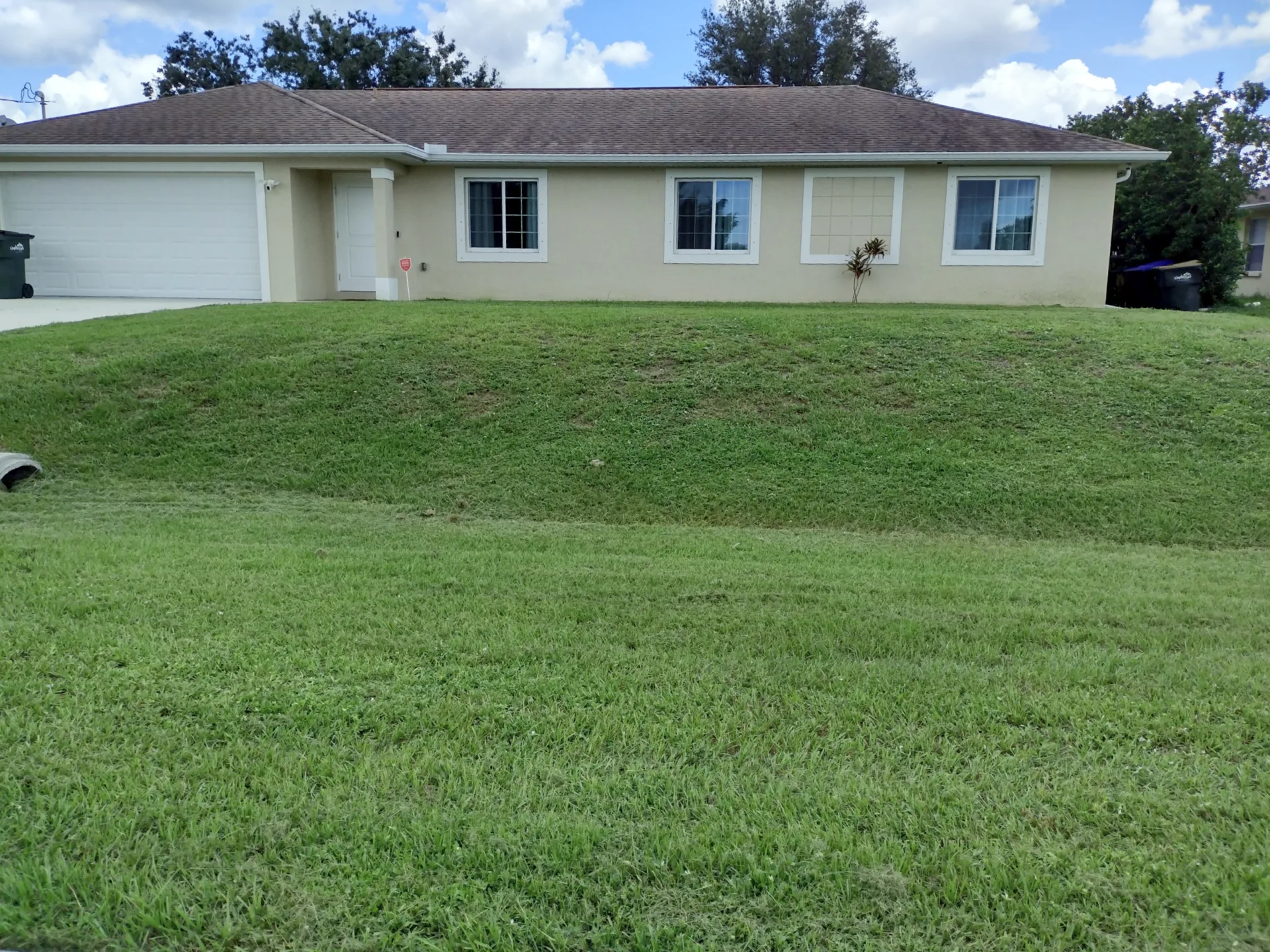
What is an irrigation system? The plain answer
What is an irrigation system? It's a network of buried pipe, valves, and sprinkler heads, run by a timer, that puts a measured amount of water on each part of your yard on a set schedule, without anyone standing there with a hose. The yard is split into zones, and each zone gets its own valve and its own run time.
That's the textbook version. In Southwest Florida it needs one more line. Your irrigation system is what keeps a St. Augustine lawn alive through a dry season that can go weeks without real rain, while the law only lets you run it one night a week. Get the system right and that's enough water. Get it wrong and you're paying for sod twice.
Most homes around North Port, Venice, Port Charlotte, and Englewood have some mix of three setups:
- In-ground sprinkler irrigation. Pop-up spray heads and rotors on PVC pipe, run by a controller in the garage. This is what most people mean by "sprinkler system," and it waters nearly every lawn on a standard lot here.
- Drip or micro-irrigation. Low-pressure tubing and emitters that put water at the roots of shrubs, palms, and bed plants. It usually runs as its own zone off the same controller.
- Hose-end timers. A battery timer screwed onto a spigot. Fine for a few pots on the lanai. It isn't a system, and it won't carry a lawn through May.
Dennis gets a lot of calls from people who just bought a house and have no idea what's buried in the yard, where the valves are, or which day the timer runs. If that's you, you're in good company. Once you know the parts, you can tell a five-minute fix from a dig-up-the-yard repair, and that's worth knowing before anyone hands you a quote.
The parts of a sprinkler irrigation system, from the water to the head
Every system moves water through the same parts in the same order. When something goes wrong, walking the system in this order is usually how you find it.
- The water source. Around here that's city water through your meter, a private well with a pump, or reclaimed water where the utility offers it. A lot of North Port and Port Charlotte homes water from a shallow well. That's why so many driveways, pavers, and stucco walls here have orange stains on them. It's iron in the well water.
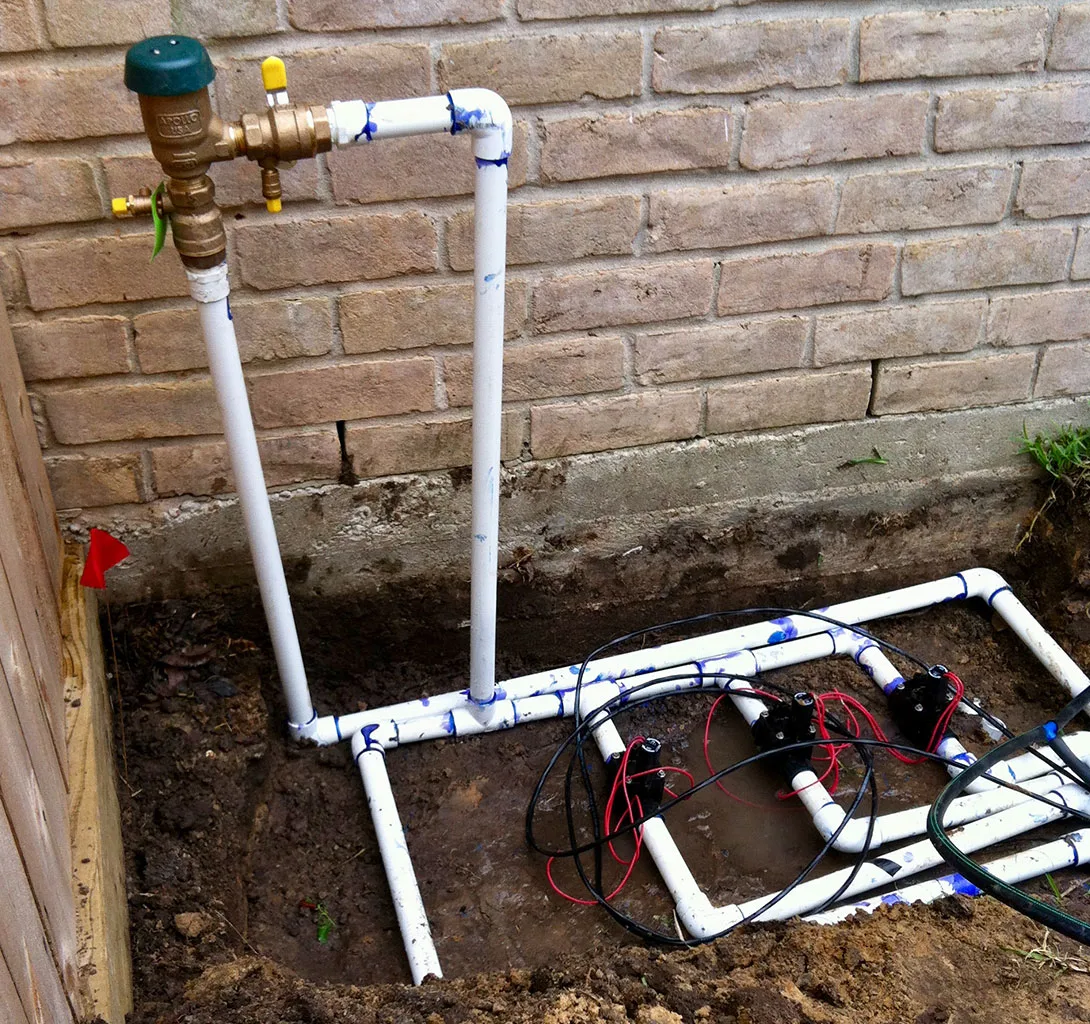
- The backflow preventer. On a system tied to city water, this brass assembly keeps water that's been sitting in pipes underground from being pulled back into your drinking water. It usually sticks up near the house or the meter.
- The mainline. The pipe between the source and the valves. On a city-water system it stays pressurized around the clock, so a break here runs nonstop until someone shuts the water off.
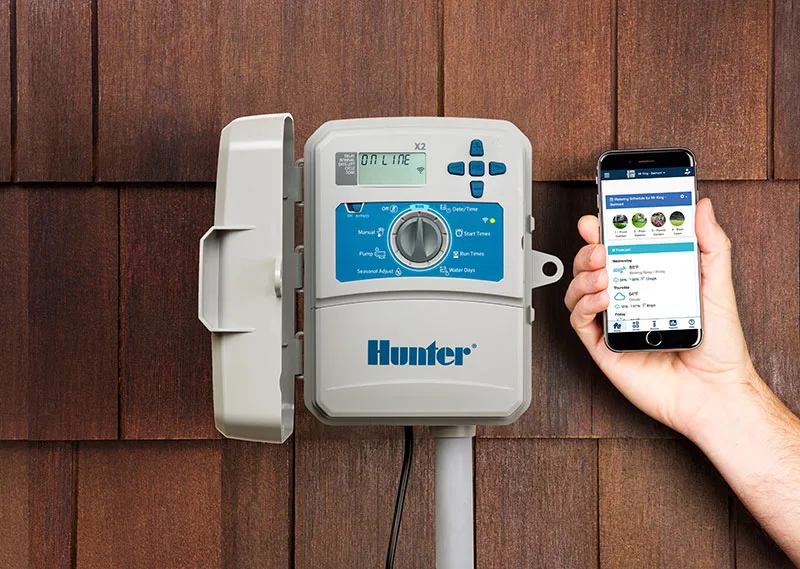
- The controller. The timer, usually mounted in the garage. It sends a low-voltage signal down a wire to open one valve at a time. On a well system it also tells the pump to start, usually through a pump start relay.
- The zone valves. One per zone, usually grouped in a green valve box in the yard. Each one opens on the controller's signal and closes when the run time ends. When a diaphragm tears or sand gets under the seal, a zone can weep all day or refuse to shut off.
- The lateral lines. Smaller pipe running from each valve out to the heads. These only hold pressure while that zone runs.
- The heads and emitters. Spray heads, rotors, or drip. This is where the water actually hits the yard, and it's where most repairs happen.
- The rain sensor. A small device on the fascia or roof edge that tells the controller to skip watering after a real rain. Florida requires one on automatic systems. More on that below.
The heads matter more than most people think. Different heads put water down at very different rates, and mixing them on one zone is one of the most common design mistakes we find.
| Head type | How it waters | Best for | SW Florida notes |
|---|---|---|---|
| Spray head | Fixed fan of water, short throw (roughly 5 to 15 ft) | Small lawns, narrow strips, tight side yards | Puts water down fast. On compacted ground it can run off before it soaks in. |
| Rotor | Rotating stream, long throw (roughly 15 to 50 ft) | Open St. Augustine and Bahia lawns | Slower, more even water. Needs a longer run time than spray to put down the same amount. |
| Drip / micro-irrigation | Slow drip or small spray right at the roots | Shrubs, palms, beds, new plantings | Counts as low-volume watering, which can run on more days under the current water shortage order. |
Put rotors and spray heads on the same zone and one part of the yard floods while the other goes dry. Same thing when beds and lawn share a zone. We covered that mistake in detail in drip irrigation vs. spray in Florida. Which raises the bigger question: is all this pipe in the ground actually worth it?
Benefits of an irrigation system, and when you don't need one
The biggest benefit of an irrigation system is steady water at the right time without you being there. That matters more here than almost anywhere. Under the current order, the legal lawn-watering window is either midnight to 4 a.m. or 8 p.m. to midnight, one day a week. Nobody is out there with a hose at 2 a.m.
The rest of the benefits are just as practical:
- It protects what you already paid for. Sod and new plants are the most expensive things in a yard to lose. Fresh St. Augustine needs steady moisture while its roots grab hold. A timer doesn't forget, and it doesn't go out of town.
- It can use less water than a hose. Matched heads, separate zones for lawn and beds, and a working rain sensor put down what each area needs and then stop.
- Drip keeps bed plants going between lawn days. Low-volume watering has more room under the rules, so a real drip zone can water shrubs and palms on the days they need it.
- It's even. A well-laid-out lawn zone covers every square foot. Hand watering never does, which is why hand-watered lawns end up with green patches and brown edges.
Now the honest part. Not every yard needs a full system. A Bahia lawn on a big lot, which you'll see a lot of in the outer parts of North Port and around Englewood, can often get by on summer rain and ride out the dry season half-dormant. Rock beds with established drought-tolerant plants may need almost nothing once they're rooted in. St. Augustine is a different story. In our sand, in April and May, St. Augustine without irrigation often doesn't make it to the rainy season. If you're wondering why new sod dies on so many lots, this is usually where it starts.
Tip from Dennis: Before you spend money on a new system or a big repair, ask what's actually growing on each zone today. Plenty of yards have a zone still watering a bed that got turned into rock and agave years ago. Cap those heads. That's free water savings, and one less zone to break.
Whether you have a full system or just a couple of zones, it has to follow watering rules that got a lot tighter in 2026. Most of the controllers we open are still set for the old ones.
SW Florida watering rules your system has to follow
An irrigation system is only as good as its programming, and in Florida the programming has to match the law. Two rules matter most.
Florida's rain sensor law
Florida Statute 373.62 says anyone who installs an automatic landscape irrigation system has to install, maintain, and operate technology that shuts the system off when there's been enough rain. In practice that means a rain sensor or a soil moisture sensor. We find a lot of sensors on fascia boards that died years ago, so the system runs straight through an afternoon downpour. Check yours: while a zone is running, press the test button or the spindle on top of the sensor. The zone should shut off. If it doesn't, the sensor is dead, disconnected, or the controller's sensor switch is set to bypass.
The Modified Phase III water shortage order
The Southwest Florida Water Management District declared a Modified Phase III water shortage in March 2026. After below-average rain in both the 2025 and 2026 rainy seasons, the District extended it in September through March 31, 2027. It covers all of Sarasota County, which takes in North Port, Venice, and the Sarasota County side of Englewood, plus parts of Charlotte County. It applies to homes on private wells, too.
| Address ends in | Lawn watering day |
|---|---|
| 0 or 1 | Monday |
| 2 or 3 | Tuesday |
| 4 or 5 | Wednesday |
| 6 or 7 | Thursday |
| 8 or 9 | Friday (also common areas and mixed addresses) |
- Lawn hours: 12:01 a.m. to 4 a.m., or 8 p.m. to 11:59 p.m. Properties under an acre get one of those windows, not both.
- Low-volume watering of plants and shrubs (drip, micro-irrigation, soaker hoses, hand watering) is allowed any day, before 8 a.m. or after 6 p.m.
- Citations come first, without a warning.
- HOAs can't enforce deed restrictions or community standards that would make you use more water, including replacing plants to meet appearance standards. If you're in a North Port community that's sending letters about a dry lawn, that's worth knowing.
Check before you reprogram: The District can change the order as conditions change, and Charlotte County addresses aren't all covered the same way. If you're in Port Charlotte or the Charlotte County side of Englewood, confirm your day and hours with your utility. Everyone else can check WaterMatters.org/Restrictions or call their city or county utility before touching the controller.
One night a week, in sand, in the dry season. That's a thin margin. A system losing a third of its water to a broken head or a clogged nozzle has nothing left to give. So what actually breaks?
Irrigation repair in Venice FL, Port Charlotte, and North Port: what breaks first
Most irrigation repair calls in Venice, Port Charlotte, and North Port come down to five things: broken heads, clogged nozzles, a valve that won't open or close, a controller or wiring fault, and cracked pipe. Heads are the most common. Most single repairs land in the $100 to $400 range. A mainline break that has to be dug up costs more.
Here's how to read what your yard is telling you before you call anyone:
| What you see | Likely cause | What you can check first |
|---|---|---|
| One zone won't come on | Bad valve solenoid, broken wire, or a dead station on the controller | Run that zone manually from the controller. If the other zones work, the problem is on that zone's valve or wire. |
| A zone won't shut off | Sand or debris stuck in the valve, or a torn diaphragm | On city water, shut the irrigation supply off at the backflow or shutoff valve. This one runs up a water bill fast. |
| Geyser, or a soggy spot that never dries | Head knocked off its riser, or a cracked lateral line | Walk the driveway and curb edges. That's where mowers, edgers, and tires get them. |
| Brown crescents between heads | Tilted or sunken heads, grass grown over them, or mismatched nozzles | Run the zone and watch. Every head's spray should reach the next head. |
| Weak spray on every zone | Clogged filter or nozzles, a pump problem, or a mainline leak | On a well, check the filter screen for sand. On city water, check whether the meter moves with everything off. |
| System runs in the rain | Dead or disconnected rain sensor, or the sensor set to bypass | Look for a sensor bypass switch or setting on the controller. |
| Orange stains on walls and pavers | Iron in well water | Nothing is broken. Aim heads away from hardscape and the house. |
Why heads break so often here
St. Augustine runners grow right over spray heads, so the head pops up into a wall of grass and waters a circle the size of a dinner plate. Heads near the driveway get run over. Heads set in soft sand slowly sink and tilt until they're watering the side of the house. Because we're on so many lawns every week for mowing, we see the same handful of problems over and over, and most of them start small.
Lightning and controllers
Our summer storms are hard on controllers. A nearby strike can travel through the field wiring and take out one station or the whole board. If your system was fine on Friday and three zones are dead after a storm on Saturday, start at the controller before anyone digs up a valve box.
What changes city to city
In North Port, a lot of systems run off wells, and the spodosol hardpan under the sand holds water near the surface. A weeping valve or a zone that runs too long shows up fast as a squishy, yellowing patch. In Venice, compacted sand-and-shell soil sheds water from fast spray heads. If you see water running down the sidewalk before a zone finishes, split that run time into two shorter cycles. Port Charlotte canal-front lots tend to have long pipe runs out to the back of the lot, and low spots that hide a slow leak. In Englewood, coastal sand drains fast and the wind pushes fine mist off target, so pressure and nozzle choice matter more than usual.
Some of these are a five-minute fix. Others mean the system was laid out wrong from the start, and no amount of replacing heads will change that. That's where an upgrade beats another repair.
Irrigation system upgrades in Englewood and across SW Florida that pay off
If you're weighing irrigation system upgrades in Englewood, Venice, or anywhere along this stretch of coast, these are the ones worth the money, roughly in the order we'd suggest them.
- A working rain sensor. The least expensive upgrade there is, and the law requires it anyway. A soil moisture sensor goes a step further and skips watering when the ground is still wet.
- A smart controller. Weather-based controllers adjust run times to recent rain and heat, and most can be set and checked from your phone. When the District changes the rules, you change your schedule from the couch instead of squinting at a dial in the garage.
- Drip on the bed zones. Converting shrub and palm zones from spray to drip moves them into the low-volume category, which can run any day in the allowed hours. It also keeps water off leaves and walls.
- Split lawn and beds onto separate zones. If one zone waters both, one of them is always getting the wrong amount.
- Matched nozzles and pressure-regulated heads. High pressure turns spray into mist that blows away, especially near the water in Englewood. Pressure-regulated bodies and matched nozzles put the water on the ground where it belongs.
Before you upgrade anything: write your watering day and time window on a piece of tape inside the controller cover. If a storm or power outage resets it, whoever is in the garage will know exactly how to set it back.
An upgrade is only as good as the person programming it. Which brings up the part most people get wrong: picking who to call.
How to choose between irrigation companies in Port Charlotte and Venice
Search for irrigation companies in Venice FL, or Port Charlotte irrigation companies, and you'll get a page full of names that all say "repair, install, maintenance." The difference shows up in how they handle the first visit. Ask these before anyone starts work:
- Will you run every zone with me? A real diagnosis starts at the controller and walks every zone. Fixing the one head you pointed at and leaving is how you end up calling again next month.
- Will you program it to my address's watering day? If they don't ask your address, they aren't thinking about the order.
- Do you check head-to-head coverage? Each head should reach the next. If no one checks, the dry crescents stay.
- What's the price before you dig? You should know the cost of a head swap or a valve before the shovel comes out.
- If my system is badly laid out, will you tell me? Some yards need a zone rebuilt, not a tenth service call. You deserve to hear that up front.
That's how Dennis runs every irrigation visit. He starts at the controller, runs each zone with you, and shows you what he's seeing, whether it's a clogged nozzle or a zone that was never going to work. Then you get a price before anything gets dug up. One customer who called us for irrigation repair and walkway landscaping put it this way:
“Dennis was extremely knowledgeable, friendly, and professional. His passion, knowledge, and expertise was apparent during our very first conversation. Their prices are great, and they do an amazing job.”
Dennis Bogle, Google review
If you want to see what a full new system runs, we broke it down zone by zone in what a sprinkler system costs. If you've got a zone acting up right now, call Dennis at (941) 946-8403 or send a few photos through the contact form. Estimates are always free, and you'll usually know on that first call whether you're looking at a quick repair or something bigger.
Frequently asked questions
What is an irrigation system in simple terms?
It's buried pipe, valves, and sprinkler heads or drip lines, run by a timer, that waters your yard zone by zone on a schedule. The controller opens one valve at a time, each zone runs for its set time, and a rain sensor skips the cycle after real rain.
What are the benefits of an irrigation system?
Steady, even water at legal hours without you being there. That protects sod and plants you've already paid for, uses less water than hand watering when it's zoned right, and lets drip zones water beds on days the lawn can't be watered. In SW Florida's sand, St. Augustine rarely survives the dry season without one.
What's the difference between sprinkler irrigation and drip irrigation?
Sprinkler irrigation throws water through the air from spray heads or rotors, and it's the right choice for lawns. Drip puts water right at the roots through tubing and emitters, and it's better for beds, shrubs, and palms. Under the current order, drip counts as low-volume watering and can run any day before 8 a.m. or after 6 p.m.
How often should I run my irrigation system in Southwest Florida?
Right now, lawn zones get one day a week, based on the last digit of your address, under the Modified Phase III order running through March 31, 2027. Rotor zones need longer run times than spray zones to put down the same amount of water. Drip zones can run more often within the low-volume hours.
Do I need a rain sensor in Florida?
Yes. Florida Statute 373.62 requires a working device that shuts off an automatic irrigation system when there's been enough rain. A rain sensor or soil moisture sensor does the job. If yours is dead, your system is out of compliance and wasting water every time it storms.
Do the watering restrictions apply if I'm on a private well?
Yes. The District's order applies to homes watering from private wells, not just city water customers. A lot of people in North Port and Port Charlotte assume a well puts them outside the rules. It doesn't.
How do I find irrigation system repair in Port Charlotte I can trust?
Look for someone who runs every zone with you, programs the controller to your watering day, and prices the repair before digging. We handle irrigation in Port Charlotte, North Port, Venice, and Englewood, and Dennis will walk the system with you on the free estimate.
How much does irrigation repair cost?
Most single repairs, like a broken head, a clogged nozzle, or a stuck valve, run about $100 to $400. A cracked mainline costs more because it has to be found and dug up. If a system needs repairs in several places at once, a partial rebuild of the worst zones can cost less than years of patching.