What is French drainage? The plain answer
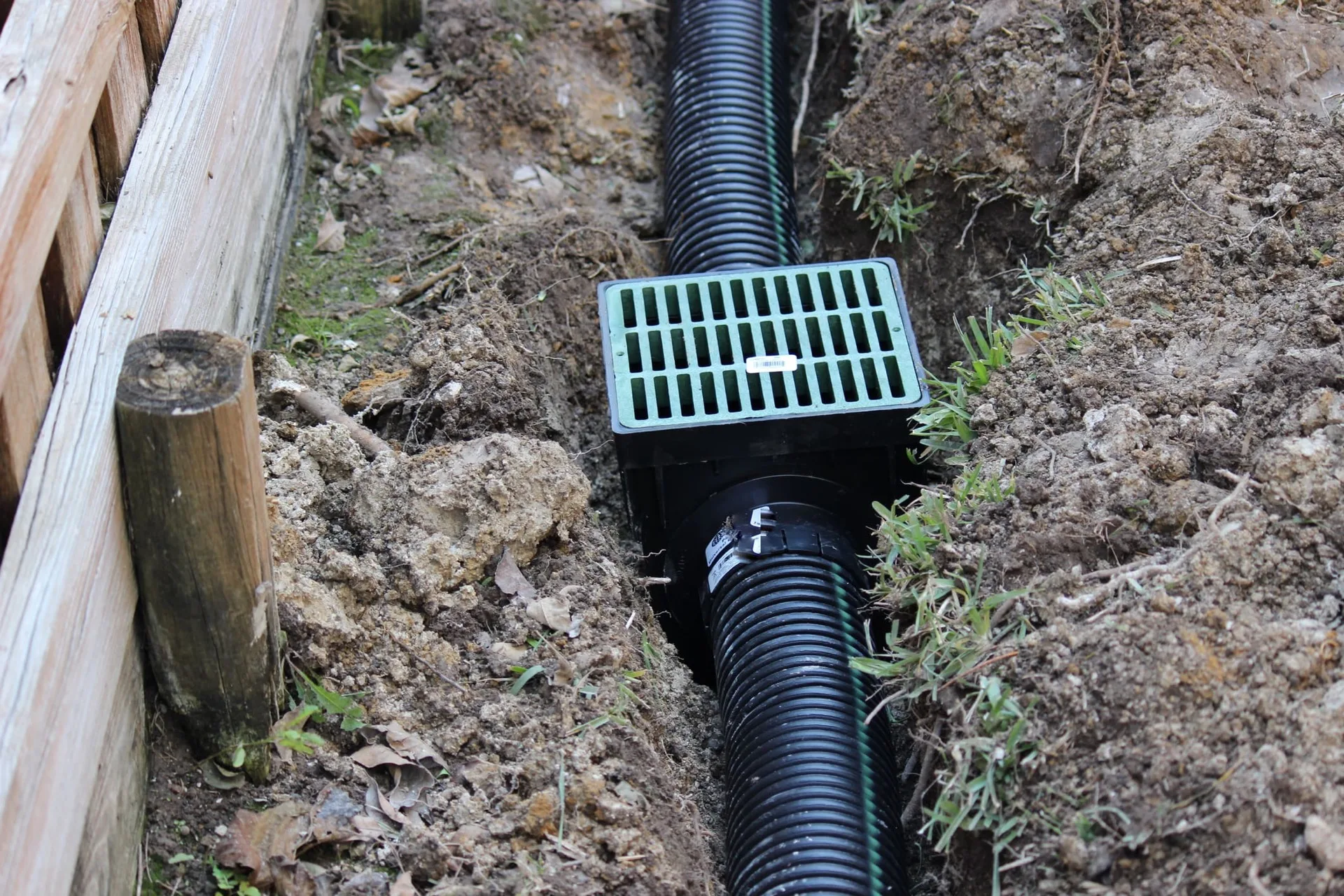
French drainage is a buried trench full of washed stone, usually with a perforated pipe running through it, that collects water from soggy ground and carries it somewhere it can leave your yard. That's the whole idea. Water takes the easiest path it can find, and a trench of loose stone is a much easier path than packed sand.
The name has nothing to do with France. It comes from Henry Flagg French, a Massachusetts judge and farmer who published a book called Farm Drainage in 1859. He was trying to dry out wet fields so his crops wouldn't drown. Farmers were burying stone and clay tile long before he wrote it, but his book is the reason the trench carries his name.
You'll see it called a few other things on quotes: curtain drain, rock drain, perimeter drain, weeping tile. A curtain drain is a shallow French drain built across a slope to catch water before it reaches something. A perimeter drain runs along a foundation, which is rare on Florida's slab homes. A "trench drain" usually means a grated channel set in concrete, which is a different system altogether. If two quotes use different names for what sounds like the same job, ask each contractor to walk you through the layers. The layers are what you're paying for.
Around North Port, Venice, Port Charlotte and Englewood, people usually start asking about French drains after a summer storm leaves the backyard under water for two days. Dennis gets that call all through the rainy season. Sometimes a French drain is exactly the right fix. Sometimes it's an expensive way to not fix anything. Telling those apart starts with knowing what's going on inside the trench.
How a French drain works, layer by layer
Every French drain is built from the same five parts. Skip one or do it cheap and the drain stops working. Usually not right away, which is the frustrating part. It handles a season or two of storms just fine, then slowly fills with sand.
- The trench. Usually 12 to 24 inches deep and 8 to 12 inches wide. The depth depends on where the water sits and how low the outlet is. Deeper isn't automatically better, and here in Florida it's often worse. More on that in the next section.
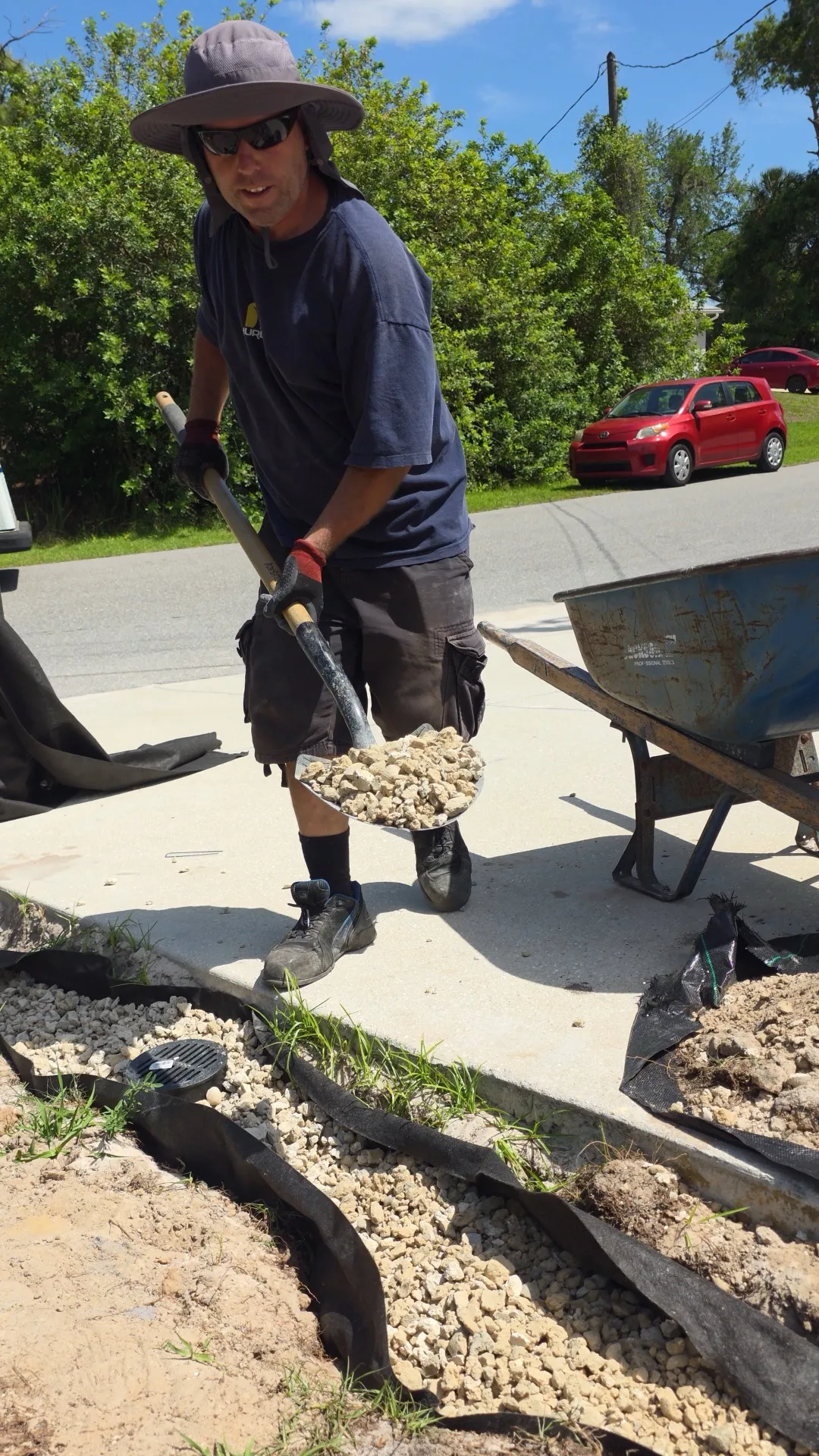
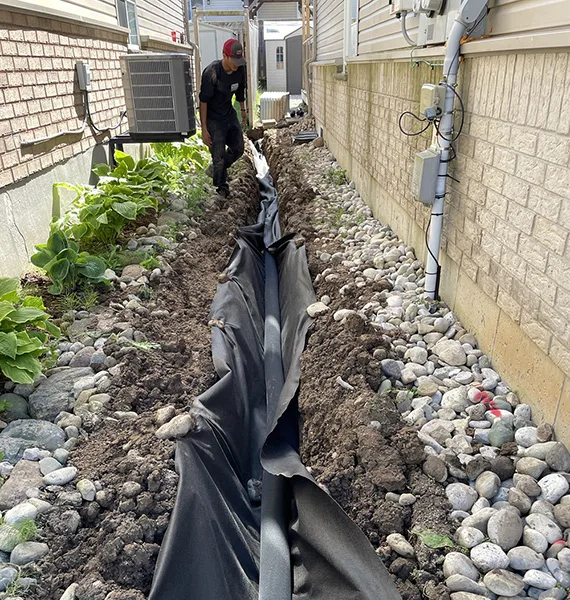
- Filter fabric. A non-woven drainage fabric lines the trench and folds over the top of the stone. It lets water through and keeps sand out. In our soil, this one layer decides whether a drain lasts a few years or a few decades.
- Washed stone. Clean gravel like #57 stone or pea gravel fills the trench around the pipe. "Washed" is the important word. Crushed concrete or limerock with fine dust mixed in packs down tight and clogs the drain from the inside.
- Perforated pipe. Usually 4-inch pipe, laid in the stone with the holes facing down. Water soaks into the stone, collects at the bottom of the trench, and enters the pipe as the level rises. The pipe carries it away far faster than stone alone could. A drain with no pipe at all is an old-style rock drain. It works, but it moves a lot less water.
- Slope and an outlet. The pipe has to fall the whole way, at least 1/8 inch per foot. That's about an inch every 8 feet, or a full foot of drop over a 100-foot run. At the low end the water needs somewhere to go: daylight at a lower part of the lot, a pop-up emitter, a swale, or a dry well.
Notice what's missing from that list: anything that pushes water uphill. A French drain runs on gravity and nothing else. It can only send water to a spot lower than where it collects it. In hilly parts of the country that's easy. In Southwest Florida, where plenty of lots barely drop at all between the back fence and the street, finding that lower spot is most of the job.
And there's a second problem under the sand that most of the how-to videos online never mention.
Why French drains act differently in SW Florida soil
Most French drain advice on the internet was written for clay soil up north. Clay doesn't let water soak in, so a drain gives the water a fast lane out. Our ground has a different set of problems, and they change how a drain here should be built.
The hardpan under the sand
A lot of North Port and Port Charlotte sits on Myakka fine sand. It's Florida's official state soil, named for the Myakka River that runs along North Port's west side. Dig a hole and you'll find light gray, almost white sand on top. Somewhere around 18 to 24 inches down you hit a dark brown layer the color of coffee grounds. That's the spodic layer most people call hardpan. Water moves through it slowly. Rain soaks the sand above it fast, reaches that layer, and backs up. That's why a North Port backyard can look like a pond an hour after a storm and still be soft two days later.
The water table comes up to meet you
In the summer rainy season, the water table on these soils can rise to within a foot of the surface and stay there for weeks. A French drain dug 24 inches deep in August is sitting in groundwater. It can't drain the water table. It can only carry off water that sits higher than its outlet. So a drain that works here is usually built to catch water near the surface and move it fast, not dug deep to chase groundwater it has no way to lower.
Flat lots and the outlet problem
Run the numbers on a 100-foot drain. At 1/8 inch per foot it needs about 12 inches of fall. If the trench starts 12 inches deep at the wet spot, it ends around 24 inches deep, and the outlet has to sit lower than that. On a flat lot there may be no such spot. The swale out front is often the lowest point on the property, and in North Port those swales are part of the city's stormwater system. Tying into one or reshaping it can require city approval. If you're in an HOA community like Heron Creek or the West Villages, expect the HOA to want a say in drainage changes too.
Fine sand gets into everything
Our sand is fine, and it moves. Without fabric, a little of it washes into the stone and pipe with every storm. The drain doesn't fail in a day. It carries a bit less water every year until one summer it carries almost none. In this soil, fabric is the difference between a drain and a buried pile of rock.
Venice and Englewood are a little more forgiving. Venice's sandy soil with shell mixed in drains better than North Port hardpan, and Englewood's coastal sand drains fast. Out there a French drain is more often about one low corner or a run of downspouts than a whole soggy yard. On Port Charlotte's canal lots the water usually wants to head for the canal, and where it's allowed to go once it gets there is a question to settle before anyone picks up a shovel.
Before anyone digs: Florida law requires a locate request through Sunshine 811 at least two full business days before digging. But 811 only marks public utility lines. Your irrigation pipes, landscape lighting wire, and the water line from the meter to your house are private, and nobody from 811 will flag them. A French drain trench crosses a lot of yard, so walk the route and map those lines before the trench goes in.
So with ground this tricky, how do you know a French drain is even the right fix for your yard?
When a French drain is the right call, and when it isn't
A French drain earns its price when the problem is water soaking through ground that stays wet. Here's what that usually looks like around here:
- A strip of lawn or a side yard that stays spongy for a day or more after rain while the rest of the yard dries out.
- Water seeping in along a fence line from a higher lot next door.
- Plant beds along the house that stay soggy long enough for plants to rot.
- A low spot that collects runoff from the lawn, with a lower place nearby to send it.
Here's when it's the wrong tool. If water sheets fast across your driveway or pool deck, you need a surface drain at the edge of the concrete, and our French drain vs. channel drain guide covers that in detail. If your yard is pitched toward the house, no drain will keep up until the grade gets fixed. And if there's nowhere lower on the property to send the water, a drain just stores it underground until it overflows.
| Fix | What it handles | Where it fits | Watch out for |
|---|---|---|---|
| French drain | Soggy ground, slow seepage, runoff soaking across lawn and beds | Side yards, fence lines, wet strips along beds | Needs fabric, steady fall, and a real outlet |
| Regrading or a swale | Surface water flowing the wrong way or sitting in a bowl | Yards that pitch toward the house or hold water in the middle | Has to fit the lot's original drainage plan and the lots next door |
| Catch basin + solid pipe | Water pooling in one low spot, roof water from downspouts | Low corners, downspout runs | Needs fall to an emitter or swale; keep the grate clear |
| Channel drain | Fast water running across concrete or pavers | Driveway ends, pool decks, garage fronts | Does nothing for a soggy lawn |
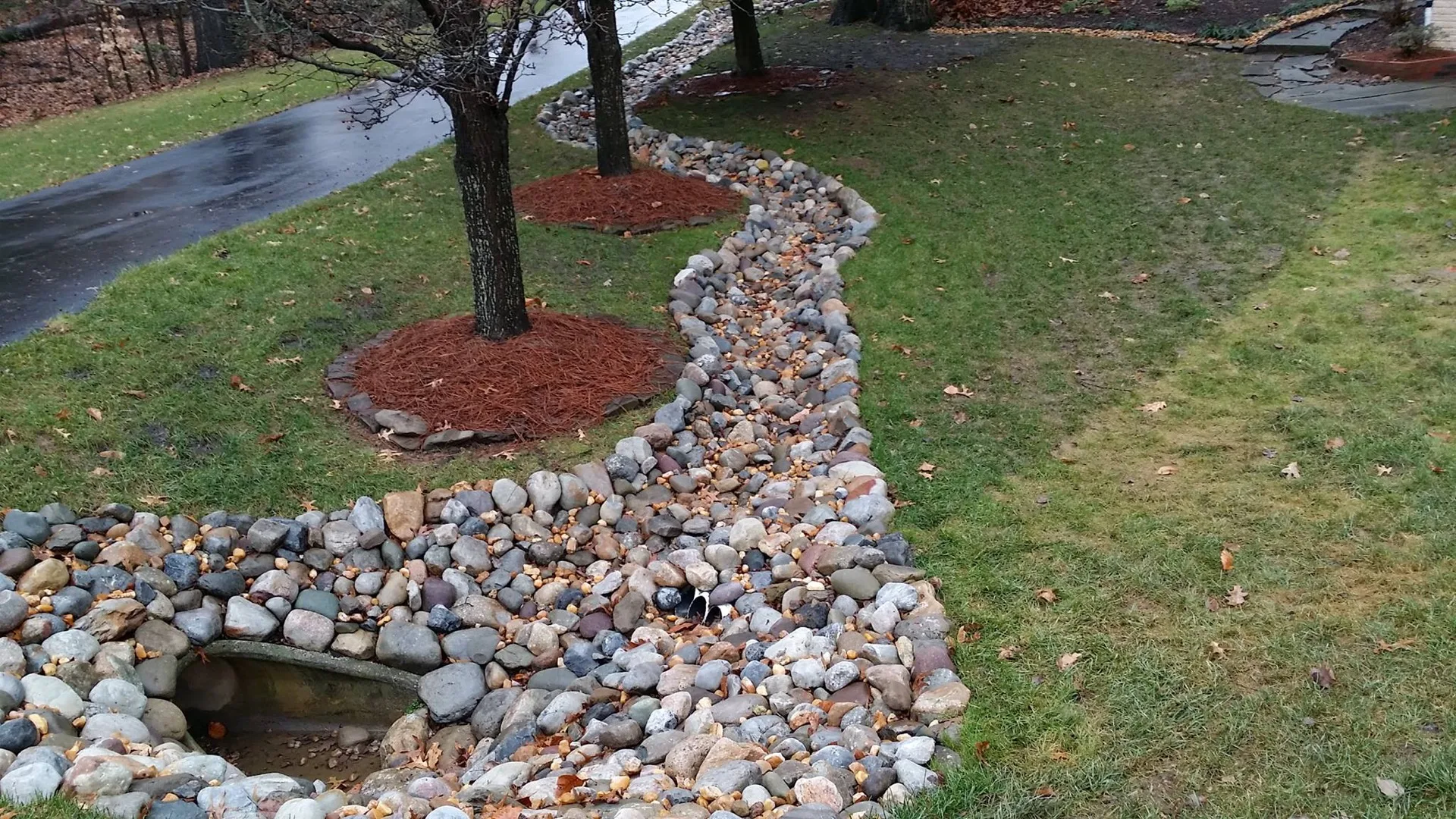
| Dry creek bed | Surface water you want to move in plain sight | Front yards, a path from downspouts to the swale | Mostly handles surface flow; can sit on top of a French drain |
Plenty of yards need two of these together. Regrading moves the surface water, and a short French drain or catch basin handles the one spot grading can't reach. That combination is the core of our grading and drainage work.
Tip from Dennis: Next time a hard afternoon storm rolls through, step outside with your phone. Film where the water comes from, where it sits, and how long it takes to go away. Show me that video when I come out for the estimate. It tells me more than an hour of talking, and most of the time it tells me right away whether you're looking at a French drain job or a regrade job.
Say the video points to a French drain. The next question is how to make sure you don't end up with one that quits after two summers.
Why French drains fail, and how to check yours
When a French drain stops working, it's almost always one of four things. Each one saves money during the install, which is exactly why they get skipped.
1. No fabric, or the wrong fabric
Some crews skip the fabric entirely. Others wrap a sock around the pipe and leave bare sand against the stone, or use woven silt fence because it's what's on the truck. Non-woven drainage fabric around the whole stone column is what keeps fine Florida sand out of the drain. A pipe sock by itself tends to clog in sand this fine.
2. Roof water dumped into the perforated pipe
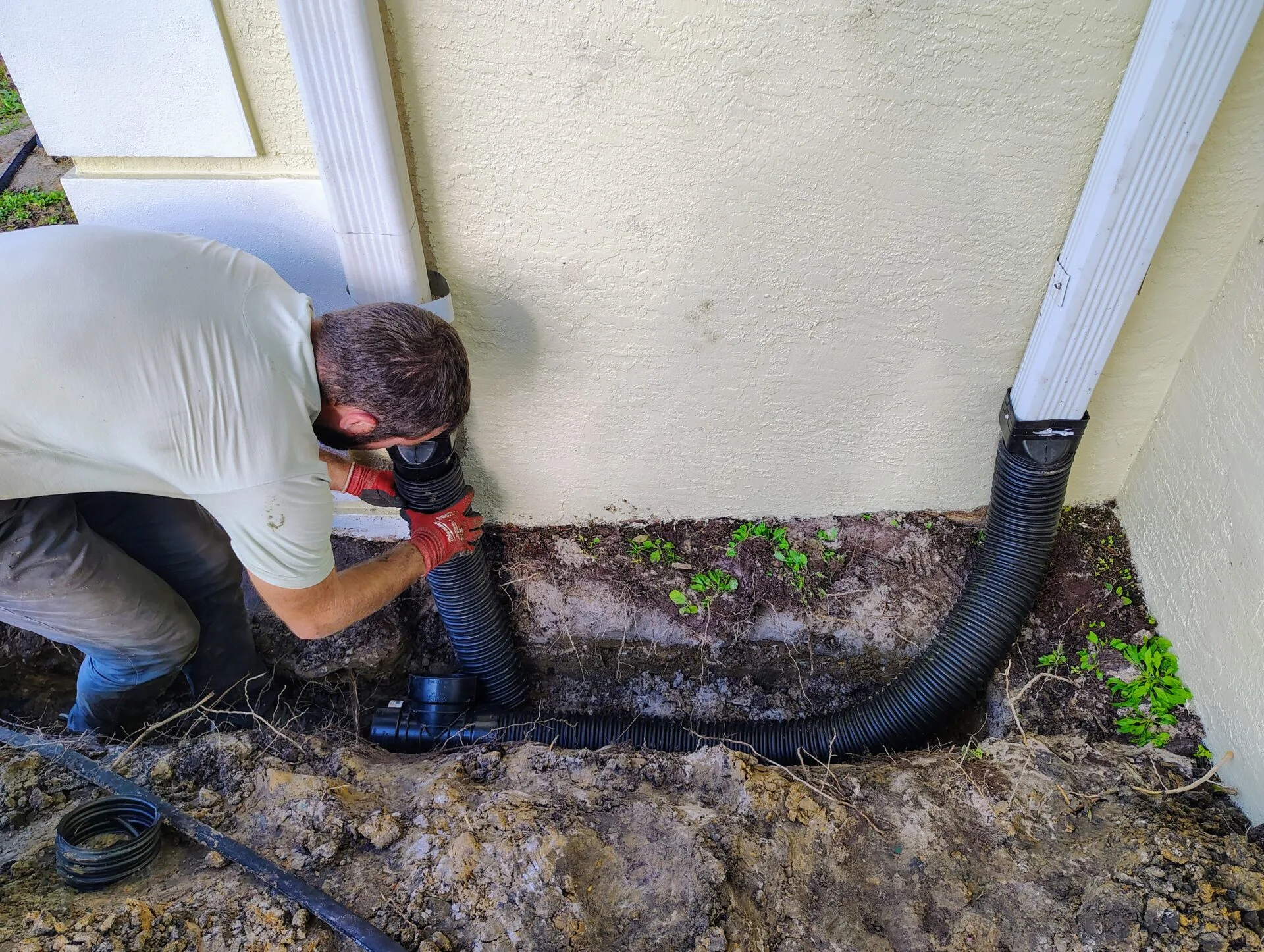
One inch of rain on 1,000 square feet of roof is about 620 gallons. Send that down a few downspouts into a perforated French drain and the pipe floods. Water gets pushed back out through the holes into the soil right next to your slab, the exact spot you were trying to dry out, and it drags sand into the system on the way. Roof water belongs in its own solid pipe running to an emitter or the swale.
3. A pipe that's flat or sags
If the pipe dips anywhere along the run, that low spot holds water between storms. Sand settles there. Over time the belly fills and the drain backs up behind it. Every foot of pipe has to keep falling, and on a flat Florida lot that takes a level or a laser. Eyeballing it doesn't work.
4. An outlet that's buried, broken, or in the wrong place
Pop-up emitters get covered by sod, buried under mulch, or snapped by a mower. Some outlets daylight into the first spot in the yard to flood, so the drain fills from the wrong end. If the outlet can't let water out, nothing upstream matters.
How to check a drain you already have: find the outlet first. Then run a garden hose into the high end or the cleanout for ten minutes. Water should show up at the outlet, and it should come out fairly clear. If nothing comes out, or it trickles out brown and slow, the drain is clogged, bellied, or both. A clogged drain can sometimes be flushed. A bellied one, or one built without fabric, usually has to be dug up and rebuilt.
All four of those failures come down to how much care went into the install. That's also what drives the price.
What a French drain costs in SW Florida
A typical residential French drain in our area runs about $25 to $50 per linear foot installed. At that rate, a 60-foot side-yard drain lands somewhere between $1,500 and $3,000. Where your job falls in that range comes down to a handful of things:
- Length and depth. More trench means more digging, more stone, more fabric, and more pipe.
- The outlet. A pop-up emitter at a swale 10 feet away costs a lot less than a long solid-pipe run to reach the only low spot on the lot, or a dry well dug where there's no other option.
- Access. A lot of North Port and Port Charlotte homes have narrow side yards with AC units and pool equipment in them. If a machine can't fit, the trench gets dug by hand.
- What goes back on top. New sod over the trench, a rock finish, or relocated irrigation heads all add to the total.
- Grading. If the yard needs regrading anyway, doing that first can shorten the drain or take away the need for one.
The cheapest quote usually saves its money in the places you can't see once the sod is back down: no fabric, dirty stone, a pipe laid by eye. You won't find out until the next rainy season. For a line-by-line breakdown of materials and labor, see the cost section of our French drain vs. channel drain article.
“Dennis was polite and very informative. Told me prices right up front did a great job. Will be back again next year. Thanks again guys.”
Ron Hoffman, Google review
Dennis handles drainage estimates the same way. He walks the yard, finds where the water comes from and where it's allowed to go, and gives you the number before any work starts. If a regrade fixes it for less than a drain, he'll tell you. You can see local drainage work on our North Port, Port Charlotte, Venice, and Englewood drainage pages, or read how standing water plays out on canal lots in our Port Charlotte standing water guide.
Here are the French drain questions that come up most on estimates.
Frequently asked questions
Why is it called a French drain?
It's named after Henry Flagg French, a Massachusetts judge and farmer who wrote Farm Drainage in 1859. Burying stone to drain wet ground is much older than that, but his book made the method popular in the U.S., and his name stuck to it.
How deep should a French drain be in Florida?
Most residential French drains are 12 to 24 inches deep. In SW Florida, the right depth depends on the outlet and the wet-season water table. A drain dug deeper than its outlet, or down into summer groundwater, won't move any more water. It'll just sit full.
Do French drains work in Florida's sandy soil?
Yes, when they're built for it. Fine sand will clog a drain that isn't wrapped in non-woven fabric, and the high summer water table limits how deep a drain can usefully go. Built with fabric, washed stone, steady fall, and a working outlet, a French drain handles soggy side yards and wet strips well.
Can I connect my gutter downspouts to a French drain?
Not to the perforated part. A downspout dumps a lot of water fast, and in a perforated pipe that water gets pushed back out into the soil, often right next to your foundation. Run downspouts through solid pipe to a pop-up emitter, a catch basin, or the swale instead.
Does a French drain need an outlet?
Yes. A French drain moves water. It doesn't make it disappear. Without an outlet lower than the trench, it fills up and stops working. A dry well can serve as the outlet on some lots, but where the water table runs high it often fills during the same storms you need it for.
How long does a French drain last, and how do I maintain it?
A well-built drain with proper fabric can work for decades. Keep the outlet clear of sod, mulch, and debris, and flush the line through the cleanout with a hose every year or two. Avoid planting trees with aggressive roots right on top of the trench.
Do I need a permit for a French drain in North Port?
It depends on where the work happens and where the water goes. Work that touches the swale in front of your house, or changes where water leaves your lot, can need city approval in North Port and other local cities. HOA communities usually want to review drainage changes too. Check with both before work starts.
Do you install French drains in North Port, Venice, Port Charlotte and Englewood?
Yes. French drains, catch basins, downspout lines, and regrading are all part of our grading and drainage work across Sarasota and Charlotte counties. Call Dennis at (941) 946-8403 for a free estimate. He'll walk the yard with you and tell you which fix it actually needs.