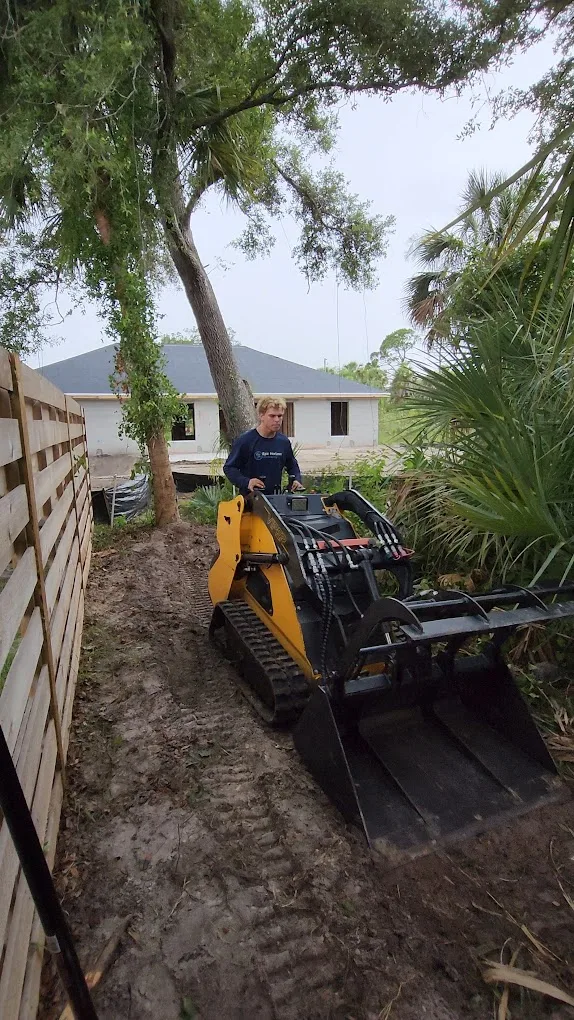
Why Standing Water Sits in Port Charlotte Yards
If you have standing water in your Port Charlotte yard two days after a storm, you're not alone. You're also not stuck with it. Port Charlotte gets about 54 inches of rain a year, and most of it falls between June and September. The afternoon storms that roll in off Charlotte Harbor can drop an inch in under an hour. Your yard has to move that water somewhere. When it can't, it sits there.
The ground here makes that harder. Port Charlotte soil is a mix of sand and organic material, and a lot of the city sits low. Walk Deep Creek, Harbor Heights, or the side streets off Kings Highway after a summer storm and you'll see the same thing: water parked in the same low corner of the same yards, every year.
Four things cause almost every standing-water problem we're called out for:
- The grade runs the wrong way. The yard pitches toward the house, the lanai, or a fence line instead of away from it. This is often left over from the original build, a pool job, or years of settling.
- The swale stopped working. Many Port Charlotte lots drain to a roadside or side-lot swale. Once it fills in with sod, sand, or a driveway extension, water has no exit.
- Downspouts dump in the wrong place. One roof can shed hundreds of gallons in a single storm. If all of it lands in a flower bed by the foundation, that bed turns into a pond.
- The water table is just high. On low lots and canal lots, the ground is already close to full in rainy season. Rain has nowhere to soak in, so it can only run off across the surface.
Every one of those causes looks the same from your kitchen window: a puddle. The fix for each one is different. So how do you tell which one you have before you pay anyone?
Read the Puddle Before You Pay for a Fix
Your puddle is telling you what's wrong. Before Dennis quotes a drainage job, he looks at three things. You can check all three yourself.
1. Where does it sit?
Water against the foundation or the lanai slab almost always means the grade or the downspouts. Water in the middle of the lawn usually means a low spot that settled. Water along the back property line or the canal side usually means the lot itself is low, or the swale is blocked.
2. When does it show up?
If it only shows up after big storms, you have a surface flow problem, and grading or a drain will handle it. If it shows up after your sprinklers run on a dry day, that's an irrigation problem. If it's there from July to September no matter what, you're looking at the water table, and that calls for a different plan.
3. How long does it stay?
A yard that clears in a few hours is doing its job. Sandy soil should drain fast. Water that's still sitting 24 to 48 hours later is killing the grass under it and softening the ground near your slab.
Do the 48-hour test. After the next real storm, take a photo of the wet spot right away, then again 24 and 48 hours later, from the same spot each time. Note whether your sprinklers ran. Those three photos tell us more than a 20-minute walk on a dry day ever will.
Sometimes the whole problem is the downspouts. Fix where the roof water goes and the yard dries out. That's the cheapest drainage fix there is, and one customer put it plainly:
"Did a Fantastic Job! was able to ground down spouts into the ground properly! did everything with exact specifications and precision."
— Certified Reviews, Google review
Downspouts aren't always the answer, though. When the ground itself is shaped wrong, you have a bigger choice to make.
Regrade, French Drain, or Catch Basin: What Each Fix Actually Does
Homeowners usually call asking for a French drain. Sometimes that's right. Often a regrade alone would have solved it for less money. Here's how the main options compare on the kind of lots we work on in Charlotte County.
| Fix | What it solves | Where it fails | Relative cost |
|---|---|---|---|
| Regrade the yard | Water flowing toward the house, low spots from settling, a filled-in swale | Lots with nowhere lower to send the water | $–$$ |
| Downspout extensions or buried downspout lines | Roof water flooding beds by the foundation | Problems that aren't coming off the roof | $ |
| French drain | Water that soaks in and lingers along a long run, like a side yard | Places where the water table sits high in rainy season, so the trench fills from below | $$ |
| Catch basin and solid pipe | Heavy surface flow in one low spot that has to be carried somewhere else | Lots with no legal or lower discharge point | $$–$$$ |
| Raise the area and plant for wet ground | Low lots where moving the water isn't realistic | Homeowners who want flat lawn wall to wall | $$ |
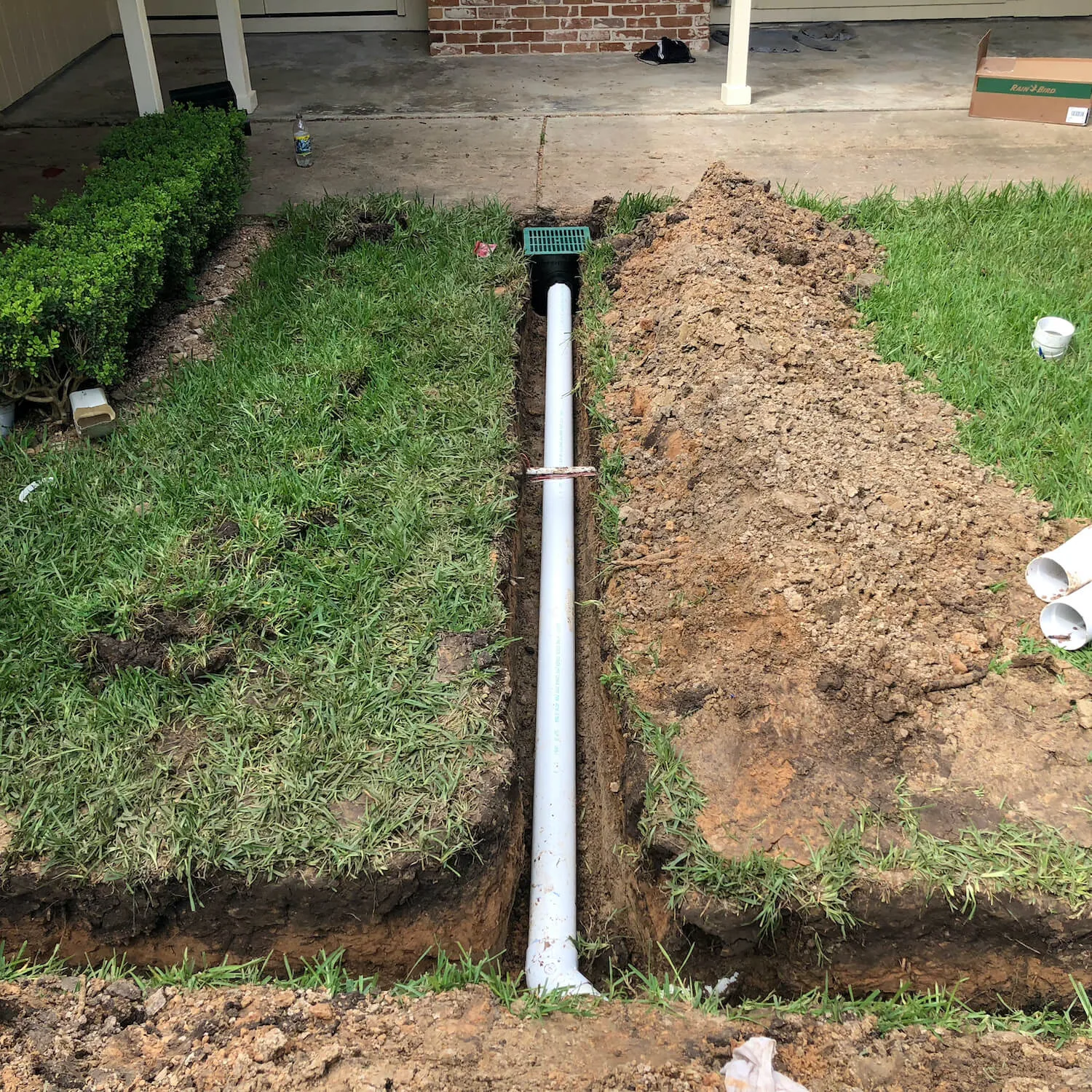
Every drain on that list has one rule: the water must end up somewhere lower than where it started. Pipe can't push water uphill. If there's no lower outlet, a drain is just a buried bucket. We've seen that in yards where another crew put in a French drain that ended in a dead-end gravel pit. It worked for one storm.
Be careful with dry wells and "pop it into the canal" fixes. A dry well depends on the ground soaking up water. In rainy season, a lot of Port Charlotte ground is already full, so the well fills and stays full. Running a pipe straight into a canal or a neighbor's swale can also break local stormwater rules. We check where water is allowed to go before we design anything.
That outlet question is easy on a lot with a working street swale. It's much harder on the lots Port Charlotte is known for: the ones backing up to the water.
Canal-Front and Low Lots: The Port Charlotte Problem
Port Charlotte has miles of canals, and a lot of homes back right onto them. Canal lots look like they should drain easily, since the water is right there. In practice they have three problems that inland lots in North Port or Venice don't:
- The water table rises with the canal. During high water and heavy rain, the ground near the seawall stays wet from below. Surface water has nowhere to soak in.
- Erosion at the back edge. Water running fast across the yard toward the canal carries sand with it. You see it as washouts along the seawall cap, under the fence, or at the corners.
- Fences and slabs in the flow path. A solid fence along the back line can trap water on the house side like a dam.
On these lots we usually don't try to force every drop out. We shape the yard so water moves slowly and evenly instead of cutting channels. We protect the fence line and the seawall edge, and sometimes we raise the beds near the house so the foundation stays dry. That's the kind of job one Port Charlotte-area canal customer wrote about:
"They did a great job helping us fix our landscaping near our canal and fence! We are looking forward to using their services for maintenance moving forward. Great guys who are honest and hardworking."
— Corey Cyr, Google review
Low inland lots near the Peace River and in older parts of Murdock follow the same idea. If there's nowhere lower to send the water, you build up what matters and let the low corner be low on purpose.
Fixing the water is half the job. The other half is what you put back on top of it. That's where a lot of drainage jobs fall apart six weeks later.
Sod, Irrigation and Plants After the Water's Gone
New sod goes on the new grade, not on top of the old problem
Grass that sat underwater for a summer is usually dead or thin. Once the grade is fixed, the dead sod comes out and new sod goes on the corrected ground. We don't bring in topsoil under sod. The prep is grading, leveling, and making sure the water runs where we just told it to. If you're pricing sod in Port Charlotte, FL for a wet spot, ask whether the quote includes fixing the grade first. If it doesn't, the new sod will rot in the same place the old sod did.
Check the sprinklers before you blame the rain
A lot of "drainage problems" are irrigation problems. We see broken heads that gush, zones running in the rain, and rotors watering the same low corner the rain already floods. Good irrigation work in Port Charlotte means checking each zone, fixing broken heads, and adjusting run times so you aren't adding water to a yard that's already full. Sometimes we move or cap heads that sit in the wet zone.
Plant for the spot you actually have
Some low corners will always be wetter than the rest of the yard. Instead of fighting that, plant for it. Fakahatchee grass, swamp hibiscus, and other plants that tolerate wet feet can turn a soggy corner into a bed that looks planned. We install these plants and fertilize them as they establish. We don't fertilize lawns.
All of that only works if the person doing the job knows which problem they're fixing. So how do you tell a crew that does from one that's guessing?
What to Ask Landscapers in Port Charlotte Before You Hire
There are plenty of landscapers in Port Charlotte. Fewer of them do grading and drainage, and fewer still will tell you when you don't need the expensive fix. Ask these questions on the estimate:
- "Where is the water going to end up?" If they can't point to a lower outlet that's allowed, the drain won't work.
- "Why this fix instead of a regrade?" A good answer names your specific grade, soil, or water table. A bad answer is "French drains always work."
- "What happens to my sprinklers?" Trenching cuts irrigation lines. The quote should cover repairing them.
- "What if it still puddles after the first big storm?" You want a crew that comes back and looks at it.
- "Who's going to be on site?" On our jobs, that's Dennis. He measures the lot, shoots the grade, and stays on the job until the water does what he said it would.
Dennis has been doing this work across Port Charlotte, North Port, Venice, and Englewood since 2022. He'll tell you on the first call if what you're describing sounds like a $300 downspout fix or a full regrade. Call him at (941) 946-8403, or look at our grading and drainage work in Port Charlotte and our Port Charlotte landscaping page.
Frequently Asked Questions
How long should water stand in my Port Charlotte yard after a storm?
Most Port Charlotte yards should be clear within a few hours, and certainly within a day. Water still sitting 24 to 48 hours after the rain stops means a grade, swale, or water table problem. If it lasts that long, the grass under it is already suffering.
Can I just lay new sod in Port Charlotte over the wet spot?
Not if you want it to live. New sod on a low spot dies the same way the old sod did. Fix the grade first, then lay the sod on the corrected ground. Our sod prep is grading and leveling for drainage, not adding topsoil. See our sod installation in Port Charlotte page for how we do it.
Could my sprinklers be causing the standing water?
Often, yes. If the puddle shows up on dry days after the system runs, look for a broken head, a leaking line, or a zone set too long. We handle irrigation repair in Port Charlotte as part of most drainage jobs, because trenching and regrading usually touch the lines anyway.
Will my lawn service in Port Charlotte fix drainage?
Most mowing crews don't. Drainage takes grading equipment, a level, and a plan for where the water goes. We do both. Our lawn service in Port Charlotte covers mowing, and our drainage work is a separate job with its own estimate.
What does lawn care in Port Charlotte, FL include with Epic Horizons?
For us, lawn care in Port Charlotte means mowing, edging, and keeping the yard clean. We don't fertilize grass and we don't do pest control. If you have bugs in your lawn, call a pest company. If the problem is water, call us.
Should I buy plants from a nursery in Port Charlotte, FL for my wet corner?
You can, but pick plants rated for wet soil, not the ones on the end cap. Fakahatchee grass and swamp hibiscus handle wet feet better than most shrubs. We can source, place, and install them for you, and fertilize them while they get established.