A pavers patio in Venice has a harder life than one in Orlando or Tampa. Salt air drifts in off the Gulf, the ground under your yard is sandy loam full of shell, and from June through September it rains hard almost every afternoon. Most patio ideas you'll find online were never tested against any of that.
I'm Dennis, owner of Epic Horizons Landscaping. We build paver patios, walkways, and pool decks across Venice, North Port, Port Charlotte, and Englewood. Below are the patio layouts that actually hold up here, the materials worth paying for, and the ones I'd steer you away from — even when they look great in a catalog.
Why Venice Patios Fail Differently
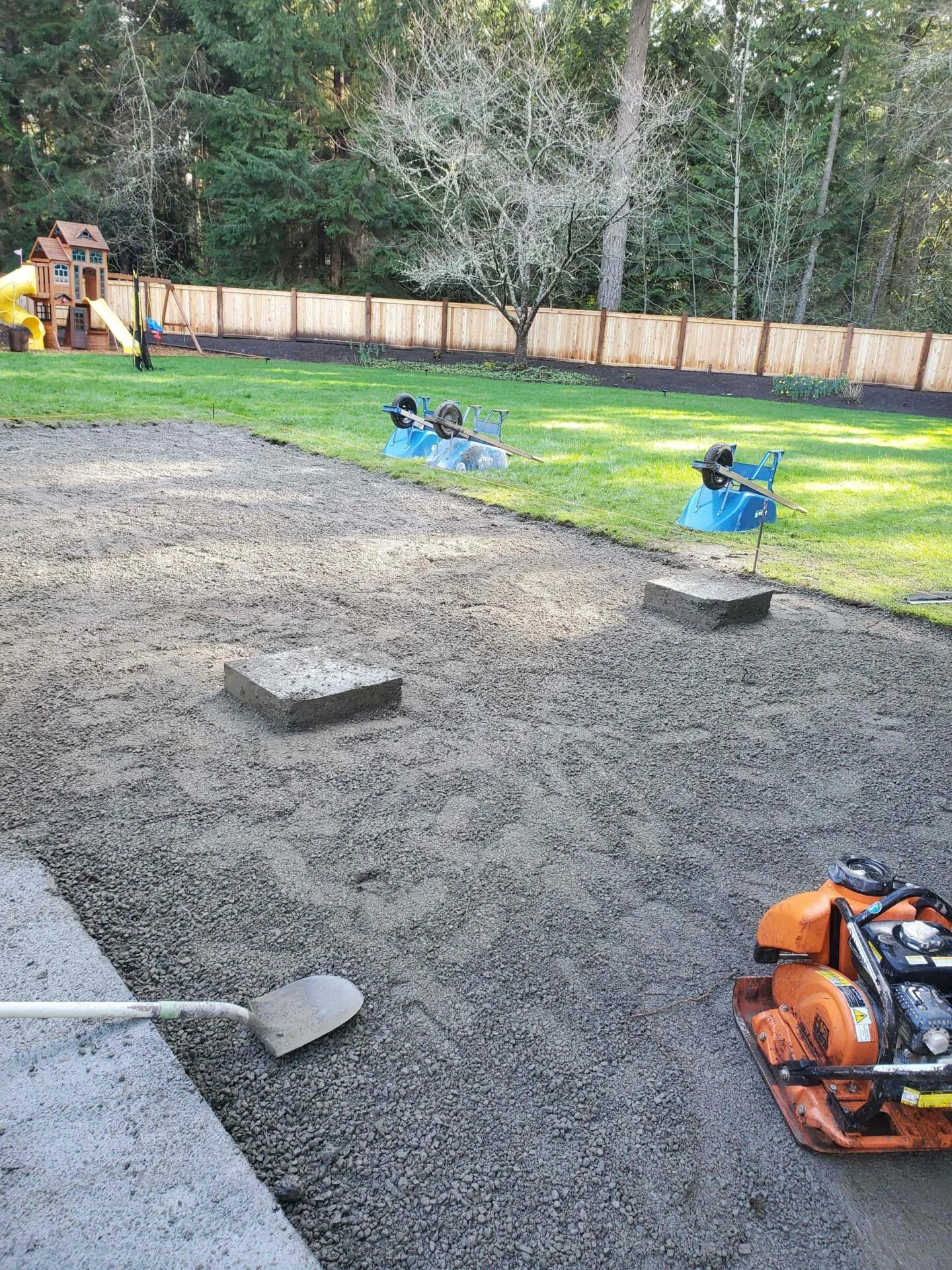
Every paver patio fails from the bottom up. The pavers themselves almost never break. What goes wrong is the base underneath, the edge that holds everything in place, or the water that has nowhere to go.
In Venice, three things push on a patio at once:
- Shell-heavy sandy soil. It drains fast in some spots and packs hard in others. If the crew doesn't dig past the loose top layer and compact a real base, the patio settles unevenly within a couple of rainy seasons.
- Salt spray. The closer you are to the beach, the more salt lands on your patio. It leaves white residue on some concrete pavers and wears down cheap sealers fast.
- Summer downpours. Venice gets roughly 55 inches of rain a year, and most of it lands in four months. A patio pitched the wrong way sends that water against your foundation or into your lanai.
None of these are reasons to skip a patio. They're reasons to pick the right idea for your lot. And the idea that works on a canal lot in Pelican Pointe is not the same one that works in a small backyard on the Island. So which layouts are worth building?
7 Paver Patio Ideas That Work in Venice
1. The lanai extension
Most Venice homes have a screened lanai that's too small to actually live on. Extending past the screen with pavers gives you room for a grill and a table without a full remodel. The key detail: the new pavers have to slope away from the slab — about a quarter inch per foot — so rain doesn't run back under your screen door.
2. Travertine pool surround
If you have a pool, travertine pavers are the upgrade people notice. They stay cooler underfoot than concrete, and the tumbled finish isn't slick when wet. Near the coast, a quality travertine with a good sealer handles salt better than most budget concrete pavers.
3. Fire pit circle off the main patio
A circular paver pad with a fire pit, connected to your main patio by a short path. Our winters are perfect for it — November through March is fire pit season here. Use a circle kit or cut pavers on site, and keep it at least 10 feet from the house and any overhanging palms.
4. Patio that flows into the driveway pavers
If you already have driveway pavers, matching the color and pattern on a side or front patio makes the whole property look planned. If you're doing both at once, you save on mobilization and material delivery. Just know the driveway needs a deeper base than the patio — same look on top, different build underneath.
5. Seat wall patio
A low seat wall around one or two sides gives you built-in seating and hides the AC unit or pool equipment. It also gives a hard edge against beds, so mulch and rock don't wash onto your patio every storm.
6. Shell or rock border
Venice is a shell town. A border of crushed shell or river rock between your patio and the lawn handles runoff, stops grass from creeping into the joints, and looks like it belongs here. We've done shell borders around lanais and they're one of the cheapest upgrades with the biggest visual payoff.
7. Stepping-stone path to a small sitting pad
Not every backyard needs a big slab. On tight Venice Island lots, a few large pavers across the lawn leading to a 10x10 sitting area under a shade tree can do more than one big patio. Less material, less cost, and less hard surface shedding water.
Any of these will look good the day we finish. Whether they still look good in five years comes down to what they're made of — and that's where most homeowners get sold the wrong thing.
Travertine, Bluestone, Limestone, or Concrete Patio Pavers?
Here's the honest comparison for backyard pavers in a coastal SW Florida yard. Prices are fully installed patio ranges based on what we see on our jobs — your site can move them up or down.
| Material | Heat underfoot | Salt air | Installed cost (per sq ft) | Our take for Venice |
|---|---|---|---|---|
| Concrete patio pavers (tumbled) | Warm to hot | Good with sealer | $17–$21 | Best value. Huge color range, easy to match HOA standards. |
| Travertine pavers | Cool | Good with sealer | $21–$27 | Top pick around pools and anywhere you walk barefoot. |
| Limestone pavers | Cool to warm | Fair — softer stone | Quote by stone | Beautiful, but softer. Needs sealing and more care near the coast. |
| Bluestone pavers | Hot — dark stone | Fair | Quote by stone | Gorgeous up north. In full Venice sun, it gets too hot to stand on barefoot. |
Bluestone is the one I talk people out of most. It's a great stone. It just wasn't made for a backyard that sits in direct Florida sun from 10 a.m. to 5 p.m. If you love the look, put it in a shaded spot or on a covered area.
Barefoot test: Before you pick a paver, ask for a sample and leave it in your backyard sun for an afternoon. Step on it at 3 p.m. That one test settles more patio debates than any brochure.
Choosing the paver is the fun part. But I can put the most expensive travertine in Venice on a bad base and you'll be calling someone to fix it in two years. Here's what's underneath that matters.
What's Under Your Backyard Pavers Matters More
The cheapest patio quote you get almost always saves money in the same place: the base. You can't see it once the pavers are down, so it's easy to cut. Here's the difference.
Drainage is the part people forget. A new patio is a big hard surface. All the rain that used to soak into your lawn now runs off it. If your yard already holds water after a storm, the patio can make it worse unless we plan where that water goes — a swale, a shell border, or a drain at the low edge. We look at that during the estimate, not after the pavers are down.
Watch out for the "sealed same day" pitch. Polymeric sand needs to cure before sealer goes on. A crew that seals the same afternoon they finish is skipping a step. On a coastal patio, that sealer is your main defense against salt — it needs to go on right.
"Dennis did a great job on our paver driveway! It is truly beautiful."
— Karen Appel
So the base is where the money should go. Which raises the obvious question: how much money are we talking?
What a Paver Patio Costs in Venice
For a new concrete-paver patio, we typically land between $17 and $21 per square foot installed. Travertine runs about $21 to $27. A 12x16 patio — a common lanai extension size — works out to roughly $3,300 to $4,000 in concrete pavers. Full breakdowns are in our paver installation cost guide.
Four things move the price the most:
- Demo. Tearing out an old concrete slab or failed patio adds labor and haul-off.
- Access. If we can't get equipment into the backyard, base material goes in by wheelbarrow. That adds time.
- Shape. Curves, circles, and borders mean more cuts. A simple rectangle is the cheapest layout.
- Drainage work. If the yard needs regrading or a drain before the patio can go in, that's part of the job.
Searching "pavers near me" will turn up a dozen companies. Ask each one the same three questions: how deep is the base, what holds the edges, and which way does the water go. If they can't answer fast, keep calling.
Price is only half of it in Venice, though. A lot of patios here have to get approved before a single paver gets ordered.
HOA Approval and Planning Your Venice Patio
Venice has a lot of HOA communities, and most of them want to see your patio plan before work starts. That usually means a site sketch, the paver color and style, and sometimes a sample. Some neighborhoods have an approved color list. If you're on Venice Island, ask your HOA or the city whether any architectural review applies to your property before you fall in love with a color.
Here's how we handle it. Dennis comes out, measures, and sketches the layout with you. We give you the paver specs and color names so you can submit to your HOA. Once you're approved, we schedule. Most patios take two to four days once we start, depending on size and how much demo is involved.
Best time to build: the dry season, November through April. The ground is firmer, the base compacts better, and nothing gets washed out mid-job. We build in summer too — we just plan around the afternoon storms.
If you want to see the full scope of what we do in your area, start with our paver installation in Venice page or our broader hardscaping in Venice work. Still have questions? These are the ones we hear most.
Frequently Asked Questions
What are the best pavers for a backyard patio in Venice FL?
For most backyard pavers here, tumbled concrete pavers give the best value and the widest color choice. If the patio is by a pool or you walk on it barefoot, travertine pavers are worth the extra cost because they stay cooler. We'd skip dark stone like bluestone in full sun.
Are travertine pavers better than concrete patio pavers?
Not better across the board. Travertine is cooler and looks more upscale. Concrete patio pavers cost less, come in more colors, and are easier to match to HOA standards. Both last for decades on a properly built base, and both should be sealed near the coast.
Do limestone pavers hold up near the beach?
They can, but limestone is softer than travertine or concrete. Salt and foot traffic wear it faster. If you're within a mile or two of the Gulf, plan on sealing it and resealing on schedule. Our paver sealing guide covers timing.
Can you match my new patio to my existing driveway pavers?
Usually, yes, if the manufacturer still makes that paver. Older pavers fade, so even an exact match looks a little brighter for the first year. Bring us the name off your original invoice if you have it.
How long does a pavers patio last in Florida?
Built on a compacted base with real edge restraint and good drainage, a paver patio lasts 25 years or more. The pavers outlive the sand and sealer — those need occasional top-offs. Most failures we see come from a thin base, not bad pavers.
How do I find good pavers near me in Venice?
Look at reviews that mention paver work specifically, and ask how deep the base is and how the patio will drain. You can also call Dennis directly at (941) 946-8403. Estimates are free, and he'll tell you on the spot whether your yard needs drainage work first.
Got a spot in your backyard that's been waiting for a patio? Send Dennis a photo or call (941) 946-8403. He'll come measure, walk the drainage with you, and give you a straight number — no pressure, and the estimate's free.