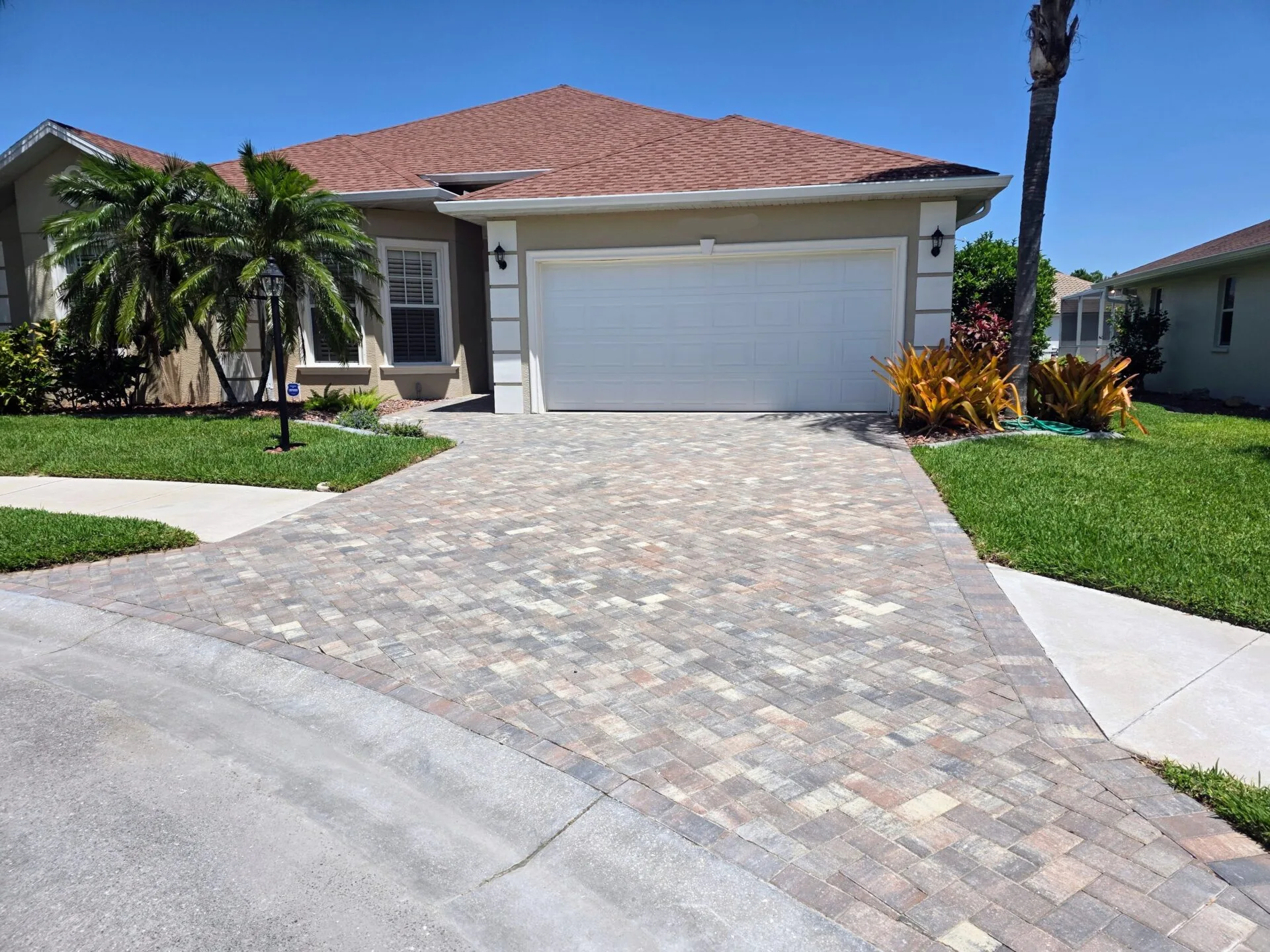
What Paver Sealer Actually Does
Before we argue about whether you need it, let's clear up what sealer actually is. Paver sealer is a liquid coating — either water-based or solvent-based — that soaks into or sits on top of your pavers. It does a few things:
- Locks in joint sand. The polymeric sand between your pavers stays put instead of washing out during heavy rain or getting excavated by ants.
- Reduces staining. Oil, leaf tannins, rust — they sit on top of the sealed surface instead of soaking into the paver.
- Enhances color. Most sealers darken pavers slightly and bring out the pigment, making them look freshly installed. A "wet look" sealer takes this further.
- Slows weed growth. By hardening the joint sand and reducing gaps, sealer makes it tougher for weed seeds to take root between pavers.
That all sounds great, right? So why doesn't every paver installation get sealed immediately? Because sealer also introduces maintenance, cost, and in Florida specifically, some real problems if it's done wrong.
Why Florida Is Different
Most paver sealing advice online comes from companies in the Northeast or Midwest. Their climate is nothing like ours. Here in North Port, Venice, Port Charlotte, and Englewood, we deal with conditions that change the sealing equation completely:
UV Exposure
SW Florida gets brutal sun year-round. Sealer breaks down under UV radiation. What lasts 4-5 years in Pennsylvania might last 2-3 years here — sometimes less on a south-facing driveway with zero shade. That means more frequent reapplication and more cost over the life of the pavers.
Humidity and Moisture
We average over 50 inches of rain a year, most of it dumped between June and October. If sealer is applied when moisture is still trapped in the paver — or if it doesn't cure properly because humidity is 90% — you get a cloudy, white haze called "blushing." It looks terrible and it's a pain to fix. This is the single most common sealing failure we see on jobs around here.
Heat
Pavers in direct Florida sun can hit 150°F on a summer afternoon. Solvent-based sealers can soften and get tacky at those temperatures. You track it inside on your shoes. Pool deck pavers are especially vulnerable because people are walking on them barefoot — a sticky sealer on a hot pool deck is not just annoying, it can actually peel skin.
Mold and Algae
Some sealers — particularly the high-gloss film-forming types — trap moisture underneath. In our humid environment, that's an invitation for mold and algae to grow under the sealer where you can't clean it without stripping the whole coating. Now you're worse off than if you'd never sealed at all.
Watch out: A lot of pressure washing companies in SW Florida upsell sealing after cleaning your pavers. Many of them apply the sealer the same day — while pavers are still wet inside. This almost guarantees blushing and trapping moisture. Pavers should dry for at least 24-48 hours after cleaning before any sealer touches them, and humidity needs to be reasonable during the cure window.
Sealed vs. Unsealed: Side-by-Side
Here's the honest comparison. Neither option is universally "better" — it depends on your situation, your pavers, and how much maintenance you want to deal with.
| Factor | Sealed Pavers | Unsealed Pavers |
|---|---|---|
| Color retention | Enhanced color, looks richer initially | Gradual fading over years — natural look |
| Weed resistance | Significantly reduced weed growth in joints | More weed pressure, especially after heavy rains |
| Joint sand stability | Locked in place — survives heavy rain better | Can wash out over time, needs periodic re-sanding |
| Stain resistance | Oil and tannin stains easier to clean | Stains can penetrate — harder to remove |
| Upfront cost | $1.50–$3.00/sq ft for professional application | $0 |
| Ongoing maintenance | Strip and reseal every 2–4 years ($$$) | Occasional re-sanding and cleaning |
| Slip resistance | Can become slippery when wet (especially gloss types) | Naturally textured and slip-resistant |
| Risk of application failure | Blushing, peeling, trapping moisture — real risks in FL | No application to fail |
| 10-year total cost (1,000 sq ft) | ~$4,500–$9,000 (initial + 2-3 reseals) | ~$300–$600 (periodic cleaning and sand) |
Look at that last row. Over a decade, sealing can cost you 10x more than leaving pavers unsealed. That doesn't mean sealing is always wrong — but it means you should know what you're signing up for.
When Sealing Makes Sense
We're not anti-sealer. There are specific situations where sealing your pavers is genuinely worth it:
1. Driveway Pavers with Oil Drip Concerns
If you park vehicles on your paver driveway and oil stains drive you crazy, a penetrating sealer gives you a fighting chance at keeping them clean. We'd still recommend a penetrating sealer over a film-forming one — more on that below.
2. Light-Colored Pavers in Heavy Tree Cover
Tan, cream, or white pavers under oak trees will absorb tannin stains from leaves and acorns. In SW Florida where live oaks drop debris year-round, a sealer can save you from permanent orange-brown staining. This is a legitimate reason to seal.
3. Areas with Chronic Ant Activity or Sand Washout
Some spots — especially near sandy soil or areas that get heavy water flow — lose joint sand constantly. If you're tired of re-sanding every few months, sealing locks that sand in and saves you ongoing hassle.
4. You Genuinely Prefer the Enhanced Look
Some homeowners just love the way sealed pavers look — that rich, darkened color with defined edges. That's a perfectly valid reason. Just understand you're committing to resealing every few years to maintain it.
Our recommendation: If you do seal, wait at least 90 days after installation. New pavers have efflorescence — a white mineral haze that naturally works its way out over the first few months. Sealing over efflorescence traps it permanently and makes your pavers look washed out and cloudy.
When You Can Skip It
Honestly? Most residential paver installations in SW Florida do just fine without sealer. Here's when we'd say save your money:
- Pool decks. Slip risk goes up with sealer, especially gloss types. The pavers are constantly exposed to pool water, splash, and chlorine. Unsealed pavers with good polymeric sand are the safer, lower-maintenance choice around pools.
- Covered lanai or patio pavers. If your pavers are under a roof or screen enclosure, they're already protected from the worst UV, rain, and debris. Sealing is mostly cosmetic here and often not worth the cost.
- Dark-colored pavers. Charcoal, dark grey, and espresso-toned pavers don't show staining the way light pavers do. They also don't benefit as dramatically from color enhancement. The cost-benefit just isn't there.
- Budget-conscious projects. If you'd rather put that $2,000–$3,000 toward extending your paver patio another 100 square feet, that's a better investment. The pavers themselves will last 25+ years without sealer.
"Hired Epic Horizons to install pavers around our pool and could not be happier. Dennis was thorough in his estimate and explanation of the project. The crew showed up on time every day and the finished product is stunning." — Patricia L.
Patricia's pool pavers? Unsealed. Still look fantastic. Proper installation with quality polymeric sand does 80% of what people think sealer does.
Types of Paver Sealers Explained
If you do decide to seal, the type of sealer matters enormously — especially in Florida. Here's the breakdown:
Penetrating Sealers (Impregnating)
These soak into the paver without leaving a surface film. They don't change the appearance much — maybe a very slight darkening. They protect against stains and moisture absorption from the inside out.
Best for Florida? Yes. These handle our heat and humidity better because there's no surface film to trap moisture, blush, peel, or get tacky. They also maintain the paver's natural slip resistance. Downside: they don't lock joint sand as effectively and don't give you that "wet look" enhancement.
Film-Forming Sealers (Acrylic)
These sit on top of the paver and create a visible coating. They come in matte, satin, or high-gloss finishes. They're the ones that give you color enhancement and lock joint sand.
Best for Florida? Risky. They're more prone to blushing, peeling, and becoming slippery. If you go this route, use a water-based acrylic with a non-slip additive, and make sure whoever applies it knows what they're doing in high-humidity conditions. Avoid solvent-based in areas that get direct afternoon sun.
Polyurethane Sealers
The most durable option — very hard, chemical-resistant coating. Used more in commercial applications.
Best for Florida? Overkill for residential. Expensive to apply and even more expensive to strip and reapply. Unless you're sealing a commercial plaza, skip it.
Why Installation Quality Matters More Than Sealer
Here's what we really want to drive home: a well-installed paver system doesn't need sealer to perform. The things homeowners think sealer fixes — shifting pavers, weed growth, sand washout, settling — are actually symptoms of poor installation.
Proper Base Preparation
We compact a crushed shell or limestone base to a minimum depth that matches the load the pavers will carry. Driveway? That base is thick and compacted in lifts. Patio? Still compacted properly, not just thrown down. A solid base prevents settling and shifting — no sealer in the world fixes a bad base.
Correct Grading and Drainage
Pavers need to slope away from structures at the right pitch. Water that pools on pavers causes algae, accelerates joint sand erosion, and creates slip hazards. We grade the base before pavers go down so water moves where it should. Sealer doesn't fix ponding water.
Quality Polymeric Sand
We use high-quality polymeric sand that activates with water and hardens in the joints. Good poly sand resists washout, inhibits weed growth, and discourages ants — the same things people pay for sealer to do. The difference is the poly sand is already included in a proper installation.
Edge Restraints
Pavers need edge restraints — concrete, aluminum, or spikes — to prevent lateral spreading. Without them, the perimeter pavers slowly creep outward, joints open up, and the whole system degrades. Again, sealer can't hold a paver system together that's missing edge restraints.
"Dennis and his team did an outstanding job on our landscaping. They were on time, professional, and the attention to detail was incredible. Our yard looks better than we ever imagined." — Mike T.
The point is: if your installer cuts corners on base prep, grading, poly sand, or edge restraints, sealer is just lipstick on a problem. If they do it right, sealer becomes optional — a cosmetic choice, not a structural necessity.
Frequently Asked Questions
How long after paver installation should I wait to seal?
At minimum 90 days. New concrete pavers go through an efflorescence phase where white mineral salts migrate to the surface. You need to let that process complete and then clean the pavers before sealing. Sealing too early traps efflorescence under the coating permanently.
Can I seal pavers myself or should I hire a professional?
You can do it yourself, but the margin for error in Florida is thin. Applying sealer in too-humid conditions, over damp pavers, in direct sun, or too thickly all cause failures. If you're going to DIY, use a penetrating sealer — it's more forgiving. Film-forming sealers are much harder to apply correctly and even harder to fix when they go wrong.
Does sealing pavers prevent mold and algae?
This is a common misconception. Standard sealers do not prevent mold or algae growth. In fact, film-forming sealers can make mold worse by trapping moisture beneath the coating. Some sealers contain mold inhibitors, but they wear off quickly in our climate. Regular cleaning is more effective at controlling mold and algae than sealing.
How much does it cost to seal pavers in SW Florida?
Professional paver sealing in the North Port, Venice, and Port Charlotte area typically runs $1.50 to $3.00 per square foot, depending on the sealer type and the condition of the pavers. A 1,000-square-foot driveway might cost $1,500 to $3,000 per application. Factor in that you'll need to reseal every 2-4 years and the lifetime cost adds up fast.
Will unsealed pavers fall apart or deteriorate?
No. Quality concrete pavers are rated to last 25-50+ years. They're designed to handle freeze-thaw cycles in northern climates — Florida's weather is actually easier on them. Unsealed pavers may fade slightly over many years, but they won't crumble, crack, or deteriorate from lack of sealer. The base system underneath is what determines longevity, not the sealer on top.
Do you seal pavers at Epic Horizons?
We focus on paver installation — doing the base prep, grading, drainage, and installation right so that sealing is a choice, not a requirement. We're always happy to discuss whether sealing makes sense for your specific project during a free estimate. Give Dennis a call at (941) 946-8403 and we'll walk through it with you.
Related: What landscaping actually costs in Southwest Florida — median rates from 105 real quotes.