Local Expertise
Placida's coastal sand is the reason paver installations fail — and most crews don't build the base for it.
Unlike the compacted sandy loam or clay soils found inland, Placida's loose coastal sand provides minimal natural compaction resistance under a paver base. After heavy rain, the saturated sand beneath the base loses what little compaction was achieved during installation and pavers begin to migrate and sink. The fix is bringing in crushed limestone base material, compacting it in lifts, and building the base to a depth that accounts for Placida's conditions — not using standard inland specifications.
Soil type
Loose coastal sand — needs compacted base material
Annual rainfall
~55 inches/year
HOA density
Very low — minimal approval requirements
Typical driveway project
600–1,200 sq ft, 3–5 days
Project Record
Paver Installation Jobs My Crew Has Done in Placida
Real projects from real neighborhoods — I was on every one of these. Click any file to see the full record: materials, scope, timeline, and outcome.
Placida, FL
Location
Southwest Florida
Material / Scope
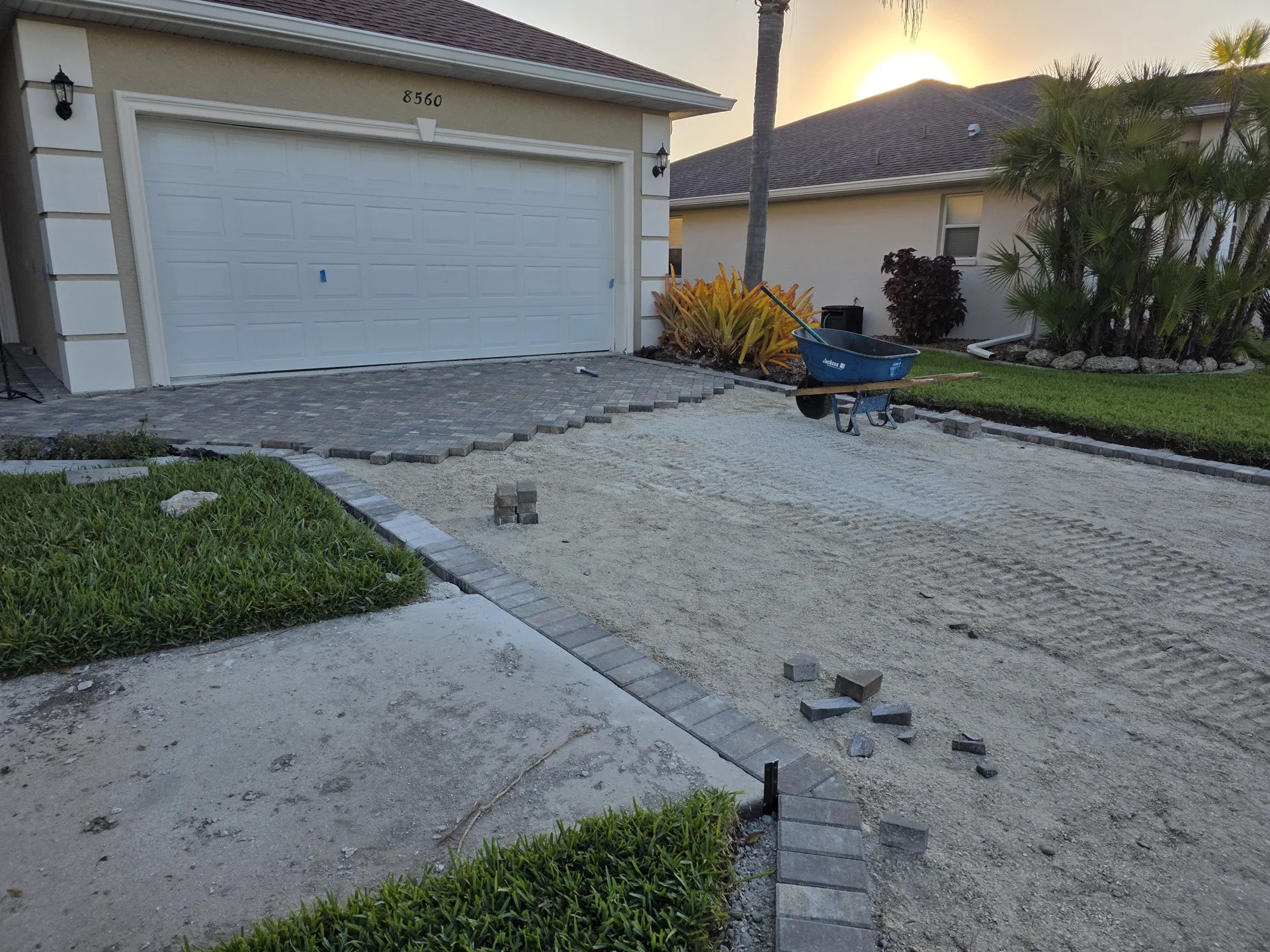
Textured templehurst sand dune pavers, compacted base, polymeric sand, concrete border
Total Area
Demo old edging, rocks, and grass (3.5 in deep), cut 2 palms, install 971 sqft templehurst sand dune pavers with compacted base and concrete border, fill seams with polymeric sand
Timeline
3–4 days
The old surface came out — edging, rocks, grass, and all, pulled down 3.5 inches to give the base room. Two palms were cut and hauled. We then prepped and compacted the base, set 971 square feet of textured templehurst sand dune color pavers in a tight pattern, locked the perimeter with a concrete border, and filled all seams with polymeric sand. Total job: $13,652.
Location
Southwest Florida
Material / Scope
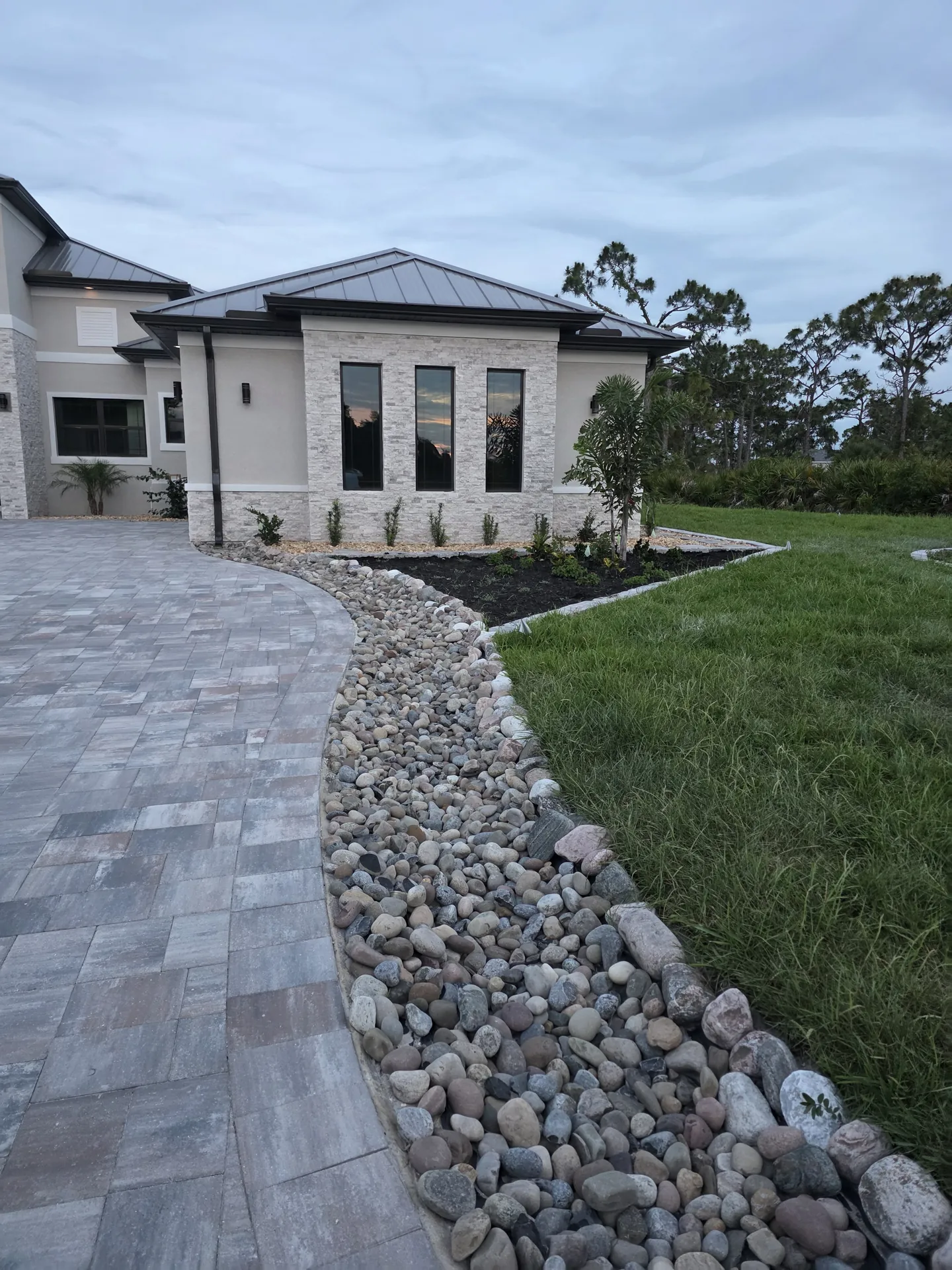
Concrete pavers, compacted base, EPDM pond liner, brick edging, river rock
Total Area
4x3 paver extension to existing pad, 26-ft EPDM pond liner bed, French drain with catch basin, 0.5 cu yd river rock, 27 ft brick edging
Timeline
1–2 days
The paver pad got a 4x3-foot extension — prepped, compacted base, set on concrete edging. A 26-foot EPDM pond liner was glued and stapled along the bed running beside the slab, then 0.5 cu yd of 1.5" river rock was set on top. A 4-foot French drain with a 12x12 catch basin tied the whole drainage picture together. 27 feet of brick edging finished the perimeter. Total job: $1,567.
Location
Southwest Florida
Material / Scope
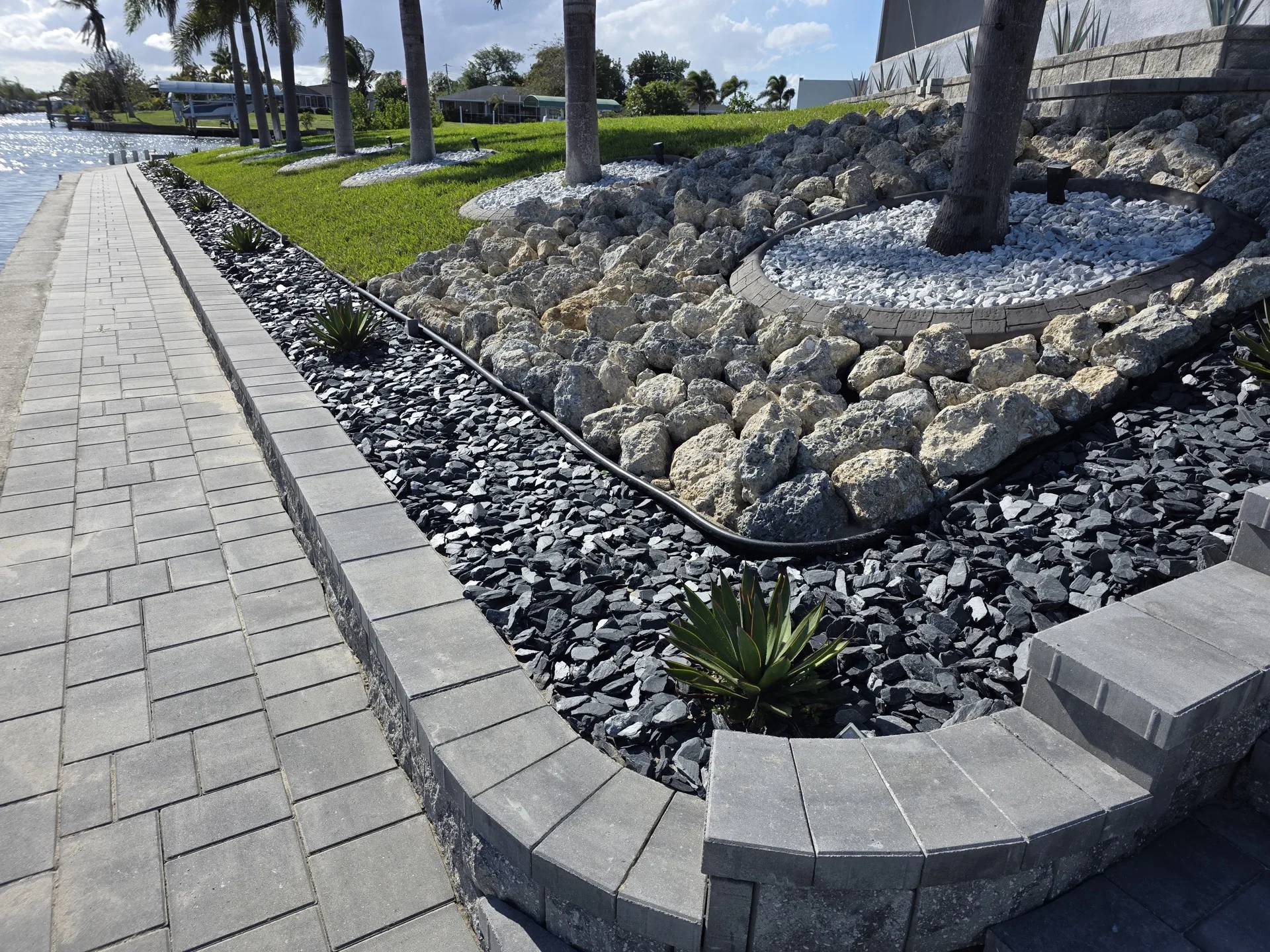
97 retaining blocks, 1.5 cu yd paver base
Total Area
97 retaining blocks set along right edge of shell driveway on 1.5 cu yd compacted paver base
Timeline
1 day
The right edge of the shell driveway had no defined border — material was spreading and the edge was crumbling. We installed a compacted paver base layer and set 97 retaining blocks along the full right edge for a clean, stable boundary.
Location
Southwest Florida
Material / Scope
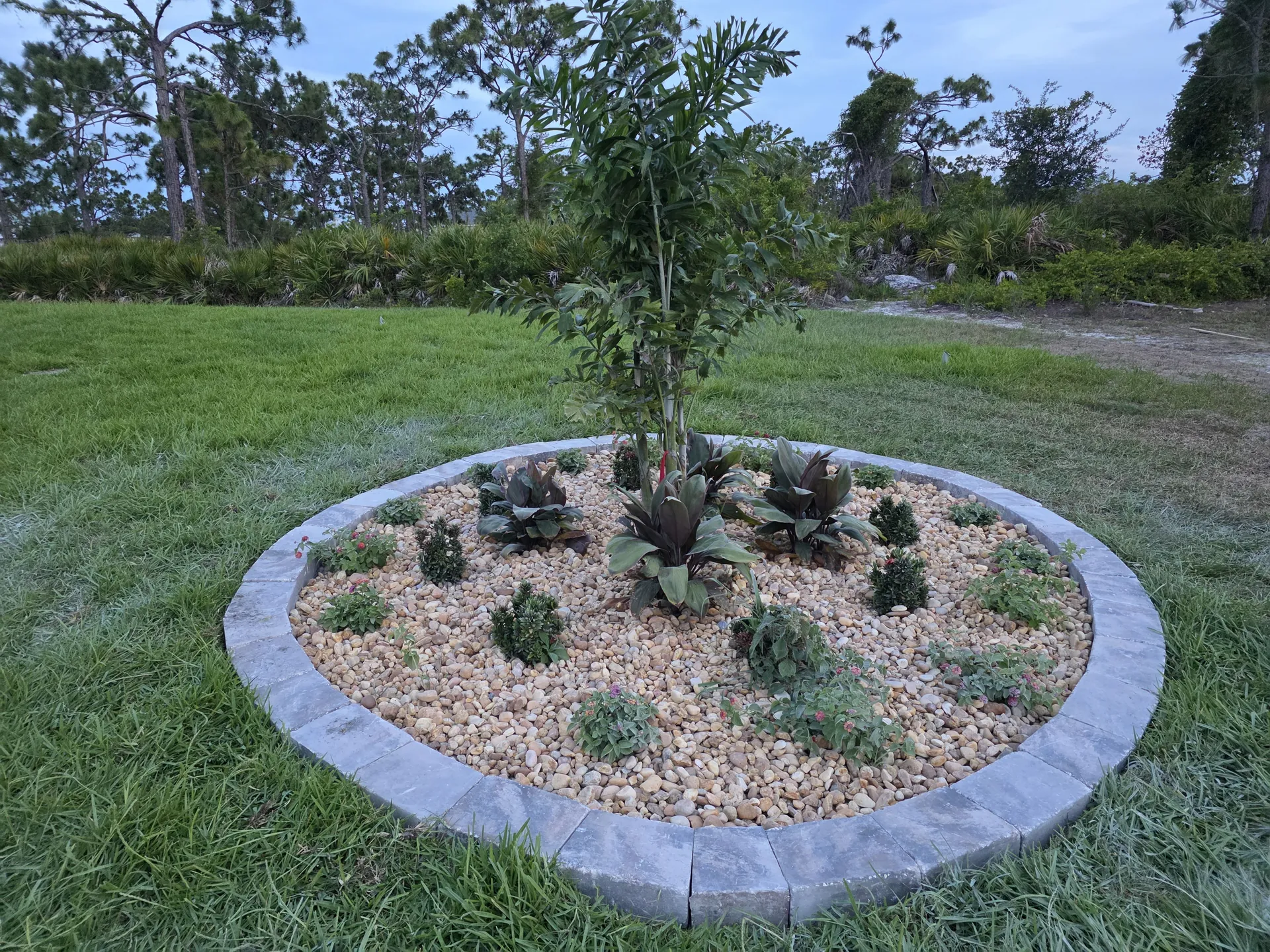
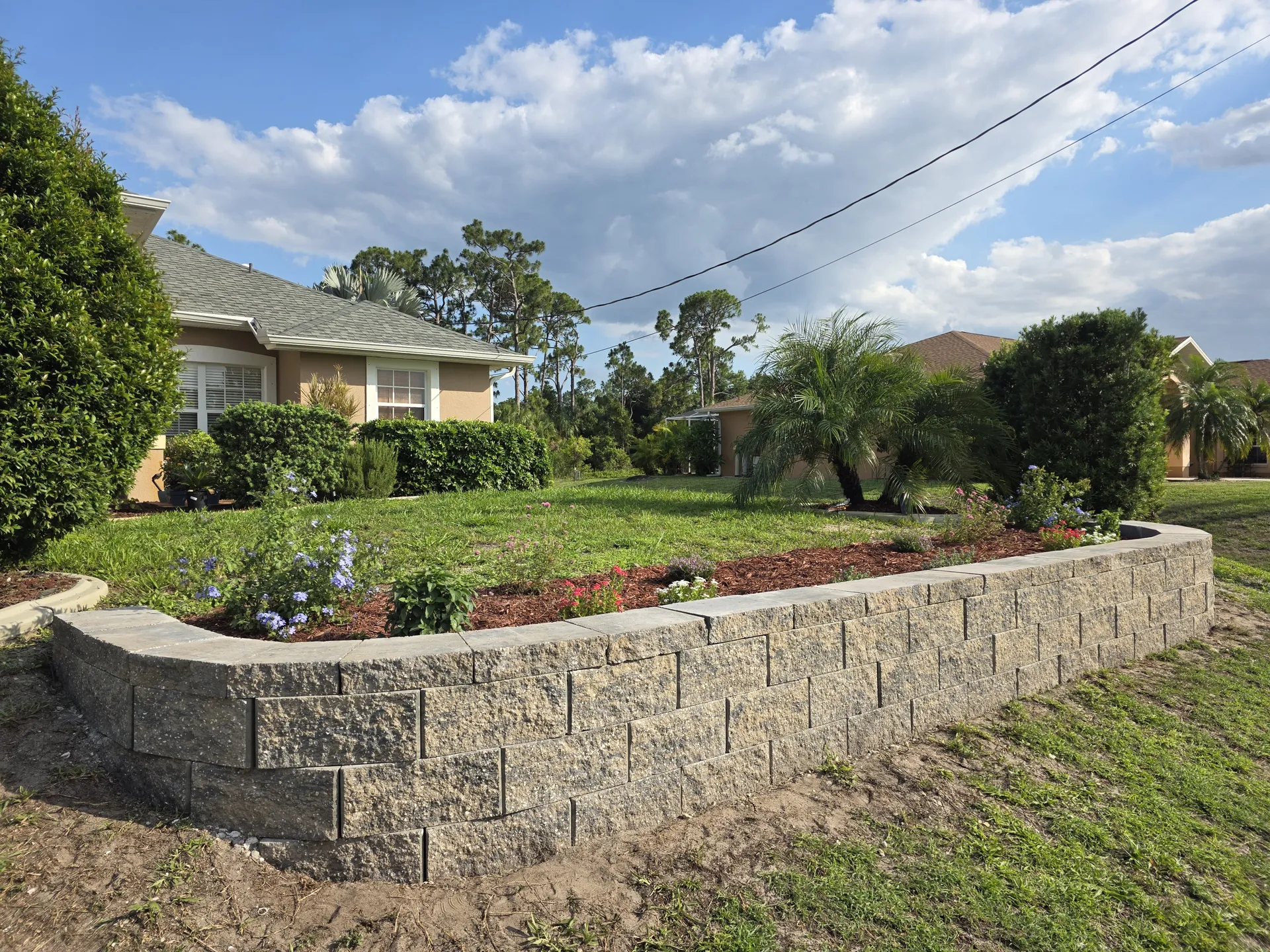
66 stone blocks, masonry adhesive, shell marl base, topsoil
Total Area
33-ft x 2-ft stone retaining wall, 66 blocks on compacted shell marl base, masonry adhesive, plus 4.5 cu yd topsoil and plants
Timeline
2 days
33-foot stone retaining wall built 2 feet tall using 66 blocks, each glued with masonry adhesive on a compacted shell marl base. The wall holds back 4.5 cubic yards of topsoil in the raised landscape zone. Pygmy date palm and podocarpus anchor the ends. All hardscape covered by a 5-year structural warranty. Total job: $3,563.50.
How We Work
Paver Installation in Placida: What Actually Happens
I've done this job in Placida enough times to know what catches people off guard. Here's what actually matters — and what's specific to this area.
Step 01
Site Assessment + Material Selection
Dennis measures the area, photographs existing conditions, and notes drainage direction and soil condition. Material selection for coastal exposure is reviewed — some products hold up better in salt air than others. A layout and material spec is confirmed before anything is ordered.
⏱ Before work begins
Step 02
Excavation + Sub-Base Compaction
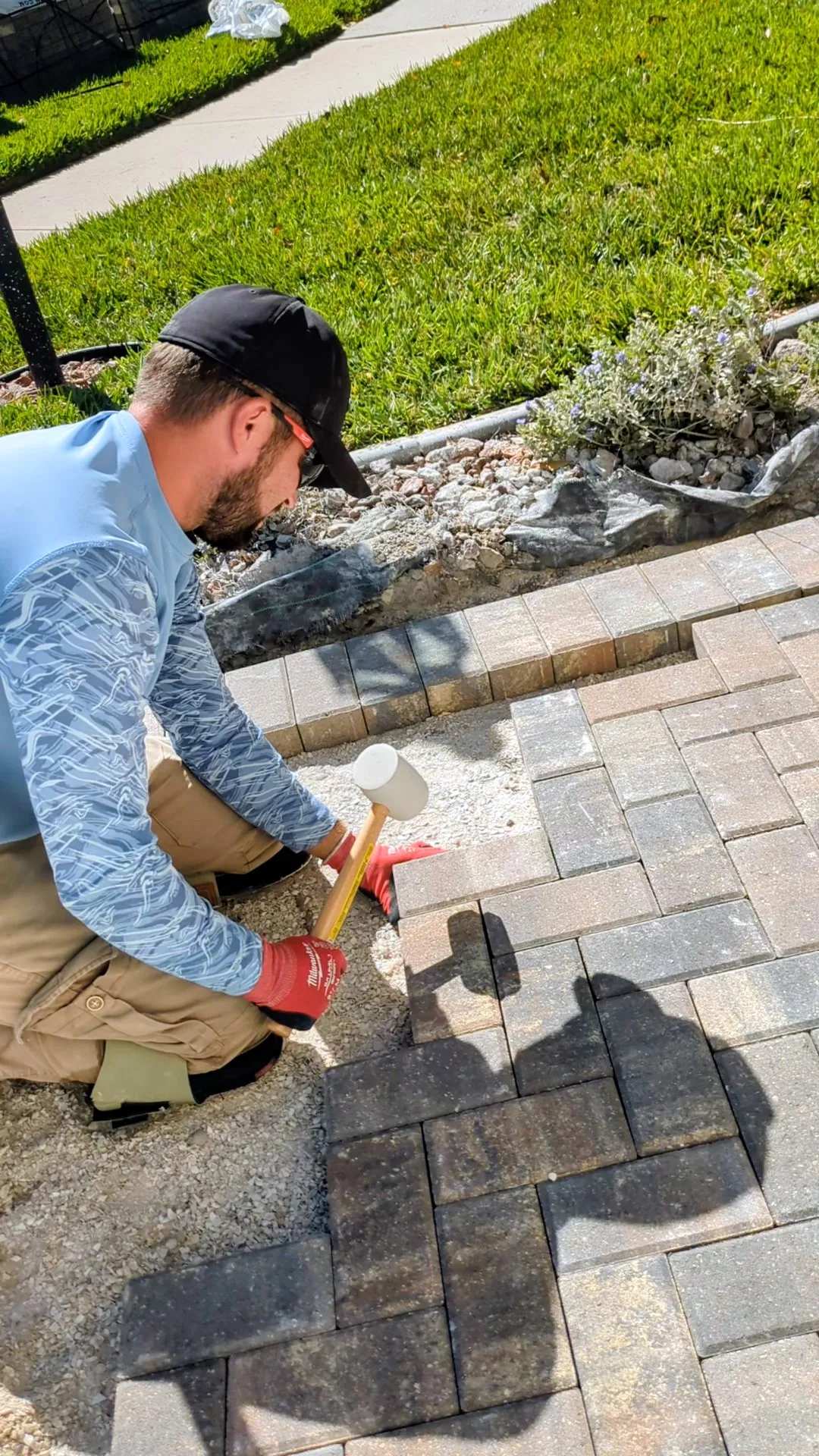
We excavate to the correct depth — 8–10 inches for driveways, 6–8 for patios — and remove all spoils. Crushed limestone base material is brought in, spread in lifts, and compacted with a plate compactor to achieve maximum density.
⏱ Day 1–2
Step 03
Paver Lay + Cut + Edge Restraints
Pavers are set in the specified pattern starting from the longest straight edge and working out. Every cut is made with a wet saw for clean edges. Plastic or aluminum edge restraints are spiked at 12-inch intervals around the entire perimeter before the final passes.
⏱ Day 2–4
Step 04
Polymeric Sand + Final Compaction + Seal
Polymeric sand is swept into all joints, compacted with a plate compactor and rubber pad, then activated with a fine water mist to harden. Excess is blown clean. On applicable jobs, sealer is applied per manufacturer specification after the polymeric sand cures.
⏱ Final day
From Dennis P. — Owner, Epic Horizons
"Coastal paver installs have one non-negotiable: the base has to be built with imported material compacted in lifts. Relying on native coastal sand as a base is the reason most paver failures happen here — I've seen it enough times to know."
Placida's coastal conditions change how Paver Installation is done. The loose sandy substrate, salt air, and wet season intensity are the actual job — not generic considerations. Every estimate I give factors these in from the start.
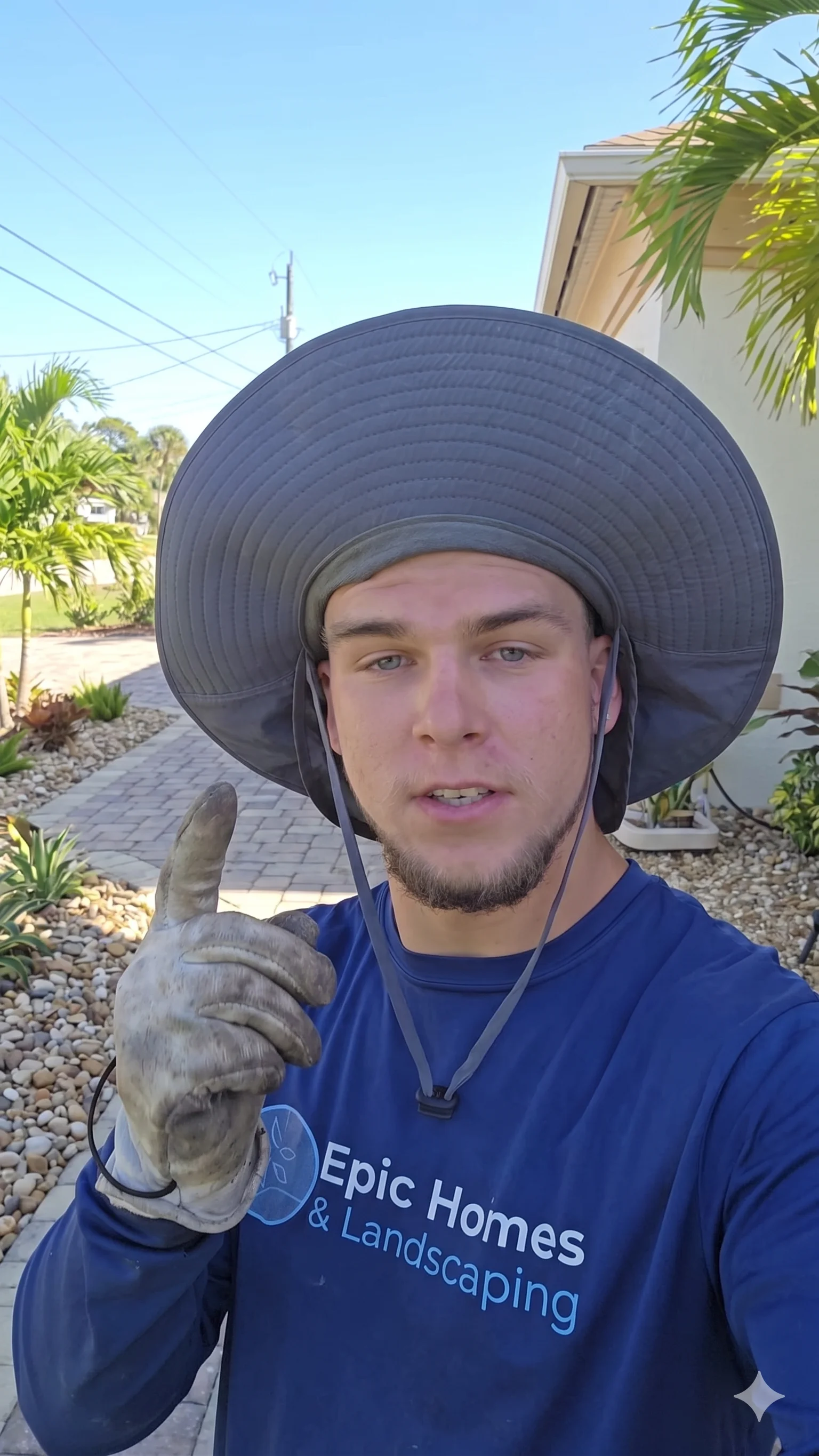
Dennis P.
Owner · Licensed Contractor · SW Florida since 2022
Placida, FL
Transparent Pricing
What Affects the Price in Placida
Placida has specific conditions that change what a Paver Installation project costs here. Here's what goes into your number.
Square footage
Total area drives material and labor cost most
Driveways, walkways, and pool decks each have different complexity. A basic 600 sq ft driveway and a 1,200 sq ft driveway are not twice the price — bulk material pricing helps larger jobs.
Base prep depth
Coastal sand requires deeper excavation and more base material
In Placida, we typically excavate deeper than inland jobs and bring in more crushed base material to achieve a stable sub-base in coastal sand. This adds cost but is the difference between a paver installation that lasts and one that moves in the first wet season.
Paver style and material
Travertine costs more than concrete paver
Concrete pavers are the most affordable and most popular. Travertine and natural stone cost more per unit but offer a different look and often perform well in coastal conditions. With no HOA restrictions in Placida, the choice is entirely yours.
Haul-away and demo
Removing existing concrete or asphalt adds to the total
If we're replacing an old concrete driveway or existing pavers, demo and haul-away is a separate line item. It's straightforward but adds 1–2 days and equipment cost.
Get a real number — not a ballpark.
We measure your space, assess the coastal soil conditions, and give you a written estimate. No surprise add-ons.
Questions & Answers
Paver Installation in Placida — Common Questions
Get Started
Free Paver Installation Quote in Placida
Paver Installation in other cities
More we do in Placida