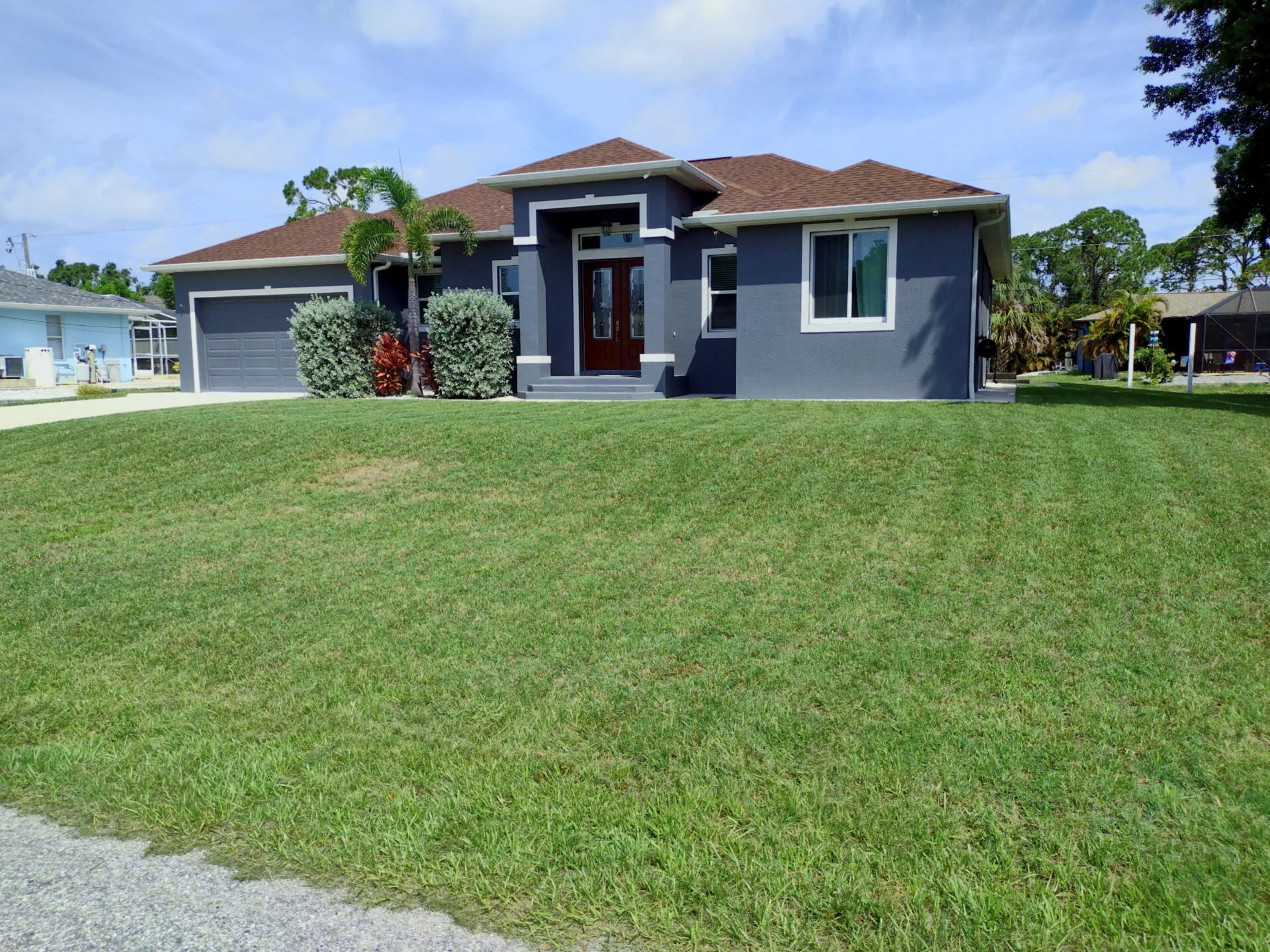
Most homeowners in Southwest Florida are either mowing too often (waste of time and money) or not often enough (damaging the grass). The correct frequency isn't a number on a calendar — it's determined by your grass type, the season, and one simple rule.
The One Rule That Governs Everything
Never remove more than one-third of the grass blade in a single mowing.
This is called the 1/3 rule, and it's the most important thing in Florida lawn care. Violating it — cutting too low or letting the grass get too tall before mowing — causes immediate and sometimes irreversible stress. St. Augustine in particular punishes scalping severely. One bad cut during heat stress can set a lawn back 4–6 weeks.
What this means in practice: if you're keeping St. Augustine at 4 inches (correct), you should mow when it reaches 6 inches (one-third more than the target). Don't let it reach 8 or 10 inches and then cut it back to 4 — that's two violations of the 1/3 rule in one mow.
The Real Mowing Schedule by Season
| Season / Months | St. Augustine | Bahia | Reason |
|---|---|---|---|
| Growing season (Mar–May) | Every 7–10 days | Every 7 days | Rapid spring growth — grass needs frequent cutting to stay in range |
| Rainy season (Jun–Sep) | Every 7 days | Every 5–7 days | Peak growth with daily rain — Bahia seed heads appear constantly |
| Transitional (Oct–Nov) | Every 10–14 days | Every 10–14 days | Growth slowing but still active — stay attentive |
| Dry season (Dec–Feb) | Every 14–21 days | Every 21–28 days | Minimal growth in cooler weather — mow only when needed |
Correct Mowing Heights by Grass Type
St. Augustine (Floratam, Palmetto, Seville)
Target mowing height: 3.5 to 4 inches. This is not negotiable. St. Augustine's root system feeds largely from the stolons (runners) near the surface. Scalping exposes these to direct UV and heat, which destroys them within days of a bad cut. At 4 inches, the broad leaf blades shade the soil, retain moisture, and crowd out weeds naturally.
Common mistake: mowing at 3 inches because "it looks cleaner." It looks cleaner for 2 days, then the stress causes yellowing, bare spots, and weed invasion. 3.5–4 inches is the correct height for a reason.
Bahia (Pensacola, Argentine)
Target mowing height: 3 to 4 inches. Bahia is more drought-tolerant and forgiving than St. Augustine, but it produces seed heads constantly during the growing season — tall, tough stalks that make a freshly mowed lawn look unkempt within 2–3 days. Keep Bahia at 3 inches and mow more frequently in summer to stay ahead of the seed heads. A sharp blade is critical with Bahia; a dull blade tears rather than cuts and leaves a ragged appearance.
Zoysia (occasionally found in older properties)
Target mowing height: 1.5 to 2.5 inches. Zoysia is rare in our area but does appear in older Port Charlotte neighborhoods. It tolerates lower heights than St. Augustine but requires a reel mower (or very sharp rotary) to cut cleanly. Rotary mowers on Zoysia below 2 inches tear the grass and create a rough, brown appearance.
Sharp Blades: The Underrated Factor
A dull mower blade doesn't cut grass — it tears it. You can tell the difference by looking at the cut ends: a sharp blade leaves a clean horizontal cut; a dull blade leaves a ragged, frayed edge that turns brown within 24 hours. In Florida's humidity, torn grass blades are also entry points for fungal disease.
Professional mowing services sharpen blades every 8–10 operating hours. If you're mowing your own lawn, sharpen the blade at the start of each season and inspect it after hitting any hard object (a root, a rock, a sprinkler head). A dull blade is one of the most common causes of a lawn that looks worse after mowing.
Never Mow Wet Grass
In Southwest Florida's rainy season, it rains almost every afternoon. That means morning is your mowing window — grass has dried from the previous afternoon's rain overnight, and you can get a clean cut before the afternoon storm arrives.
Mowing wet grass:
- Tears rather than cuts (same as dull blade problem)
- Clogs the mower deck and creates uneven cut patterns
- Spreads fungal spores across the lawn on wet clippings
- Compacts wet soil under mower wheels, damaging root zones
- Creates clumps of wet clippings that mat and smother the grass beneath
If morning mowing is impossible and the grass is wet from afternoon rain, wait for a dry window or skip that week's mow. One skipped cut is far less damaging than mowing wet.
Edging and Blowing
A proper mowing service includes three distinct steps: mowing (cut the turf), string trimming (detail around obstacles the mower can't reach), and edging plus blowing (clean hard surface edges and clear clippings from driveways, sidewalks, and beds).
Many cheap services skip edging and blowing, or do it so infrequently that hard-surface edges become overgrown. Mechanical edging — not string trimming, which never creates a truly clean line — should be done every other mow minimum to keep driveway and sidewalk edges clean.
If you're in North Port, Venice, Port Charlotte, or Englewood and want a professional mowing service that adjusts to actual growth rate, uses sharp blades, and includes real edging every visit — get a quote here. We give written pricing within 24 hours of the site visit.