
Professional River Rock and Stone Installation in Southwest Florida
Permanent, Low-Maintenance Rock Solutions for Stunning Landscapes
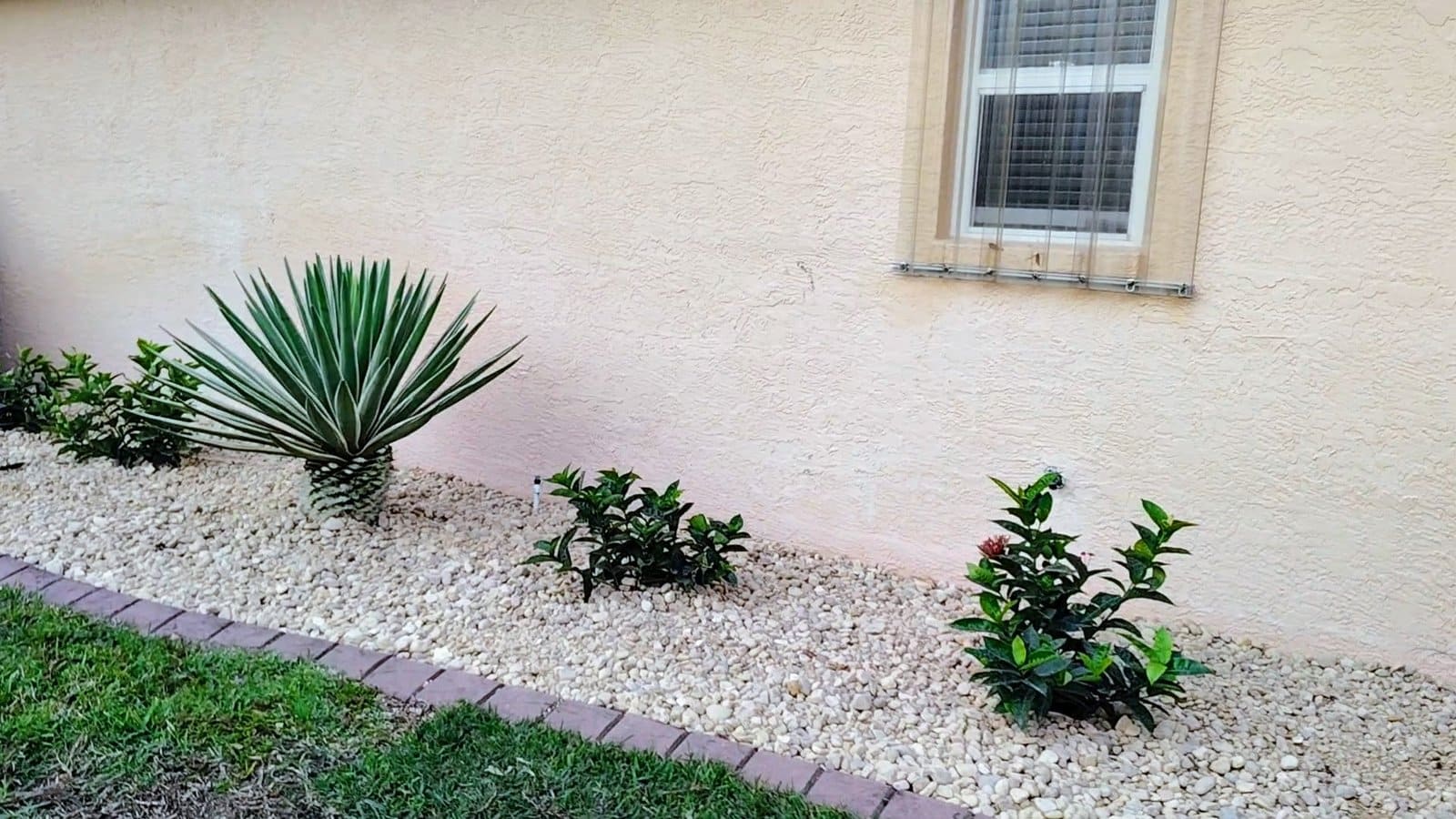
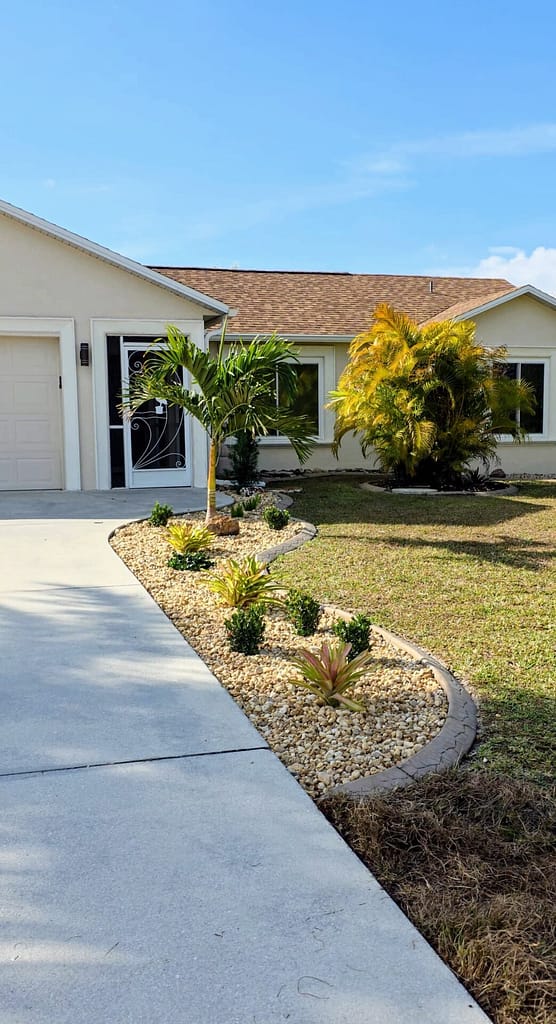
Our professional rock installation services provide a permanent, low-maintenance alternative to traditional mulch, enhancing your property’s curb appeal while solving drainage issues and reducing pest habitats. We serve homeowners in North Port, Port Charlotte, Venice, and Englewood, replacing rapidly decaying organic materials with durable river rock, white marble, or shell that withstands Florida’s intense sun and heavy rains. Unlike mulch which floats away during storms or fades within months, landscape rock creates a stable, long-lasting ground cover that improves drainage by acting as a permeable surface, reducing stormwater runoff according to UF/IFAS stormwater management guidelines. We install commercial-grade geotextile weed barriers beneath every project to suppress weed growth while allowing water and nutrients to reach your plants. Whether you need a clean border around your pool deck, a durable accent for flower beds, or a functional utility area for trash cans and A/C units, our team handles the entire process—from sod removal and grading to the precision installation of decorative stone. By eliminating the need for annual mulch replacement and reducing habitats for pests like millipedes and roaches, installing rock is a smart investment that pays for itself over time while keeping your property looking pristine year-round.
- Eliminates the annual cost and labor of replacing faded mulch
- Improves site drainage and prevents erosion during heavy rains
- Reduces pest habitats by removing decaying organic food sources
- Improves site drainage and prevents erosion during heavy rains
- Improves site drainage and prevents erosion during heavy rains
Rock Installation Use Cases
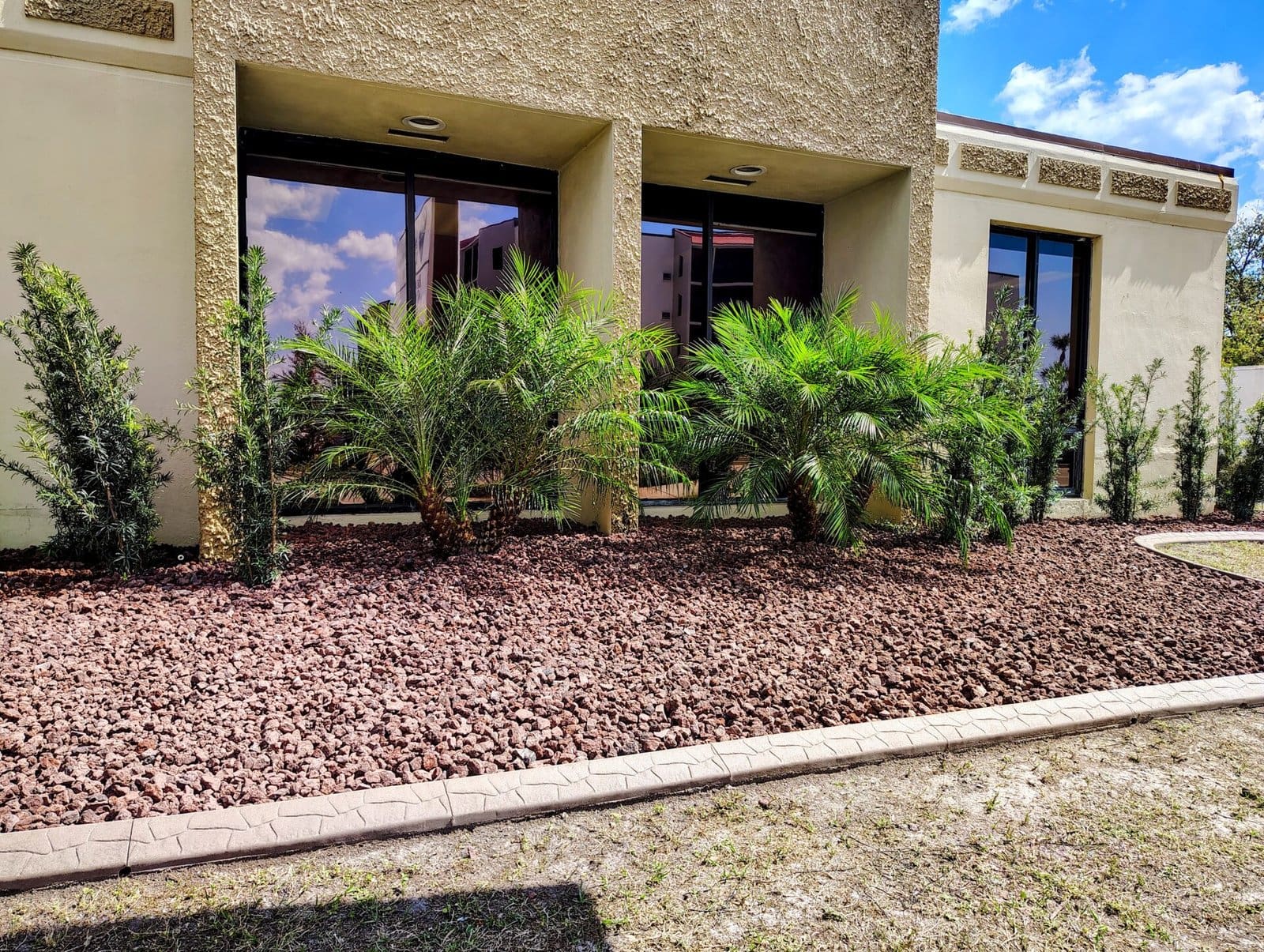
Foundation Borders
Installing a 2-foot border of river rock around your home's perimeter keeps moisture away from the foundation and creates a clean inspection zone, deterring pests in accordance with termite prevention best practices.
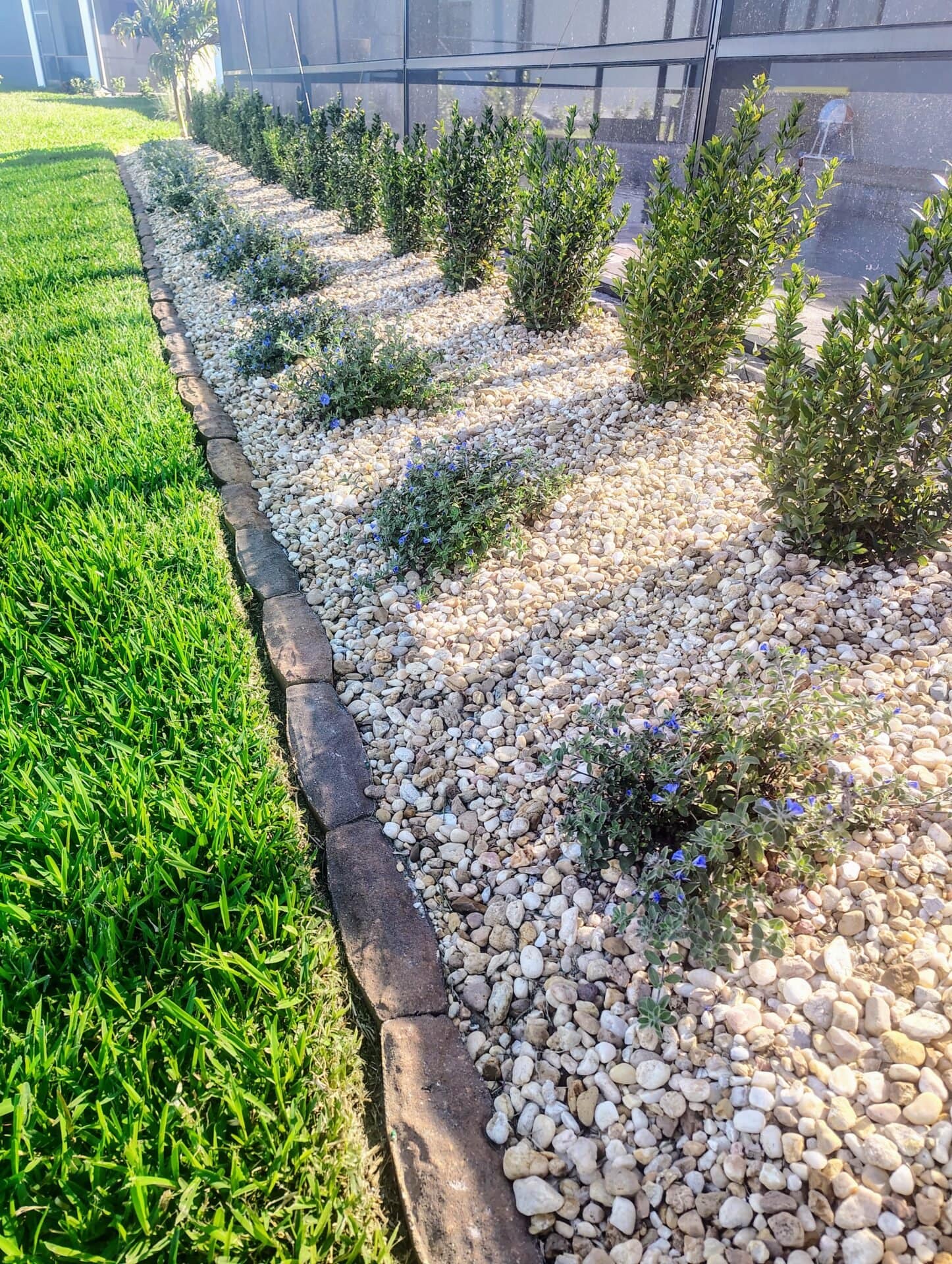
Pool Area Scaping
We replace messy mulch beds inside screen cages with dust-free decorative stone or shell. This prevents dirt and debris from blowing into your pool, keeping the water cleaner and your filters running smoother.
Driveway Edging
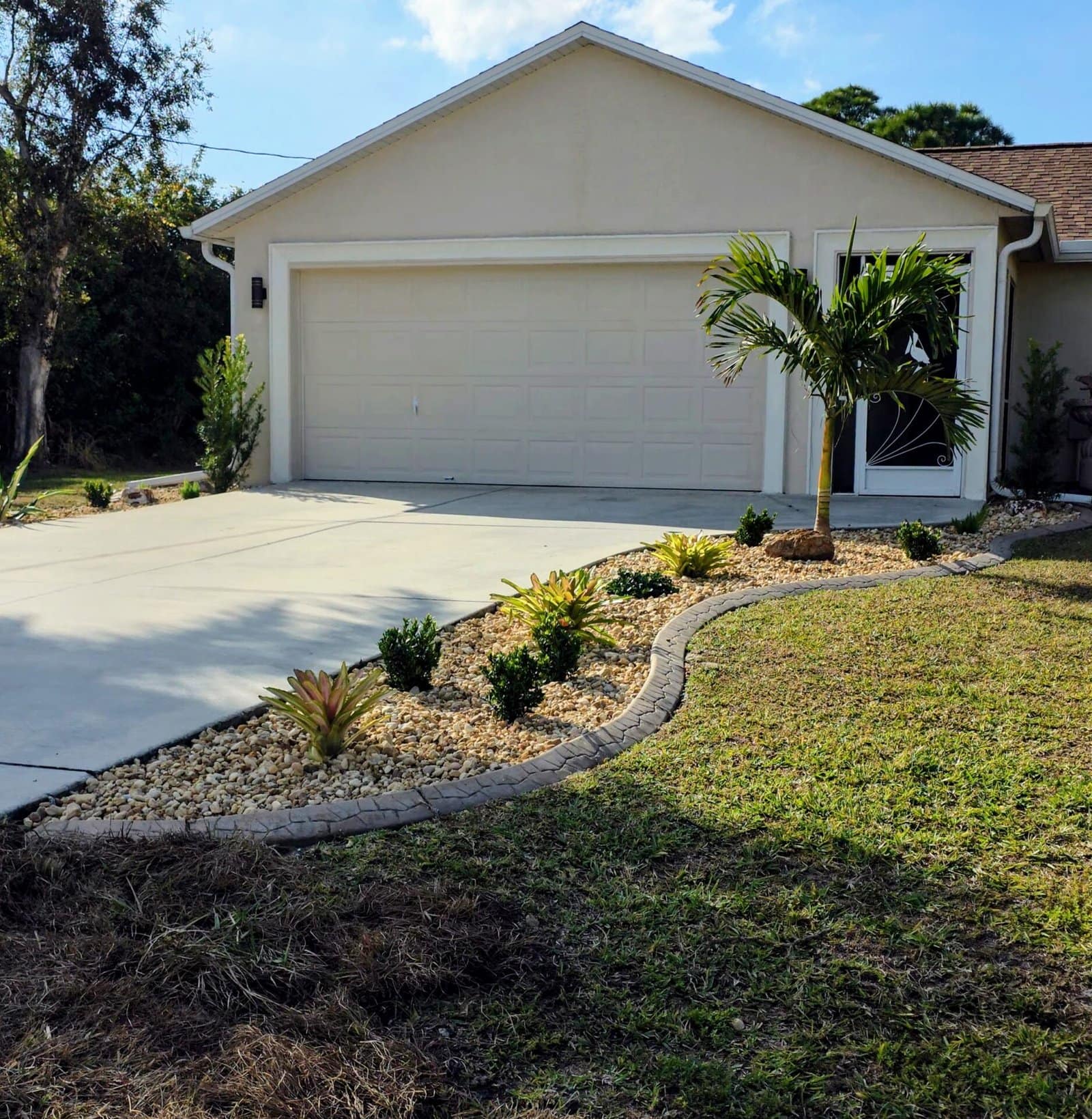
Reinforcing driveway edges with crushed granite or large river rock prevents tire ruts and mud tracking. We install concrete curbing to contain the rock, creating a permanent, manicured boundary for your entrance.
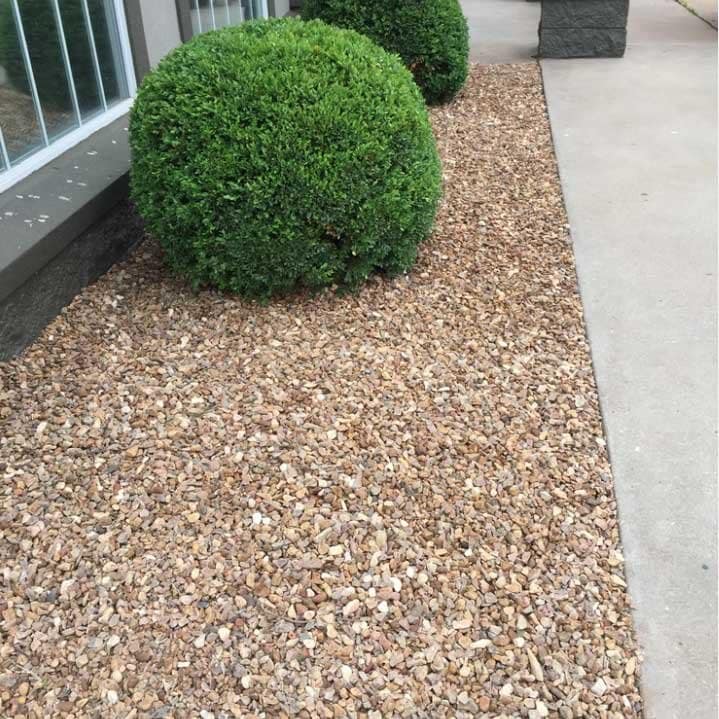
A successful rock installation requires significantly more preparation than simply spreading stone over existing grass. Our comprehensive process ensures your investment lasts for decades without becoming a weed-infested maintenance nightmare. We begin by mechanically removing old sod, weeds, and decaying organic mulch to create a clean, stable base. Grading is checked to ensuring water flows away from structures. We then install a heavy-duty, non-woven geotextile fabric—not cheap plastic sheeting—which is crucial for stabilizing the soil and separating the rock from the dirt below, following landscape fabric best practices for permeable hardscapes. Once the base is prepped, we install your chosen material—typically 1.5-inch river rock, white marble chips, or washed shell—at a depth of 2 to 3 inches to ensure full coverage and weed suppression. We carefully hand-detail around plants and sprinkler heads to avoid damage. While rock has a higher upfront cost than mulch, it is an inorganic material that does not decompose, meaning you never have to “top it off” again. It is the ultimate solution for Southwest Florida homeowners who want a “set it and forget it” landscape that looks crisp, modern, and high-end.
Rock Types & Styles
Brown River Rock
Smooth, rounded river stones in earth tones (browns, tans, creams) that blend naturally with Florida landscapes and look beautiful wet or dry.
White River Rock
A brighter variation of river rock featuring more white and gray tones, providing a modern, high-contrast look against green sod.
Black Granite
Dark, angular granite chips offering a sleek, contemporary appearance that minimizes glare and hides dirt effectively in high-traffic areas.
White Marble
Sparkling white marble chips create a formal, elegant appearance often used in high-visibility front entryways and planter boxes.
Red Lava Rock
Lightweight, porous lava rock provides a bold color contrast and retains moisture well for plants, though it can float in heavy flooding.
Mexican Pebble
A unique blue-grayish round stone that creates a clean, modern design. Good for decorative beds around a house and blends well with neutral colors like grays and light blues.
Washed Shell
Natural Florida shell is an economical, eco-friendly option perfect for driveways, side yards, and creating a coastal aesthetic.
Drainage Rock
Large, coarse #57 stone used primarily for French drains, utility areas, and stabilizing muddy spots where aesthetics are secondary to function.
Rip Rap
Large chunks of limestone rock (6-12 inches) used for erosion control along canals, ponds, and swales to hold banks in place.
How Rock Installation Compares
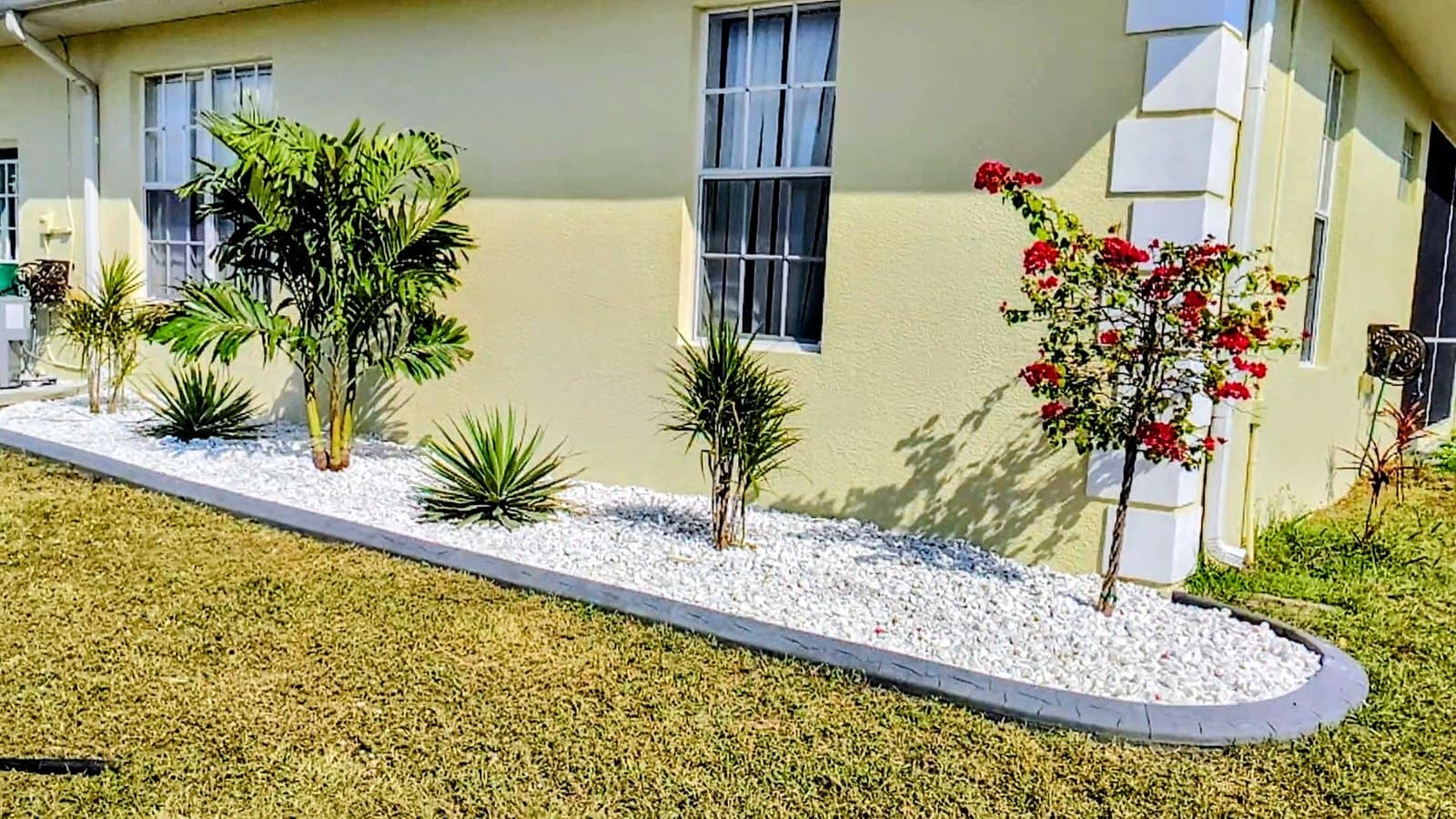
Professional Rock
Decomposes Annually
Attracts Pests
Floats Away
Fades Quickly
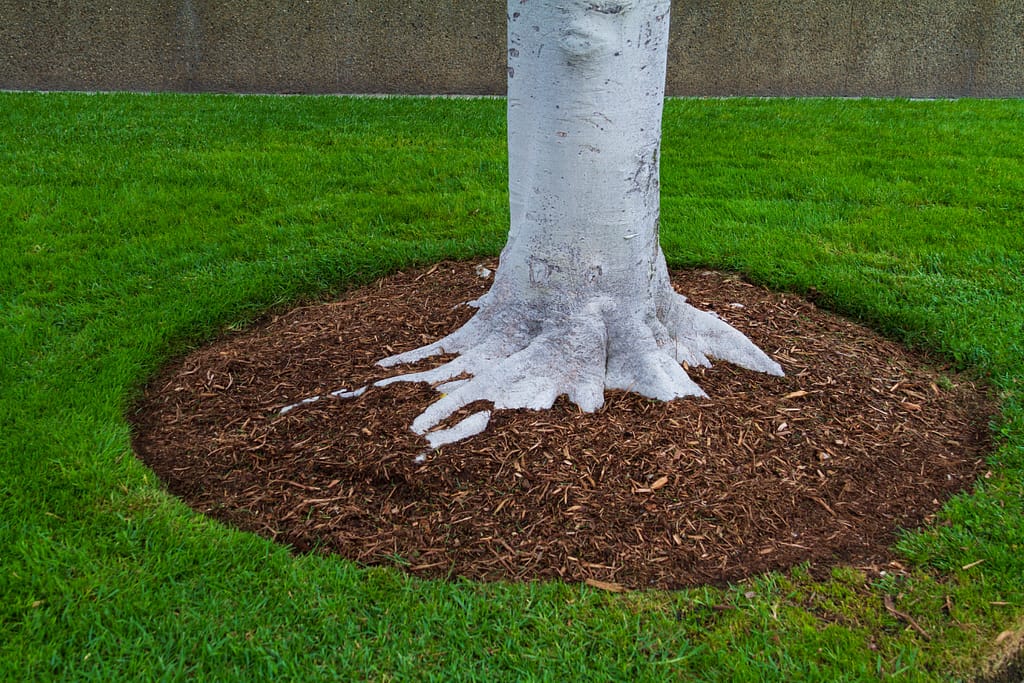
Wood Mulch
Decomposes Annually
Attracts Pests
Floats Away
Fades Quickly
The Rock Installation Process
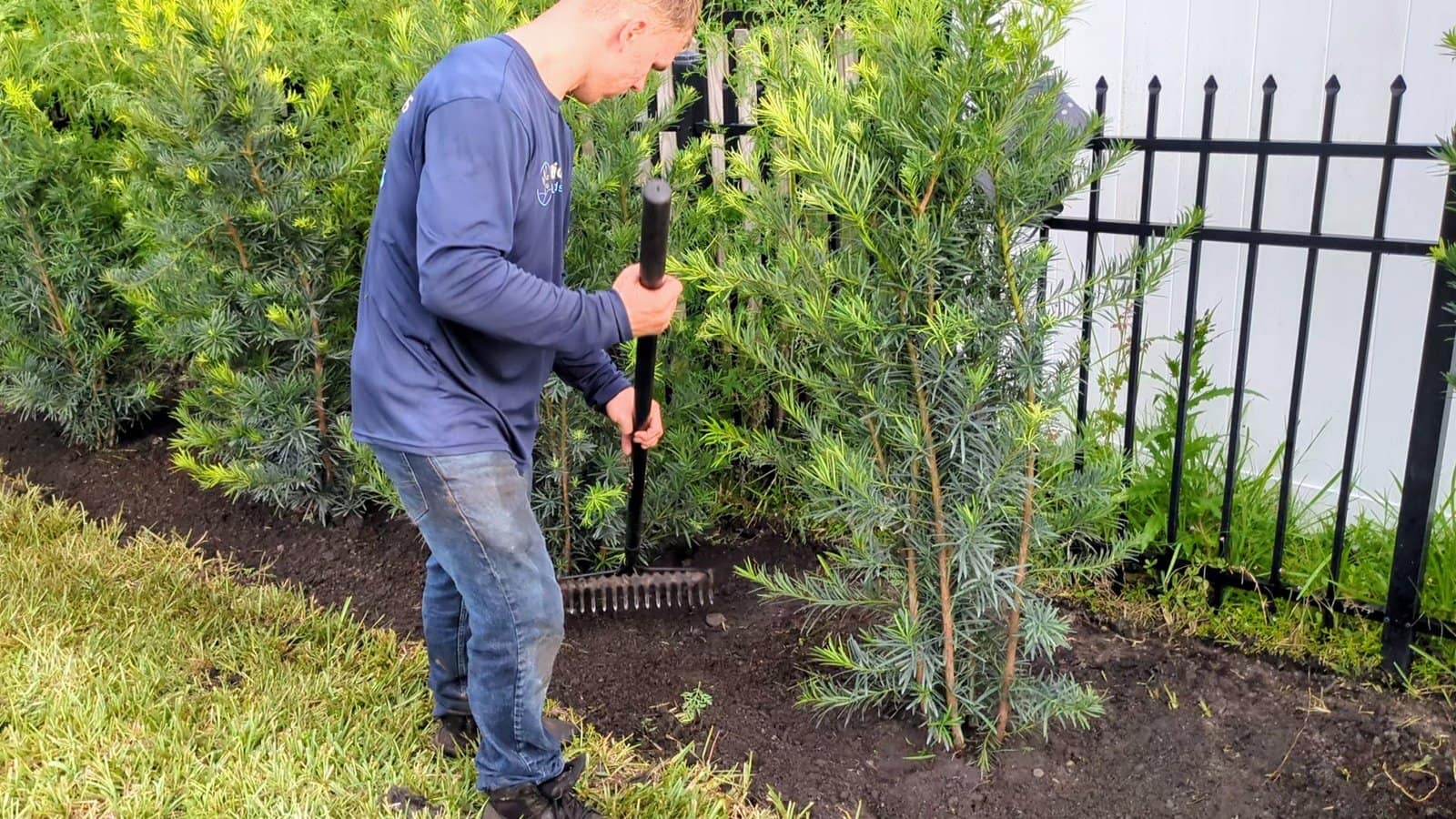
Removal & Prep
We strip away old grass, weeds, and decaying mulch to expose the bare soil, grading it to ensure proper water flow.
Proper preparation is 90% of the job. Leaving organic material underneath causes rot and settling later. We haul away all debris to the dump, leaving you with a clean slate for installation.
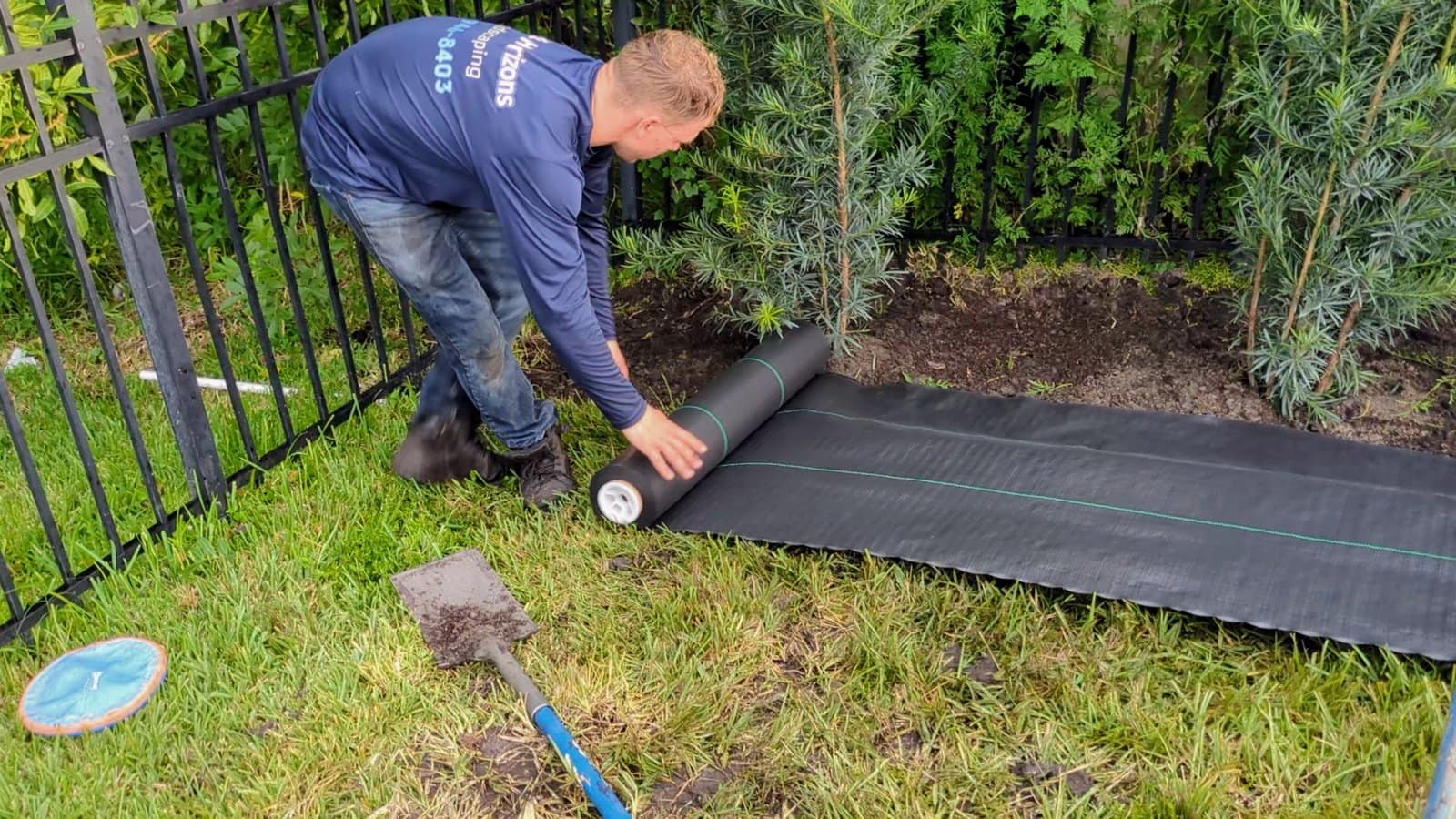
Weed Barrier
We install a commercial-grade geotextile fabric, securing it with steel pins to separate the rock from the soil below.
This fabric is “breathable,” allowing water to drain through while stopping rock from sinking into the sand. It also adds a critical layer of defense against weed roots growing from the bottom up.
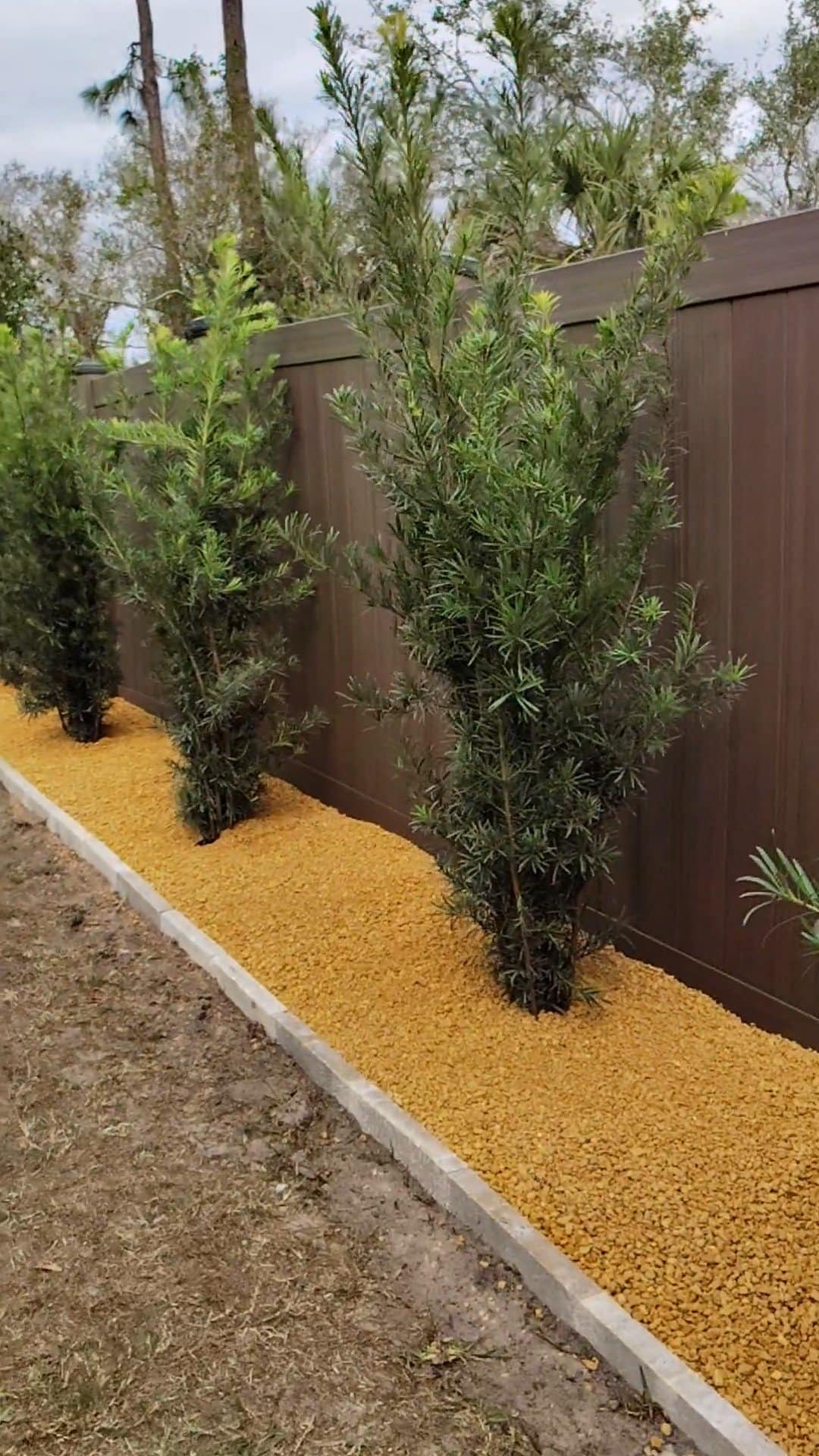
Rock Installation
Using wheelbarrows and machinery, we spread your chosen decorative stone to a uniform 2-3 inch depth across the beds.
We take care not to damage your plants or siding. The rock is spread evenly to ensure full coverage of the weed barrier, creating a solid, opaque layer of stone.
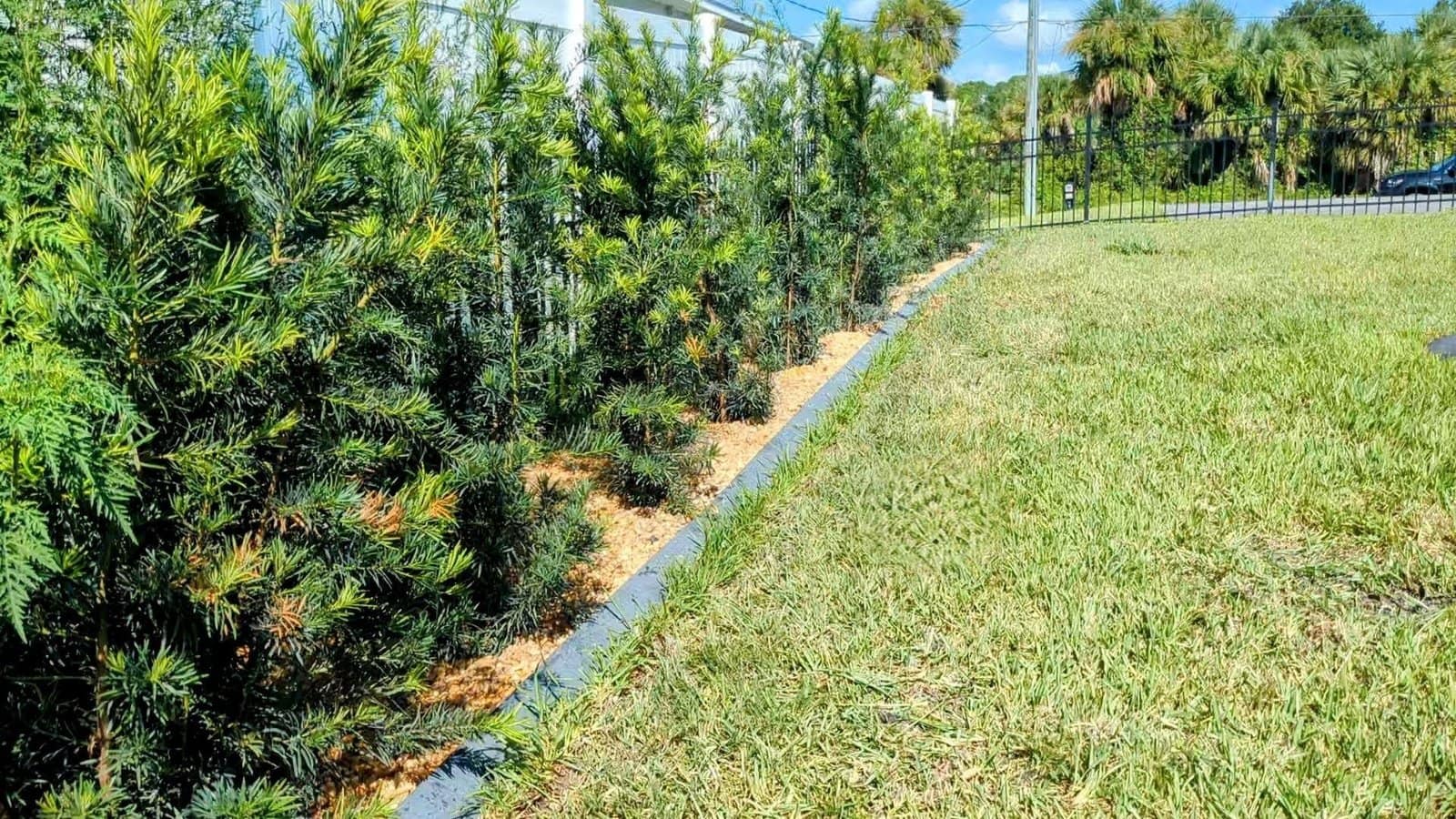
Clean up
We make sure to clean up after every rock installation job, just like with any job we do.
We pick up all plastic, packaging, and trash, and thoroughly blow off all dust and dirt, and sometimes even pressure wash the work area if necessary.
FAQ
Common Questions About Landscape Rock
Landscape rock costs significantly more upfront than wood mulch—typically 3-4 times more—due to the cost of the material, weight (requiring delivery fees), and the labor-intensive preparation process including sod removal and fabric installation. However, rock is a “one-and-done” investment. While mulch costs $400-$800 to replenish every single year, rock lasts indefinitely. Over a period of 3-5 years, rock becomes the cheaper option because you eliminate the annual recurring cost of re-mulching. It also adds permanent value to the home, whereas mulch is considered a temporary maintenance expense. For homeowners planning to stay in their property for several years, rock is financially superior.
Inorganic mulch (rock) can absorb and radiate more heat than organic wood mulch, creating a warmer microclimate immediately around the foundation. However, light-colored stones like white river rock or marble reflect sunlight, mitigating this effect compared to dark lava rock or black granite. In Southwest Florida, we recommend using heat-tolerant plants like Palms, Crotons, and Bromeliads in rock beds. We also avoid piling rock directly against the stems of delicate plants. While rock is warmer, it does not hold moisture against the house like wood mulch does, which is a significant trade-off that benefits your home by reducing humidity and rot risks near the siding.
No landscape solution is 100% weed-free forever. We install high-quality weed barrier fabric which stops weeds from growing up from the soil. However, dust and dirt will eventually settle on top of the rock over the years, creating a thin layer where airborne weed seeds can germinate. The good news is that weeds growing in rock are shallow-rooted and extremely easy to pull or spray since they aren’t anchored in deep soil. Regular maintenance involves simply spraying a non-selective herbicide on any tiny sprouts every few months. This is much easier than weeding mulch beds where weeds tap directly into the nutrient-rich decaying wood.
Standard rock depth should be 2 to 3 inches. If the layer is too thin (1 inch), you will see the black fabric showing through, and the rocks will shift easily when walked on or hit by heavy rain. If the layer is too thick (over 4 inches), it can be difficult to walk on (like walking in deep dry sand) and may bury the root flare of your plants, suffocating them. We aim for the “Goldilocks” zone of 2-3 inches, which provides complete opaque coverage, sufficient weight to stay in place, and a stable surface, while allowing your plants to breathe and thrive.