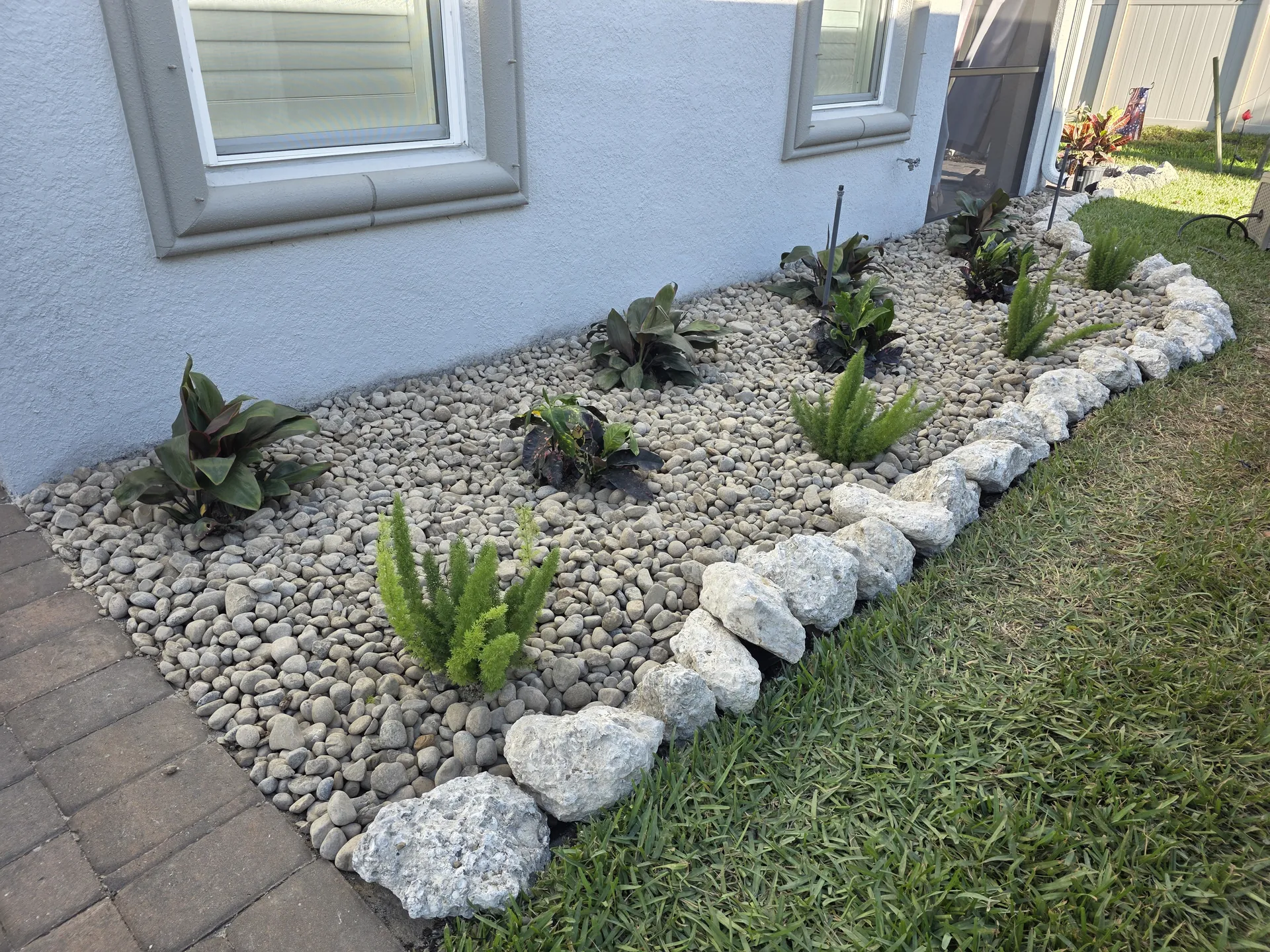
The Real Debate: It's Not as Simple as Pick One
If you ask ten landscapers in SW Florida whether you should use rock or mulch, you'll get ten different answers — and most of them are trying to sell you whichever one is on their truck that day. We've been installing both across North Port, Venice, Port Charlotte, and Englewood since 2022, and we'll tell you straight: there's no universal winner. The right answer depends on your plants, your soil, your drainage, and honestly, how much ongoing work you want to deal with.
What we can give you is the unfiltered truth about how each material actually performs in our specific climate. Not some generic gardening blog advice from someone in Ohio — real observations from maintaining and installing landscape beds in Sarasota and Charlotte counties where we get 55+ inches of rain a year, summer temps pushing triple digits, and sandy soil that doesn't hold much of anything.
This is the breakdown we give homeowners at every estimate when the rock-or-mulch question comes up. And it comes up at almost every single one.
Rock: Pros and Cons in Florida
The Good
Longevity is the headline. A properly installed rock bed doesn't decompose, doesn't wash away in a normal rain (with the right edging), and doesn't need annual replacement. River rock, Mexican beach pebble, marble chips — once they're down, they're down for years. That's the number-one reason people gravitate toward rock, and it's a legitimate advantage.
Weed suppression is better long-term with rock, especially when installed over quality landscape fabric. Mulch breaks down and becomes a growing medium for weeds itself. Rock doesn't do that. You'll still get the occasional weed pushing through a seam in the fabric, but nothing like what happens with decomposing mulch.
No color fading. Mulch turns gray in Florida sun in about 8-12 weeks. Rock stays the color it is. Period. If you picked a nice tan or gray river rock, it looks the same in year three as it did in month one.
Pest reduction. Rock doesn't attract termites, ants, or roaches the way organic mulch can. In SW Florida where we've got plenty of all three, that matters to a lot of homeowners.
The Bad
Heat is the big one. Rock absorbs and radiates heat. In July, a rock bed in full sun can push soil temperatures well over 100°F. That stresses roots, dries out soil faster, and can flat-out cook shallow-rooted plants. This is not a minor issue — it's the single biggest reason rock fails in Florida landscapes. People put it down, their plants struggle, and they blame the plants. It's the rock.
No soil benefit. Rock gives nothing back to the soil. It doesn't break down into organic matter, doesn't improve soil structure, doesn't feed beneficial microbes. Over years, the soil under rock beds in Florida tends to become more compacted and less hospitable to plant roots.
Harder to change later. Want to rearrange your plant beds? Add new plants? Rock is heavy and a pain to move. Mulch you can scoop aside and work around. Rock requires real labor to modify.
Leaf debris stands out. Live oaks drop leaves year-round. Magnolias. Palms. All that organic debris sits on top of rock and looks messy. With mulch, fallen leaves blend in. With white or light-colored rock, every single leaf and twig is visible.
Mulch: Pros and Cons in Florida
The Good
Mulch keeps roots cool. This is its superpower in Florida. A 2-3 inch layer of quality hardwood or pine bark mulch insulates the soil, keeping root zone temperatures significantly lower than bare soil or rock. During our brutal June-through-September stretch, that temperature difference is life or death for a lot of plants.
Moisture retention. Mulch holds moisture in sandy Florida soil. Our soil drains fast — sometimes too fast. Mulch slows that down and keeps water available to roots between irrigation cycles. This can actually reduce your water bill because you're not running sprinklers as aggressively to compensate.
Soil improvement. As mulch breaks down, it adds organic matter to our naturally nutrient-poor sandy soil. Over years, beds that have been mulched consistently develop noticeably better soil than beds covered in rock. Your plants grow better because the ground is actually improving beneath them.
Plant health integration. When we fertilize plants and shrubs in a mulched bed, the fertilizer integrates naturally with the decomposing organic layer. The whole system works together. With rock, granular fertilizer just sits on top of stones looking weird until it washes through.
The Bad
It doesn't last. This is the big one. In SW Florida's heat and rain, mulch breaks down in 6-12 months. You're looking at refreshing beds at least once a year, often twice if you want them looking sharp. That's an ongoing cost that adds up.
Washout in heavy rain. Our summer storms aren't gentle. Mulch migrates — into sidewalks, driveways, gutters, the street. Especially on any kind of slope. If your beds aren't edged properly or graded correctly, you'll be raking mulch back where it belongs after every serious downpour.
Fungus and mushrooms. Decomposing organic material in heat and humidity means fungal growth. Artillery fungus, stinkhorns, bird's nest fungus — they're harmless but people don't love seeing them. This is just the reality of organic mulch in a subtropical climate.
Pest attraction. Some mulches — especially cheap dyed stuff — can attract termites and other insects. We always recommend cypress or eucalyptus mulch for this reason, and keeping mulch pulled back a few inches from your home's foundation.
Watch out for dyed mulch. That cheap red or black dyed mulch from the big box store is often made from ground-up pallets and construction debris. It breaks down unevenly, the dye leaches into soil, and it can contain contaminants. Spend the extra money on natural hardwood or pine bark. Your plants will thank you.
Side-by-Side Comparison
Here's the honest breakdown we share with homeowners. No spin — just what we see in the field across hundreds of installations in SW Florida.
| Factor | Landscape Rock | Mulch |
|---|---|---|
| Upfront Cost | Higher ($3-8/sq ft installed depending on type) | Lower ($1-3/sq ft installed) |
| Long-Term Cost (5 years) | Lower — minimal replacement | Higher — annual refresh needed |
| Heat Retention | Very high — stresses plant roots in summer | Low — insulates and cools soil |
| Moisture Retention | Poor — soil dries faster | Good — holds moisture in sandy soil |
| Soil Improvement | None | Adds organic matter as it decomposes |
| Weed Control | Better long-term (with fabric) | Good initially, diminishes as mulch breaks down |
| Appearance Over Time | Consistent — color holds | Fades within 2-3 months |
| Maintenance | Occasional leaf blowing, weed pulling | Annual replacement, weed pulling |
| Storm Performance | Stays put (with proper edging) | Washes out in heavy rain on slopes |
| Best For | Hardscape borders, accent areas, beds with heat-tolerant plants | Plant-heavy beds, foundation plantings, shade gardens |
When to Use Which
Here's where we actually help people instead of just listing features. After doing this work across SW Florida for years, clear patterns emerge about where each material makes sense.
Use Rock When:
- The bed has few or no plants. Accent areas, borders around driveways, spaces between pavers, areas along fences where you just want clean ground cover with no maintenance — rock is perfect here.
- You're surrounding hardscape. Around a paver patio, along a retaining wall, bordering a pool deck — rock looks sharp and won't decompose into organic mush that stains your hardscape.
- The area gets minimal irrigation. If it's a dry bed or a space you don't water much, rock won't matter because there are no roots to stress.
- You're tired of annual mulch costs. If a bed has a few established palms or hardy shrubs that can handle the heat, rock can make financial sense long-term.
- Drainage areas. French drain trenches, swale bottoms, areas where water flows during rain — rock stays put and lets water percolate. Mulch would just float away.
Use Mulch When:
- You have a lot of plants, shrubs, or ornamentals. Any bed where plant health is the priority should get mulch. The root-cooling and moisture-retention benefits aren't optional in our climate — they're critical.
- Foundation plantings around your home. The beds immediately around your house with crotons, viburnum, ixora, or whatever else is planted there — mulch. Always mulch. These plants are working hard in reflected heat from your walls already.
- Shade gardens or under tree canopies. Mulch complements these environments naturally and the shade extends mulch life significantly.
- New plant installations. When we install new plants and shrubs, mulch gives them the best shot at establishing strong root systems in our sandy soil.
"Dennis and his team did an outstanding job on our landscaping. They were on time, professional, and the attention to detail was incredible. Our yard looks better than we ever imagined."
— Mike T.
The Hybrid Approach: What We Do Most Often
Honestly? Most of the landscapes we install use both materials. Rock in the hardscape-adjacent areas, accent strips, and drainage zones. Mulch in the plant-heavy beds where root health matters. This isn't a cop-out — it's how you get the best result. A landscape that uses one material everywhere is usually compromising somewhere.
We've done plenty of jobs where the front entry walkway is bordered with clean river rock, the foundation beds get pine bark mulch, and the backyard patio area has marble chips. Each zone gets what works best for that specific spot. That's the approach that looks great and actually functions for years.
Why Installation Matters More Than Material
Here's something that doesn't get talked about enough: a poorly installed rock bed will fail worse than a properly installed mulch bed, and vice versa. The material choice matters, but the installation matters more.
Rock Installation Done Right
When we install rock, we don't just dump bags on dirt. We grade the area for proper drainage, install commercial-grade landscape fabric (not the cheap stuff that degrades in one season), and make sure there's proper edging — concrete curbing, aluminum edging, or a hardscape border — to contain the rock. Without containment, rock migrates into your lawn and becomes a projectile hazard for mowers.
We also account for depth. Most decorative rock needs 2-3 inches of coverage to look right and suppress weeds effectively. Too thin and you see fabric through the gaps. Too thick and you've wasted money. We calculate tonnage precisely so you're not paying for material you don't need.
Mulch Installation Done Right
Mulch seems simple — spread it around, right? But we see bad mulch jobs constantly. The biggest mistake is volcano mulching: piling mulch up against tree trunks and plant stems. This traps moisture against bark, promotes rot, and can kill a perfectly healthy tree or shrub over time. We keep mulch 3-4 inches away from trunks and stems, every single time.
Depth matters here too. Two to three inches is the sweet spot. More than that and you're smothering roots and creating anaerobic conditions underneath. Less than that and you lose the cooling and moisture benefits within weeks.
Pro tip from our crew: If you're putting mulch in beds where we've installed new plants and fertilized them, the mulch layer actually helps keep that fertilizer working longer by reducing runoff and keeping the root zone environment stable. It's a system — not just decoration.
Grading underneath matters for both materials. If your bed doesn't drain properly, rock won't fix that — you'll just have standing water between pretty stones. And mulch in a poorly drained bed turns into a soggy, rotting mess. We grade every bed for positive drainage before any ground cover goes down. That's not an upsell — it's just how it should be done.
What We Actually Recommend in SW Florida
After hundreds of installations across North Port, Venice, Port Charlotte, and Englewood, here's our honest position:
For most residential landscapes in SW Florida, mulch is the better choice for plant beds. Our heat is too intense, our soil is too sandy, and our plants need every advantage they can get. The annual refresh cost is real, but it's cheaper than replacing dead plants that cooked under a rock bed in August.
Rock earns its place in specific zones — around hardscaping, in accent areas, in drainage applications, and in beds with minimal or heat-tolerant plantings. Used strategically, it adds contrast, reduces maintenance in the right spots, and looks fantastic.
The worst thing you can do is make this decision based solely on cost or aesthetics without considering what's going in the bed and how that specific area of your yard behaves. A bed on the south side of your house that bakes all afternoon is a completely different situation than a bed under a mature live oak on the north side. One might need rock. The other definitely needs mulch.
That's exactly the kind of thing we evaluate at every estimate. We walk the property, look at sun exposure, check the soil, understand the drainage patterns, and give you a recommendation that's specific to your yard — not some generic one-size-fits-all answer.
"Very professional and honest. Dennis went above and beyond for our project. The workers were respectful and the yard turned out beautiful. Would recommend them to anyone."
— Renee Davis
Frequently Asked Questions
Can I put rock over existing mulch?
We don't recommend it. The old mulch will continue to decompose underneath, creating a layer of organic material that breeds weeds and undermines the whole point of switching to rock. We remove existing mulch, grade the area, install fresh landscape fabric, and then install rock on a clean base. Doing it right means it actually works.
How often does mulch need to be replaced in SW Florida?
Plan on once a year minimum. In full-sun beds, quality hardwood mulch breaks down noticeably within 6-8 months. Pine bark holds up a bit longer — maybe 10-12 months. If you want beds looking fresh year-round, many of our customers refresh twice a year: once in spring and a lighter top-off in fall.
Does rock actually increase my home's value more than mulch?
Not necessarily. Curb appeal matters, and both materials look great when installed well. What hurts value is dead or struggling plants in rock beds, or faded, thin mulch that looks neglected. A well-maintained mulch bed with thriving plants will always beat a rock bed with stressed or dying plants. Focus on plant health first, ground cover second.
What type of rock works best in SW Florida?
River rock (1-3 inch) and Mexican beach pebble are our most popular choices. They're heavy enough to stay put in rain, they don't retain as much heat as dark-colored lava rock, and they look natural in a Florida landscape. We steer people away from white marble chips in plant beds — they reflect intense light and heat upward onto foliage, which can cause leaf burn on sensitive plants.
Will landscape fabric under rock really stop weeds?
It stops weeds from pushing up through the soil for several years. It does not stop weeds from germinating on top of the fabric in dirt and debris that accumulates on the rock over time. No ground cover — rock, mulch, or anything else — is 100% weed-free forever. But commercial-grade fabric under rock dramatically reduces the amount of weeding you'll do compared to rock on bare soil.
Can I mix rock and mulch in the same bed?
You can, but we generally don't recommend it within the same bed. The mulch decomposes and mingles with the rock, making both look messy within a season. Where it works well is using rock in one defined area and mulch in an adjacent but separate bed, with a clear physical border — concrete curbing or aluminum edging — between them. That's the hybrid approach that holds up.